Yearly Archives: 2020

News: Daily Crunch: China postpones Ant Group IPO

Yes, there’s a high-stakes presidential election underway, but tech news doesn’t stop completely: Chinese regulators pull the brakes on Ant Group’s IPO, Spotify adds standalone streaming support on Apple Watch and PayPal outlines its plans for 2021. This is your Daily Crunch for November 3, 2020. The big story: China postpones Ant Group IPO The

Yes, there’s a high-stakes presidential election underway, but tech news doesn’t stop completely: Chinese regulators pull the brakes on Ant Group’s IPO, Spotify adds standalone streaming support on Apple Watch and PayPal outlines its plans for 2021. This is your Daily Crunch for November 3, 2020.

The big story: China postpones Ant Group IPO

The Shanghai stock exchange has postponed Ant Group’s IPO a day after Chinese regulators held a closed-door meeting with Jack Ma and other company executives. The company has also halted plans for its public listing in Hong Kong.

Ant Group, a financial technology giant that spun out of Alibaba, was previously on track to raise $34.5 billion in the world’s largest IPO. It’s not exactly clear why the offering was called off, but Alibaba’s founder Ma recently gave a speech criticizing China’s financial regulation.

“We are sincerely sorry for any inconvenience brought to investors,” the company said in a statement. “We will properly handle follow-up matters following compliance regulations of the two exchanges.”

The tech giants

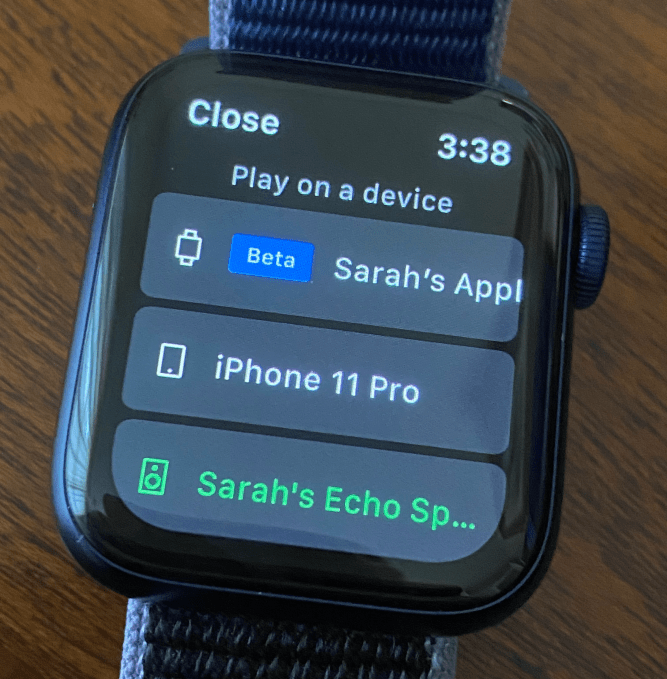
Spotify adds standalone streaming support to its Apple Watch app — The feature was spotted in testing back in September, and it arrives roughly two years after Spotify first debuted its dedicated Apple Watch app.

Twitter hides Trump tweet attacking Supreme Court’s decision on Pennsylvania ballots — In a preview of what to expect in the coming days, President Trump pushed the limits on Twitter’s election-specific policies Monday night.

PayPal details its digital wallet plans for 2021, including crypto, Honey integration and more — The company said it plans to roll out substantial changes to its mobile apps over the next year, including support for enhanced direct deposit, crypto and all of Honey’s shopping tools.

Startups, funding and venture capital

REEF Technology raises $700M from SoftBank and others to remake parking lots — REEF began its life as Miami-based ParkJockey, providing hardware, software and management services for parking lots.

Udacity raises $75M in debt, says its tech education business is profitable after enterprise pivot — The online learning company is now focused on winning over business customers.

Walmart reportedly ends contract with inventory robotics startup Bossa Nova — Walmart has reportedly pulled the plug on one of its highest-profile partnerships.

Advice and analysis from Extra Crunch

Four takeaways from fintech VC in Q3 2020 — The latest on insurtech, banking, wealth management and payments startups.

Gaming rules the entertainment industry, so why aren’t investors showing up? — Venture activity doesn’t seem to match the size of the games market.

How startups can shake up their first idea and still crush the market — Some thoughts on the ol’ startup pivot.

(Reminder: Extra Crunch is our membership program, which aims to democratize information about startups. You can sign up here.)

Everything else

Tech stocks rip higher on Election Day — The gains came long before any results that would indicate the election’s winner.

NBC News launches an iOS 14 widget that puts election results on your home screen — NBC News allows users to customize a series of widgets with information related to early voting stats, polls, current election results and more.

The Daily Crunch is TechCrunch’s roundup of our biggest and most important stories. If you’d like to get this delivered to your inbox every day at around 3pm Pacific, you can subscribe here.

News: Waymo pauses operations in San Francisco, stays the course in Phoenix on Election Day

Waymo has taken a dual approach to operations on Election Day. In San Francisco, where Waymo has been testing its autonomous vehicles, driving operations have been temporarily suspended Tuesday and Wednesday “out of an abundance of caution.” Its fleet of autonomous vehicles were moved Monday to nearby Mountain View, according to an internal email first

Waymo has taken a dual approach to operations on Election Day.

In San Francisco, where Waymo has been testing its autonomous vehicles, driving operations have been temporarily suspended Tuesday and Wednesday “out of an abundance of caution.” Its fleet of autonomous vehicles were moved Monday to nearby Mountain View, according to an internal email first reported by The Verge. Waymo has continued its testing operations on public roads in Mountain View, according to an email from Transdev, the vendor that Waymo has contracted with to staff its fleet operations. TechCrunch confirmed that Waymo has paused operations in San Francisco.

Over in Phoenix, where Waymo’s on-demand robotaxi service operates and shuttles actual customers, it’s business as usual. Waymo told TechCrunch that in Phoenix it “will continue to serve riders through our autonomous ride hailing service, in order to help facilitate travel to the polls, and will continue to closely monitor the situation in all cities where we operate. The safety of our team, riders and partners is of paramount importance.”

Waymo’s actions in San Francisco follow other businesses in the city, which have closed up shop and even boarded up windows over concern that civil unrest related to the election will boil over this week. Other AV companies such as Cruise and Zoox, which also test in San Francisco, have taken a wait-and-see approach.

Cruise, which has about 200 vehicles in its fleet and uses Aerotek to staff its driver operations, is monitoring events.

“Safety is our number one priority,” according to Cruise spokesperson Milin Mehta. “Our Operations team is monitoring the situation in real time, and has turnkey plans in place to ground the fleet and take all necessary steps to keep our team members safe.”

Cruise also gave all employees, including contract workers the day off to vote.

Zoox, which has a smaller fleet of about 50 vehicles that are tested in San Francisco and near its Foster City headquarters, continued testing today, although paused operations earlier than usual. The company is also monitoring the situation for the rest of the week.

Uber Advanced Technologies Group has tested in San Francisco in the past, but currently only has test operations in Pittsburgh. The company is not operational today because it has given all employees the day off to volunteer and vote. Testing is expected to resume in Pittsburgh this week, although a company spokesperson noted that they will reassess if the environment changes.

Aurora, which tests in Pittsburgh, the Dallas-Fort Worth area and the Silicon Valley enclaves of Palo Alto and Mountain View, is continuing operations in those locations and will “change course if needed.”

Argo AI wouldn’t provide specifics on whether it was testing today or altering its operations due to Election Day. However, a spokesperson did say that the company “places safety as the No. 1priority in all respects when it comes to our fleet testing operations and always monitors local environments where we operate and take whatever precautions are appropriate, no matter what day it is.”

News: Hustle Fund, a pre-seed firm, closes $30M for a new fund

Hustle Fund, a pre-seed fund built by former operators and founders, has raised $30 million for a new fund, per SEC filings. Hustle Fund first filed paperwork for this fund, its second to date, in May 2019 with intention to raise $50 million. Its inaugural investment vehicle closed at $11.5 million. Hustle Fund was unable

Hustle Fund, a pre-seed fund built by former operators and founders, has raised $30 million for a new fund, per SEC filings. Hustle Fund first filed paperwork for this fund, its second to date, in May 2019 with intention to raise $50 million. Its inaugural investment vehicle closed at $11.5 million.

Hustle Fund was unable to comment because it is still in fundraising mode.

Hustle Fund was created by Elizabeth Yin and Eric Bahn, two former 500 startups partners, with the goal of investing in pre-seed software startups. The firm has traditionally operated by investing $25,000 in a company, usually with a minimum-viable product, and then works with the team to help them grow. It does around 50 investments per year, according to its website.

It’s a small but focused investing approach, one that has gotten Hustle Fund into deals such as Webflow, NerdWallet, and The Hustle. But, as pre-seed grows and companies raise absurdly high first-check rounds, the need for bigger checks might be necessary for VCs to continue getting into deals. Thus, a bigger fund size for a fund a few years in is both practical and expected.

Still, don’t expect Hustle Fund to be changing up its investment appetite just yet. Yin joined us at Extra Crunch a few months ago to detail her check appetite.

“I think to a certain extent, putting money into faster experiments helps, but it only goes so far,” Yin said. “You can’t drive speed of execution with money; it happens through the speed of learning. And I think that’s something that there’s an upper bound as to how much and how many resources you can put into increasing that speed of learning in the earlier stages.”

News: After getting the date wrong earlier, Siri now knows today is Election Day

Listen chief, it’s Election Day in the United States. You know that, I know that. Everyone knows that — and in the off-chance anyone wasn’t clued in to the fact, the last few weeks have offered a non-stop barrage of reminders to vote. Today. Tuesday. November 3. 2020. It seems the last one to find

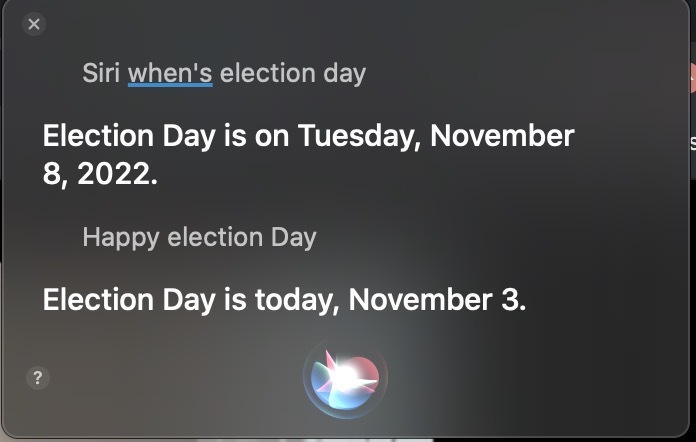
Listen chief, it’s Election Day in the United States. You know that, I know that. Everyone knows that — and in the off-chance anyone wasn’t clued in to the fact, the last few weeks have offered a non-stop barrage of reminders to vote. Today. Tuesday. November 3. 2020.

It seems the last one to find out, however, was Siri . If you happened to greet Apple’s smart assistant with a “Happy Election Day” earlier today, it may well have answered that the big day isn’t until November 8, as pointed out by noted Twitter enthusiast, Lucas Matney.

Image Credits: Kirsten Korosec

Apple has since fixed the issue, though the problem appears to be that Siri jumped the gun here. November 8 is, in fact, election day. Just not this year. November 8, 2022 marks another major election here in the U.S. — namely the midterms, which will no doubt be all sorts of fun and nerve-racking in their own beautiful way. A never-ending source if anxiety, this beautiful thing the ancient Greeks called “democracy.”

Siri notably wasn’t the only one that mixed up their dates. An Instagram cache issue earlier today caused the social media service to suggest to users that “Tomorrow is Election Day.” Which, it’s not. While it seems likely the presidential race will still be up in the air come tomorrow, showing up at your polling place to vote will likely be frowned upon.


News: Spotify adds standalone streaming support to its Apple Watch app

Spotify confirmed today it has begun to roll out support for standalone streaming on its Apple Watch app. The feature had been spotted in testing back in September, and arrives roughly two years after Spotify first debuted its dedicated Apple Watch app. With support for standalone streaming, users can listen to Spotify music or podcasts

Spotify confirmed today it has begun to roll out support for standalone streaming on its Apple Watch app. The feature had been spotted in testing back in September, and arrives roughly two years after Spotify first debuted its dedicated Apple Watch app.

With support for standalone streaming, users can listen to Spotify music or podcasts via a Wi-Fi connection or over cellular, without needing to be tethered to their iPhone.

The lack of support for standalone streaming has been a long time sore subject for a core group of Spotify’s customers. It’s even more of an issue for those who want to leave their iPhone behind when they’re exercising — like when they’re out for a run, for example — as well as any other time when carrying around an iPhone could be cumbersome.

With standalone streaming, however, Spotify users can stream from their wrist directly to their Bluetooth headphones or AirPods.

In the app, the option is still flagged with a beta label for some users, however.

Image Credits: Spotify app, phone via TechCrunch

The update to the Spotify app was spotted in the U.S. by 9to5Mac, which noted more users had started seeing the feature show up for them even though they hadn’t been a part of the September test group.

Spotify is not the first music service to offer a standalone streaming experience on the Apple Watch. In addition to Apple’s own Apple Music service, Pandora rolled out support for standalone streaming back in February 2020.

However, it is ahead of YouTube Music on this front. Although YouTube just launched an Apple Watch version of its streaming music service in mid-October, it works more like a remote control from the YouTube Music app.

Spotify confirmed the launch in statement to TechCrunch, but it hasn’t made a formal announcement about the update.

“We’re focused on developing experiences that enable users to listen to Spotify wherever and whenever they want – regardless of the device or platform,” a Spotify spokesperson said. “After an initial testing period, we are now rolling out streaming capabilities for Spotify on the Apple Watch,” they added.


News: Gaming rules the entertainment industry, so why aren’t investors showing up?

As gaming’s popularity reaches epic heights, venture investors’ activity in the industry doesn’t seem to equate with the overall size of the games market. Spurred by an unreal year where traditional entertainment has been upended by the COVID-19 pandemic and consumers find unity in virtual worlds like Animal Crossing and Fortnite, gaming has never been

As gaming’s popularity reaches epic heights, venture investors’ activity in the industry doesn’t seem to equate with the overall size of the games market. Spurred by an unreal year where traditional entertainment has been upended by the COVID-19 pandemic and consumers find unity in virtual worlds like Animal Crossing and Fortnite, gaming has never been more popular.

Late-stage investors have shown that they have a tremendous appetite for businesses in the gaming industry. They’ve been pouring capital into established gaming companies like Scopely, which on Wednesday announced a $340 million investment round at a $3.3 billion valuation. But venture capital simply hasn’t given the gaming industry and the broader synthetic market the attention it deserves given its place in the entertainment and cultural firmament.

Just ask LeBron “Bronny” James Jr., the son of the NBA’s biggest star, who became a professional athlete this week — as a gamer with one of the most popular teams in online gaming, FaZe Clan. Or look at Unity, the creator of a popular game development engine, whose stock price has nearly doubled since its public offering in mid-September. Since opening trading at $56 per share, the stock has nearly doubled in value and is now trading at $100 per share.

In the first half of the year gamers spent $36.8 billion on games through both the Android and iOS app stores, according to data from SensorTower. New game installs are also up for the year. The app analytics company said that new game installs were up to 28.4 billion over the first half of the year. Annually the 15 billion new game downloads in the second quarter represented a 45.2% year-on-year growth in gaming.

Then there’s Bitkraft, one of the only venture firms to focus on the totality of the gaming industry, which announced the close of its most recent fund, a $165 million investment vehicle. The firm, which added a former Goldman Sachs managing director earlier in the year to capitalize on the opportunity in what the firm calls “synthetic reality” investments, raised $25 million more than its $140 million target. One of these things is not like the others.

“I’ve been in the games industry for 23 years now [and] I’ve always had this huge fundamental conviction of video games not only dominating the entertainment industry but sort of taking up a big part of what society is — where video games create the digital identities that define evermore of what we understand of ourselves,” said Jens Hilgers, Bitkraft’s founding general partner. “We feel that these are times of acceleration … it’s great to see how we’re leapfrogging one or two or three years of the games industry in this crisis and it makes it more exciting to invest in these times.”

The Unity public offering, and its emphasis on markets outside of gaming, seems to prove Hilgers point and show just how much opportunity remains around the notion of synthetic reality in business and entertainment.

“Their thesis around democratizing access to gaming tools by letting hobbyists use the tools for free is smart, if you want to win the market,” said Alice Lloyd George, founder of Rogue Ventures, a new investment firm focused on frontier technologies and gaming investments.

Lloyd George compared Unity’s business to its biggest competitor, Epic Games, and noted that both have broad aspirations. “Both of them want to use their game engines beyond pure gaming,” Lloyd George said of the two big new gaming platform developers. “Unity is really well-positioned because they’re so strong on mobile. That positions them well for AR and VR. And you need onramps for the developers for AR and VR.”

Engagement and the future of entertainment

When Scopely’s co-chief executive Walter Driver talks about the attraction of gaming properties for players — and the reason investors have been willing to value his Los Angeles-based company in the billions of dollars — he talks about the connections between players. “People have found — and investors looking at the space have found also — that people value the connection they’re getting from interactive experiences. It’s not just our relationship with the players, but their relationships with each other,” Driver said. “Inside of most passively consumed media experiences, you don’t have an identity. You don’t have friends.“

News: iRobot issues warning for select Roomba i7+ docking stations over potential short circuiting

Robotic vacuum giant iRobot this week sent warnings to select owners of the Roomba i7+, noting that the Clean Base docking station has the potential to malfunction and short circuit. According to iRobot, concern stems from “very rare cases,” wherein liquids are deposited into the Clean Base Automatic Dirt Disposal unit. “We learned that certain Roomba i7+

Robotic vacuum giant iRobot this week sent warnings to select owners of the Roomba i7+, noting that the Clean Base docking station has the potential to malfunction and short circuit. According to iRobot, concern stems from “very rare cases,” wherein liquids are deposited into the Clean Base Automatic Dirt Disposal unit.

“We learned that certain Roomba i7+ Clean Base docking stations could malfunction and potentially present a hazard if liquids are collected by the Roomba i7+ robot vacuum and deposited into the Clean Base unit,” the company said in a statement to TechCrunch. “Our vacuums are only designed for cleaning up dirt and debris from dry floors and carpets and should never be used to pick up any liquids.”

The company believes around 222,000 units are potentially impacted by the issue. Of that number, the vast majority (around 210,000) were sold in North America. Emails and app notifications have been sent to users, alerting them of the problem. The company will send a replacement power cord or docking station to those with affected serial numbers.

The  i7+ was released in 2018. The system sports some key advancements in mapping smarts, along with the impacted docking, which automatically cleans the Roomba’s on-board bin.

News: Pulled Ant Group IPO costs Alibaba nearly $60B in market cap

News today that Ant Group’s IPO is suddenly on hold in both Shanghai and Hong Kong caused a sell-off of Alibaba shares. This afternoon, equity in sister-company Alibaba is off around 8% in the wake of the delayed offering and news that Ant had run into regulatory issues with the Chinese government. Ant was spun

News today that Ant Group’s IPO is suddenly on hold in both Shanghai and Hong Kong caused a sell-off of Alibaba shares. This afternoon, equity in sister-company Alibaba is off around 8% in the wake of the delayed offering and news that Ant had run into regulatory issues with the Chinese government.

Ant was spun out of Alibaba, which owns a one-third stake in the financial technology powerhouse.

Ant’s IPO was on track to be among the largest in history, perhaps raising as much as $34.5 billion in its dual-listing share sale. The company was going to have little trouble filling that book, with retail demand for its shares at IPO reaching nearly $3 trillion in mainland China alone (it’s not uncommon for popular share issues to have massive oversubscription).

That the IPO was called off is financial news on a scale that is hard to comprehend. Ant would have sported a possible market valuation of more than $300 billion at its IPO price. Such a valuation would rank it amongst the most valuable companies in the world.

Alibaba is worth around $772 billion today after the news, off from a value of around $841 billion yesterday. Ant’s delay has cost its former parent company around $60 billion in market capitalization in a single day.

Ant has its roots in Alipay, an online payment service founded in 2004. The company’s Alibaba spin-out came seven years later in 2011, with its former parent company buying 33% of its value in 2018 ahead of its planned IPO. At the time, Ant was valued around $60 billion.

The company’s IPO prospectus details the company’s work in credit, investing, insurance and other fintech-related areas. Ant’s reach has become staggering over time, with Alipay counting over 1 billion annual active users and over 80 million active merchants on the platform.

Ant competes with Tencent’s WePay, amongst other products and services.

As TechCrunch reported this morning, Ant has a history of regulatory issues with the Chinese Communist Party. Precisely what went wrong this time so close to its debut is still not perfectly clear, but news that Alibaba founder and Ant chairman Jack Ma had dinged China’s financial regulation in recent weeks could be part of the issue.

So long as the IPO remains on hold, and a cloud sits atop Mt. Ant, Alibaba shares could remain depressed.

News: Hulu tests its social viewing feature, Watch Party, with election news livestreams

Hulu is bringing its Watch Party social viewing feature to its livestreamed election news coverage, provided via its existing partnership with ABC News Live. The company announced today it will allow its on-demand customers to test Watch Party while watching ABC’s “Election 2020” coverage via the Hulu.com website. The new co-viewing feature lets Hulu users

Hulu is bringing its Watch Party social viewing feature to its livestreamed election news coverage, provided via its existing partnership with ABC News Live. The company announced today it will allow its on-demand customers to test Watch Party while watching ABC’s “Election 2020” coverage via the Hulu.com website. The new co-viewing feature lets Hulu users chat and react to what they’re watching in a chat interface that supports up to eight people per session.

Notably, this will be the first time Watch Party has been enabled for a live event, Hulu says.

The Watch Party feature first debuted in May as a way to give Hulu’s “No Ads” subscribers a way to chat with one another in the Hulu app while watching programs together. At launch, Hulu made thousands of movies and shows available for co-viewing from its on-demand streaming library.

This sort of social viewing experience had become popular during the coronavirus outbreak as families and friends were staying at home, quarantining and social distancing. Today, there are co-viewing services that work with a range of streaming services, including Netflix, HBO, Amazon Prime Video and others. But only some offer native experiences, like Hulu does.

With Watch Party, users can group chat in a sidebar to the right of the screen as their program of choice streams. The feature also allowed users to control the on-demand video playback on their own computer without interrupting the group’s experience, then click a button to get back in sync with the group at a later point.

In September, Hulu expanded Watch Party to its ad-supported viewers, too, and even tested a customized experience for viewers of its original program, “Pen15.”

However, only on-demand customers will have access to Watch Party for use with Election 2020 coverage.

Hulu partnered with ABC News Live in March in response to the COVID-19 pandemic. The company wanted to ensure its cord cutting on-demand customers had access to live news 24/7, even if they didn’t pay for the upgraded version of Hulu with Live TV. The company says that nearly 50% of its ad-supported viewers were cord cutters or even “cord nevers” — meaning they never signed up for cable or satellite TV in the first place.

The company announced earlier in October that it would also offer live election coverage to these viewers through the ABC News Live partnership.

News: How startups can shake up their first idea and still crush the market

When Quibi announced it was shutting its doors recently after raising $1.75 billion, it begged an obvious question: If the original idea didn’t work, why not adjust its model or do something completely different while it still had capital? It wouldn’t have been the first company to decide to shift gears. Perhaps because of the

When Quibi announced it was shutting its doors recently after raising $1.75 billion, it begged an obvious question: If the original idea didn’t work, why not adjust its model or do something completely different while it still had capital? It wouldn’t have been the first company to decide to shift gears. Perhaps because of the unusually large amount of money it burned through in just six months of public operation, pivoting wasn’t an option for Quibi, but it has been for countless other successful companies over the years. Sometimes an original idea simply doesn’t pan out, a market gets too crowded or a company’s founders stumble onto something they have built that is actually a better business than the original idea.

There are many such examples:

These examples — and many more — show that when your first approach doesn’t work, pivoting may be the the only logical course, but it takes courage from founders and patience from investors.

We spoke to several founders and VCs who have been through this to find out how pivots happen, and how all the parties involved adjust to shifting priorities.

Sometimes it’s a long and twisting road

A big part of founding a company is having vision. You need to believe in your idea of course, but that doesn’t mean it’s the right way to go. Sometimes it pays to move on. The king of pivots might be the aptly named Pivotal, which changed direction several times and even swapped owners before it went public and got acquired, all in the span of about 20 years. Ed Sim, co-founder at boldstart ventures was part of Dawntreader Ventures in the late 90s when his firm invested in an early version of the company called Metapa. Sim had a front row seat to every twist and turn in the company’s long and intricate history.

“Greenplum, which was sold to EMC and eventually became Pivotal Software, was initially called Metapa. Metapa was in the Akamai space and as the markets cratered in 2001 for funding infrastructure projects, Scott Yara (the company’s founder) and team bought a small company called Didera and turned it into Greenplum, the first petabyte scale data warehouse built on top of open-source technology,” Sim told TechCrunch. It didn’t end there though as Sim continued, “Once again, years later, Scott recruited his replacement CEO, Bill Cook, and they paired together to sell Greenplum to EMC and eventually spin back out and take the company public as Pivotal Software.

It’s worth noting that Pivotal eventually ran into financial problems when its stock tanked last year, but fellow Dell/EMC family member VMware saved the day by acquiring it for $2.7 billion.

Sometimes you stumble onto an idea

Segment, the customer-data platform company that was recently sold to Twilio for $3.2 billion was originally a college lecture sentiment platform, according to CEO and co-founder Peter Reinhardt. “Our first idea was a classroom lecture tool, ClassMetric, which gave students a button they could press in class to let professors know, in real-time, that they were confused. I like to think of it like a pulse monitor for class confusion,” Reinhardt told TechCrunch

That idea quickly failed when professors testing it found that inviting students to open their laptops to test their sentiment just led them to start playing Solitaire or checking Facebook. Professors weren’t thrilled and they moved on. The founders, who were MIT students at the time, decided they wanted to build an analytics tool instead, but it turned out that competition from Google Analytics and Mixpanel at the time proved too steep.

“We spent a year on development, but it was a crowded market and we struggled to carve out our own niche. We were rapidly running out of capital and the pressure was on to find something new,” he said. They were actually considering simply packing it in, but they had developed a tiny open-source tool called analytics.js, which they used to get data into their failed analytics product. At that point, desperate for an idea, one of the founders suggested posting the open-source tool on Hacker News.

WordPress Image Lightbox Plugin