Yearly Archives: 2020

News: Alibaba passes IBM in cloud infrastructure market with over $2B in revenue

When Alibaba entered the cloud infrastructure market in earnest in 2015 it had ambitious goals, and it has been growing steadily. Today, the Chinese ecommerce giant announced quarterly cloud revenue of $2.194 billion. With that number, it has passed IBM’s $1.65 billion revenue result (according to Synergy Research market share numbers), a significant milestone. But

When Alibaba entered the cloud infrastructure market in earnest in 2015 it had ambitious goals, and it has been growing steadily. Today, the Chinese ecommerce giant announced quarterly cloud revenue of $2.194 billion. With that number, it has passed IBM’s $1.65 billion revenue result (according to Synergy Research market share numbers), a significant milestone.

But while $2 billion is a large figure, it’s one worth keeping in perspective. For example, Amazon announced $11.6 billion in cloud infrastructure revenue for its most recent quarter, while Microsoft’s Azure came in second place with $5.9 billion.

Google Cloud has held onto third place, as it has for as long as we’ve been covering the cloud infrastructure market. In its most recent numbers, Synergy pegged Google at 9% market share, or approximately $2.9 billion in revenue.

While Alibaba is still a fair bit behind Google, today’s numbers puts the company firmly in fourth place now, well ahead of IBM. It’s doubtful it could catch Google anytime soon, especially as the company has become more focused under CEO Thomas Kurian, but it is still fairly remarkable that it managed to pass IBM, a stalwart of enterprise computing for decades, as a relative newcomer to the space.

The 60% growth represented a slight increase from the previous quarter’s 59%, but basically means it held steady, something that’s not easy to do as a company reaches a certain revenue plateau. In its earnings call today, Daniel Zhang, chairman and CEO at Alibaba Group said that in China, which remains the company’s primary market, digital transformation driven by the pandemic was a primary factor in keeping growth steady.

“Cloud is a fast-growing business. If you look at our revenue breakdown, obviously, cloud is enjoying a very, very fast growth. And what we see is that all the industries are in the process of digital transformation. And moving to the cloud is a very important step for the industries,” Zhang said in the call.

He believes eventually that most business will be done in the cloud, and the growth could continue for the medium term as there are still many companies who haven’t made the switch yet, but will do so over time.

News: Calm’s hilarious CNN ad campaign sent the meditation app flying up App Store charts

Meditation app Calm’s brilliant and hilarious marketing campaign that saw it sponsoring CNN’s coverage of the 2020 U.S. Presidential Election results this week seems to have paid off for the business. The app, which today offers mindful meditations, peaceful sounds and sleep stories, had flashed on screen during CNN’s “Key Race Alert” coverage, reminding users

Meditation app Calm’s brilliant and hilarious marketing campaign that saw it sponsoring CNN’s coverage of the 2020 U.S. Presidential Election results this week seems to have paid off for the business. The app, which today offers mindful meditations, peaceful sounds and sleep stories, had flashed on screen during CNN’s “Key Race Alert” coverage, reminding users of the need to relax during this stressful time.

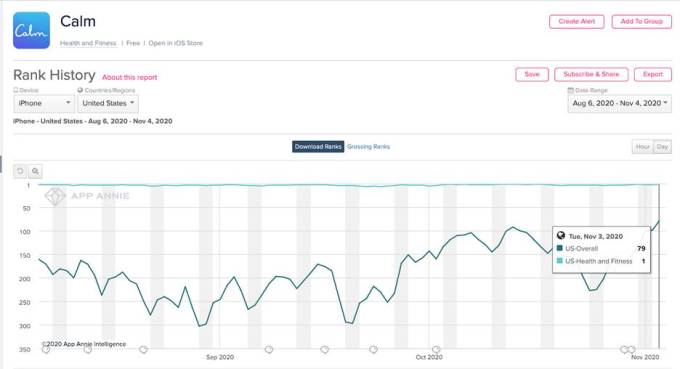
According to data from third-party app store analytics and marketing firms, Sensor Tower and App Annie, these CNN advertisements appear to have helped substantially boost Calm’s downloads (as determined by the app’s chart rankings.)

On iPhone in the U.S., App Annie says Calm moved up 20 ranks from the day before Election Day to reach No. 79 Overall across both apps and games in the U.S. It also reached No. 1 in the U.S. Health & Fitness category.

Image Credits: App Annie

Meanwhile, Sensor Tower found that the app moved up again on Nov. 4, climbing 51 spots to reach No. 68 among the top free iPhone apps on the U.S. App Store.

The firm notes this is the highest the app has ranked since July 21, when it hit No. 60 — a jump that was likely boosted by the release of the Harry Styles’ Sleep Story. While Calm did add another new Sleep Story on Oct. 30, it didn’t appear to have an impact the way that Styles’ Story had, Sensor Tower said.

A spokesperson for Calm explained the company’s decision to run the CNN ad campaign was about associating its brand with the anxiety that its meditations and relaxing sounds help to address.

“We understand the uncertainty of this election cycle can be a source of anxiety for many of us, especially as it coincides with an ongoing pandemic,” the spokesperson said. “Our goal during CNN’s Key Race Alerts was to provide viewers a moment of Calm, and a reminder to take a deep breath during a stressful night,” they added.

The company declined to confirm the third-party estimates, however.

Overall, the CNN ad campaign worked for Calm because it was almost a troll on how stressed people have been this week as election results poured in — and particularly by CNN’s “Key Race Alert” music that plays when there’s an important update.

Simply put, most people found Calm’s ad funny.

The CNN KEY RACE ALERT is sponsored by the Calm app lmao pic.twitter.com/MSg3FYBFyK

— Josh Billinson (@jbillinson) November 4, 2020

The election coverage sponsor is honestly hilarious pic.twitter.com/SUF3MOczql

— Kyle Ayers (@kyleayers) November 5, 2020


LOL @CNN’s ‘Key Race Alert’ brought to you by the @calm app #Election2020 #ElectionNight pic.twitter.com/S911VGSoJ6

— Travis Dhanraj (@Travisdhanraj) November 4, 2020

In addition to running ads on CNN, Calm launched a refreshed resource hub with free mindfulness tools, including Sleep Stories, meditations, music and other mindfulness content ahead of the elections.

And just ahead of Nov. 3, it partnered with mobile news organization NowThis to create a soothing livestream that ran on NowThis’ Facebook and YouTube pages on Nov. 3 through Nov. 4.

Outside of its CNN sponsorship, Calm has been working to capitalize on increased TV viewing around the election to gain attention for its anxiety-reducing resources, as well.

According to data from iSpot.tv, reported by AdAge, Calm’s app saw 66 million total impressions from Oct. 31 through Nov. 3, with 11 million on Election Day alone. And over the last 30 days, Calm saw 241.7 million TV ad impressions, valued at $1.4 million.

In addition to CNN, the company ran Election Day ads on MSNBC, E!, HGTV, IFC, Freeform, the Discovery Family Channel and the Discovery Life Channel, the report said.

News: WhatsApp receives approval to expand its payments service in India

WhatsApp, which began testing its payments service in India with 1 million users in early 2018, can finally start to expand the feature to more users in the world’s second largest internet market. National Payments Corporation of India (NPCI), the body that operates the widely popular UPI payments infrastructure, said on Thursday evening that it

WhatsApp, which began testing its payments service in India with 1 million users in early 2018, can finally start to expand the feature to more users in the world’s second largest internet market.

National Payments Corporation of India (NPCI), the body that operates the widely popular UPI payments infrastructure, said on Thursday evening that it has granted approval to WhatsApp to roll out UPI-powered payments in India.

Like Google, Samsung, and a number of other firms, WhatsApp has built its payments service atop UPI, a payments infrastructure built by a coalition of large banks in India. NPCI said WhatsApp, which has amassed over 400 million users in India, can expand payments to its users in a “graded manner” and to start with, it can only roll out the payments service to 20 million users and has to work with multiple banking partners.

A WhatsApp spokesperson in India did not immediately respond to a request for comment.

More to follow…

News: Ayar raises $35M for optical interconnect tech to overcome computing bottlenecks in the CPU

The race is on to build more efficient chip technology for faster and less power-intensive computing, and today an innovative startup that’s built one solution based on in-package optical interconnect (optical I/O) technology is announcing a round of growth funding from a number of strategic investors that speaks to how its approach is getting traction.

The race is on to build more efficient chip technology for faster and less power-intensive computing, and today an innovative startup that’s built one solution based on in-package optical interconnect (optical I/O) technology is announcing a round of growth funding from a number of strategic investors that speaks to how its approach is getting traction.

Ayar Labs, which makes chip solutions based on optical networking principals — architecture that promises both faster computing speeds and far less power consumption (and heat) in the process — has picked up $35 million in a Series B round of funding. Co-led by Downing Ventures and BlueSky Capital, the round also includes Applied Ventures (the VC arm of Applied Materials), Castor Ventures and SGInnovate (the Singaporean government’s deep tech fund), with participation also from existing investors BlueSky Capital, Founders Fund, GLOBALFOUNDRIES, Intel Capital, Lockheed Martin Ventures, and Playground Global.

Charles Wuischpard, CEO of Ayar Labs said that the funding will be used to continue developing its product as well as working on further commercialization. “The main application area for our technology is next-generation computing, anywhere that there is massive movement of data,” he said.

That includes aerospace and government applications, artificial intelligence and high-performance computing, telecoms and cloud applications, and LIDAR for self-driving car and other autonomous systems. Currently Wuischpard said that most of Ayar’s work is in the areas of AI and HPC — it’s a key partner of Intel’s in its work on AI computers for Darpa (see here and here) — and in telecoms/cloud.

Ayar’s focus on optical technology — specifically using silicon photonics and processing to build an optical communication device that can be built into a CPU — is emerging as a key area for chipmakers. Just last week, Marvell announced that it would buy Inphi, an optical networking specialist, for $10 billion.

As Wuischpard describes it, the big breakthrough that Ayar has brought to bear has been bringing down the size and scale of the technology to work within a computer’s core chip architecture, its CPU, which impacts and controls memory, control unit, and processing/logic, helping to speed up computing for the most demanding applications.

(The company was co-founded by Mark Wade, Chen Sun, Vladimir Stojanovic, and Alexandra Wright-Gladstein based on work at MIT, and they brought in Wuischpard, an engineer by training and also a veteran exec from Intel, to help figure out how to build a commercialised business around that.)

“Optics has been around for a long time,” he points out, first in subsea cabling, then between data centers and then inside the data center. “We think of ourselves as the last or first mile, bringing optical tech into the CPU.”

As he describes it, the company has devised a new type of modulator to turn electrons into photons, a “mirroring modulator” as he calls it. “There have been 1,000 research papers on this, but it’s typically difficult to manufacture and operate over a wide range of temperatures, and this is where a lot of our patents come in, to develop that into a single chiplet” he said. The amount of bandwidth the tech can handle, 2 terabits/second, “would fill a whole server, but we are doing it in 5×9 millimeters.”

He adds that the opportunities here are such that there are others also working on the same kind of technology. “There are bigger companies and one or two smaller ones, but they are all still a couple of years behind us in commercialization,” he said. “It’s one thing to build one, versus a million.” Having GLOBALFOUNDRIES as an investor — it’s also fabricating hardware for Ayar — is key in this regard.

The company seems like it would be a key acquisition target, I pointed out, not least because of the race for having ownership of technology that can give a company a leading edge over another, but also because of the trend of consolidation in the chip industry. (Intel’s acquisition of Habana Labs also underscores the interest it has in optical tech.)

Wuischpard laughs a little ironically and says that Covid-19 has been a “help” in this regard: acquisitions have slowed down, giving the startup more time and less pressure to sell up.

“Ayar Labs represents the future of interconnects which have eventual applicability to every electronic device on earth”, said Warren Rogers, Partner and Head of Ventures at Downing Ventures, in a statement. “We have the highest confidence that when their optical I/O technology is applied to computing, the industry will finally break away from Moore’s Law and redefine the boundaries of computing.”

“We’ve been an investor in Ayar Labs since the beginning and have been looking for opportunities to increase our ownership in the company” added Madison Hamman, Managing Director of Blue Sky Capital. “We are very excited about Ayar Labs and believe in their patented technology and execution of a plan that makes it a core building block of future computing systems.”

News: Google and Walmart face growth hurdles as India caps payments transactions

Google and Walmart have a new challenge ahead of them as they race to expand the reach of their payments apps in India: They won’t be permitted to grow beyond a limit. National Payments Corporation of India (NPCI), the body that operates the widely popular UPI payments infrastructure, said Thursday evening that it will enforce

Google and Walmart have a new challenge ahead of them as they race to expand the reach of their payments apps in India: They won’t be permitted to grow beyond a limit.

National Payments Corporation of India (NPCI), the body that operates the widely popular UPI payments infrastructure, said Thursday evening that it will enforce a cap to ensure that no single payments app processes more than 30% of UPI transactions in a month.

The payments body said the move is aimed at addressing the “risks” and “protecting the UPI ecosystem as it further scales up.” The change goes into effect in January 2021.

UPI is a payments infrastructure built by large banks in India and is backed by the Indian government. It has become the most popular digital payments method in the country in recent years.

The cap of 30% will be calculated based on total volume of UPI transactions processed in the preceding three months, it added.

The move, described by an industry executive as the most absurd thing they have heard in months in India, will severely impact Google and Walmart, whose respective apps already process more than 35% of UPI transactions each.

In fact, Walmart’s PhonePe processed more than 40% of about 2 billion transactions on UPI network last month.

It remains unclear how any payments app will comply with this limit. Let’s say PhonePe or Google Pay has already processed about 650 million transactions in three weeks. Would it just switch off UPI payments on their app for the remainder of the month?

UPI transactions will also drop.
A banker just messaged: ‘We are good at screwing ourselves’. https://t.co/HgcypgcTln

— Arti Singh (@artijourno) November 5, 2020

More to follow…

News: 4 questions as Airbnb’s IPO looms

Almost on command after we asked yesterday if a rash of technology IPOs were about to land, news broke that Airbnb plans to drop its S-1 filing early next week with a December roadshow. The document will be of intense interest for shareholders — as well as public investors who hope to purchase shares in the

Almost on command after we asked yesterday if a rash of technology IPOs were about to land, news broke that Airbnb plans to drop its S-1 filing early next week with a December roadshow. The document will be of intense interest for shareholders — as well as public investors who hope to purchase shares in the home-sharing unicorn.


The Exchange explores startups, markets and money. Read it every morning on Extra Crunch, or get The Exchange newsletter every Saturday.


Per Reuters, which broke the news of Airbnb’s impending public IPO filing, the company intends to raise “around $3 billion” at a valuation that could top $30 billion.

The stock market is rallying before Airbnb’s public filing, making it a good time for the company to seek a rich valuation for itself. But while Airbnb’s recovery from COVID-related lows could become a business case of the ages, it’s not hard to still have questions about what its S-1 will contain.

We know quite a lot about Airbnb’s last few years, something TechCrunch covered here. But, to save you hundreds of words, let’s quickly blast through a rough rundown of its last few quarters. Once we get through that, we’ll ask four questions that, once answered, will help the market price Airbnb’s IPO.

Results, questions

Running back through Airbnb’s numbers without extra conversation, here’s the data in bullet-point format, with percentage-change figures comparing year-over-year data provided when possible:

  • Q4 2019: Revenues of $1.1 billion (+32%), EBITDA of -$276.4 million (+92%).
  • Q1 2020: Revenues of $842 million, and an adjusted loss of $341 million.
  • Q2 2020: Revenues of $335 million, and an adjusted loss of $400 million.

Turning to more recent times, we know that Airbnb’s financial performance improved in Q3, with data showing the company’s bookings bouncing back as summer ran its course. And the company itself has made noise about local bookings (key to its rebound as folks stayed close to home during the pandemic), and total nights booked

News: TikTok tests a Learn tab to showcase education and how-to videos

How-to videos have been some of the most popular content on YouTube over the years, and now, to grow engagement and the pool of users that it appeals to, the upstart video app TikTok is getting in on the action, too. After launching a dedicated “Learn On TikTok” hashtag (#LearnOnTikTok) earlier this summer with a

How-to videos have been some of the most popular content on YouTube over the years, and now, to grow engagement and the pool of users that it appeals to, the upstart video app TikTok is getting in on the action, too.

After launching a dedicated “Learn On TikTok” hashtag (#LearnOnTikTok) earlier this summer with a slate of premium creators producing videos for it, multiple users and social media watchers (thanks Matt) are reporting sightings of a new menu item called “Learn.”

Featured prominently alongside “For You” and “Following” at the top of the homescreen, TikTok describes Learn as a place to discover how-to and informative videos posted by users that take viewers through making food, producing art, how scientific processes work, and more.

The Learn feed seems to have disappeared overnight: from what we understand it’s still being tested.

Image Credits: Lena Koppova (opens in a new window)(opens in a new window)In any case, its emergence coincided with the company yesterday launching a new promotional campaign for educational content discoverable through the #LearnOnTikTok hashtag.

(And in the original announcement for Learn On TikTok content, TikTok noted that it is “exploring additional ways to showcase the rich offering of instructional content that’s thriving on the platform,” which includes “building a creator learning portal that will provide insights, tools, and best practices on how to create quality content on TikTok,” so the Learn tab may have been a test of how that will look and work.)

These are not TikTok’s first or only efforts in the realm of education.

Aside from its self-referential audience-created educational videos — it’s the best platform for learning TikTok dances, for learning about the latest song-based memes, watching comedic mishaps as people try to explain something, etc. — the company has been cultivating an image as a go-to platform for learning more serious things, not just messing around.

It’s been pushing that even harder this year than ever, both as TikTok itself faces ire from authorities for having a more potentially harmful influence; and as more people turn to their screens during the Covid-19 pandemic.

This has included formal efforts like partnering up with institutions, and encouraging students to create educational content.

@cambridgeuniversityCan #cars talk to each other? #learnontiktok #cambridgeuniversity #cambridge #artificialintelligence #driverless♬ HAPPY SUMMER ADVENTURE – Sergey Wednesday

It’s also included dedicating $50 million specifically to a creator fund to promote educational videos; and reportedly a whopping $5 billion educational fund as part of a deal to keep from getting shut down in the US over national security concerns (Bytedance, the owner of TikTok, has disputed the idea of the fund).

This has also included soft diplomacy, where teachers are using TikTok as a way of being more relatable to their audience of TikTok-loving students.

At its heart, doing more in education is a natural move for TikTok. Video is a huge learning tool, as YouTube and many others have demonstrated, and it connects with the app’s younger audience while also creating more reasons for why others might also want to use it — but also somewhat opportunistic.

Education is a good look, and its push in India was coming at a time when the company was first starting to face backlash over its content (it didn’t help: it’s currently banned there).

Meanwhile, its US Creative Learning Fund and those reports of a $5 billion education fund — accurate or not — emerged just as the company was working on hammering out a deal — which might include its Chinese owner Bytedance ceding control of the app — to keep it from getting banned outright in the US over national security concerns. (That story is still ongoing.)

Learn On TikTok — which officially was announced this summer — is heavy on user-generated content from TikTok’s wider base, with videos ranging pretty widely, from pottery making to make-up tips, and learning pig Latin to folding origami pigs.

But alongside this, TikTok is now populating the hashtag with a lot of premium content. Working with publishers like Self and WWD, professional organizations, non-profit institutions, and influential personalities (Bill Nye and Neil deGrasse Tyson in the science arena, chef José Andrés, Lilly Singh and Tyra Banks), TikTok is also curating and cultivating content made specifically for TikTok to broaden people’s minds and experiences.

“I’m excited to partner with TikTok,” Nye said at the time that his deal was announced. “Looking forward to doing some science on the small screen— the real small screen— the one on your phone…”

All of this is to say that there is a lot of opportunity, but probably some more growing pains to come for TikTok and the people using it to teach and learn.

We will update this story as we learn more ourselves…

News: Nvidia reportedly bringing Fortnite back to iOS through its cloud gaming service

Nvidia is bringing Fortnite back to iPhones and iPads, according to a report from the BBC. The British news service is reporting that Nvidia has developed a version of its GeForce cloud gaming service that runs on Safari. The development means that Fortnite gamers can play the Epic Games title off of servers run by

Nvidia is bringing Fortnite back to iPhones and iPads, according to a report from the BBC.

The British news service is reporting that Nvidia has developed a version of its GeForce cloud gaming service that runs on Safari.

The development means that Fortnite gamers can play the Epic Games title off of servers run by Nvidia. What’s not clear is whether the cloud gaming service will mean significant lag times for players that could effect their gameplay.

Apple customers have been unable to download new versions of Epic Games’ marquee title after the North Carolina-based company circumvented Apple’s rules around in-game payments.

Revenues and rules are at the center of the conflict between Epic and Apple. Epic had developed an in-game marketplace where transactions were not subject to the 30% charges that Apple places on transactions conducted through its platform.

The maneuver was a clear violation of Apple’s terms of service, but Epic is arguing that the rules themselves are unfair and an example of Apple’s monopolistic hold over distribution of applications on its platform.

The ongoing legal dispute won’t even see the inside of a courtroom until May and it could be years before the lawsuit is resolved.

That’s going to create a lot of hassles for the nearly 116 million iOS Fortnite players, especially for the 73 million players that only use Apple products to access the game, according to the BBC report.

Unlike Android, Apple does not allow games or other apps to be loaded on to its phones or tablets via app stores other than its own.

Nvidia already offers its GeForce gaming service for Mac, Windows, Android and Chromebook computers, but the new version will be available on Apple mobile devices as well, according to the BBC report.

If it moves ahead, Nvidia’s cloud gaming service would be the only one on the market to support iOS users. Neither Amazon’s Luna cloud-gaming platform, nor Google’s Stadia service carry Fortnite.

News: Mobile testing platform Kobiton raises $14M, acquires competitor Mobile Labs

Atlanta-based Kobiton, a mobile testing platform that allows developers and QA teams to test their apps on real devices, both on their own desks and through the company’s cloud-based service, today announced that it has acquired Mobile Labs, another Atlanta-based mobile testing service. To finance the acquisition of its well-funded competitor, Kobiton raised a $14

Atlanta-based Kobiton, a mobile testing platform that allows developers and QA teams to test their apps on real devices, both on their own desks and through the company’s cloud-based service, today announced that it has acquired Mobile Labs, another Atlanta-based mobile testing service.

To finance the acquisition of its well-funded competitor, Kobiton raised a $14 million extension to its $5.2 million Series A from its existing investor BIP Capital and new investor Fulcrum Equity Partners.

As Kobiton CEO Kevin Lee told me, we shouldn’t take that as the acquisition price, but it’s probably a fair guess that the real price isn’t too far off. The companies declined to disclose the exact price, though. Mobile Labs, which was founded in 2011, had raised about $15 million before the acquisition, according to Crunchbase. The last time it raised outside funding was in 2014. Kobiton and Mobile Labs do not share any common investors.

Kobiton CEO Kevin Lee

It’s interesting that Kobiton, which launched in 2017 and which may seem like a smaller player at first glance, was able to acquire Mobile Labs. Lee argues that one of the reasons why Mobile Labs decided to sell is that while his company has long focused on using machine learning to help developers build the tests for their apps — and the open-source Appium testing framework — Mobile Labs had fallen behind in this area.

“They were a little slow to invest in [AI] and I think they realized — and rest of the market, I think will realize it — if you don’t invest heavily and early, you kind of get behind the eight ball,” Lee told me.

He also noted that there are a lot of obvious synergies between the two companies. Mobile Labs has a lot of clients in the gaming and financial services space, for example. A lot of those clients are relatively new to mobile, while Kobiton’s existing customer base is often mobile-first.

“They’ve been around for 10 years and [have] a lot of partners, a lot of stuff outside the US,” Lee noted. “They have mainly have focused on what I would call large established enterprises in regulated industries or industries that are really concerned about IP protection — so behind the firewalls — where they really succeeded well.”

Those Mobile Labs customers, Lee said, were also looking for AI/ML-based testing solutions and the acquisition will now allow the two companies to layers Kobiton’s technology on top of the Mobile Labs solution. There will be an upgrade path for these customers and they’ll be able to do so at their own pace. There’s no plan to sunset Mobile Labs’ existing services for the time being, though some of Mobile Labs’ individual brands may change names.

With this acquisition, Kobiton will more than double the number of its US-based employees, though that’s in part because a good portion of the company’s team is based in Vietnam.

News: Review: Microsoft’s Xbox Series X is ahead of its time

Arriving seven years after the Xbox One first launched, the new Microsoft Xbox Series X console lands in a different world and a very different Xbox ecosystem. Microsoft is embracing subscription bundling with its Game Pass service and cloud-streaming with xCloud, nevertheless they are still committed to building huge metal boxes with tremendous power designed

Arriving seven years after the Xbox One first launched, the new Microsoft Xbox Series X console lands in a different world and a very different Xbox ecosystem. Microsoft is embracing subscription bundling with its Game Pass service and cloud-streaming with xCloud, nevertheless they are still committed to building huge metal boxes with tremendous power designed to carry new boundary-pushing gaming titles into consumers’ homes.

Right off the bat, I will say that the $499 Series X and $299 Series S were tough systems to review. Launch lineups for brand spanking new consoles always leave a little to be desired, but this generation has been particularly prone to launch title delays and a handful of the launch day Series X titles weren’t even available to reviewers ahead of launch. The former can be pinned on COVID-19 related delays impacting already aggressive timelines, but the latter seemed to be a bit of an unnecessary limit placed on reviewers.

Nevertheless, I’ll look to update this review next week when some more of these titles are able to be played.
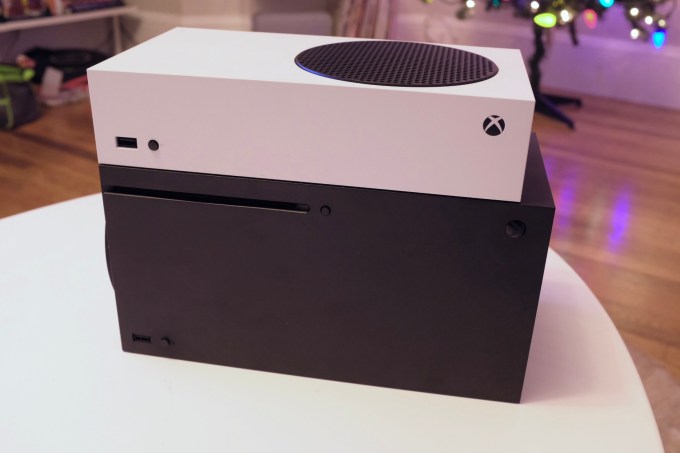

This thing has a lot of specs behind it. It’s got lots of cores and lots of teraflops. There aren’t any futuristic/gimmicky features that Microsoft is pushing, there’s no bundled Kinect, there’s no VR headset. The Series X is just a giant black box that plays games better than any Xbox before it.

Quickly, here are the high level differences between the Series X and Series S, I’ll say that this review mostly focuses on the Series X.

Series X
Plays titles in 4K at up to 120fps, with eventual 8K support at up to 60fps* 
1TB storage
4K UHD Blu-ray drive
Very big

*developers decide how hard you can push their titles

Series S
Plays titles at up to 1440p at up to 120fps
512GB storage
No optical drive
Not nearly as big

This previous generation of hardware really shook up the idea of what a console generation actually was. In the past, mid-generation updates to hardware were largely cosmetic — slimmed down packages with the same power — but with the Xbox One S and One X, Xbox delivered mid-generation console upgrades that improved performance, breaking the rules in an aim to steal users away from PlayStation with the promise that they could make the most of their brand new 4K televisions.

A result of that is that this doesn’t immediately feel like a mind-bending upgrade over Microsoft’s previous release, the One X, it’s twice as fast teraflops-wise, but there isn’t a title that really showcases those internals. It feels ahead of its time, and I think consumers that buy the device on day one will have to wait quite a while before they can harness its full capabilities.

While I’m not convinced that users are going to be staring mouth agape at a launch title that blows their mind graphics-wise, I think that all of this power will eventually go a long way to eliminating some huge annoyances that have been accepted as commonplace in the world of console gaming.
The load-time reductions that are largely thanks to the new SSD storage are very substantial and are probably the biggest thing you’ll notice off the bat. Another advantage of barely meeting its potential out-of-the-box is that I barely heard a peep from the Series X when I got into the thick of a game, the console’s fans were whisper quiet. Another big quality-of-life improvement is Quick Resume, which allows users to quickly hop back into a game they were playing a while ago without reloading the entire game and wandering through start menus. This feature is killer, and is one that PlayStation 5 users are missing an equivalent for, at least for the time being.

With all of this in mind, I’d say that the reality is — and this is on paper — there also isn’t a ton separating the Series X and Sony’s PS5 consoles in terms of playability. Both are getting much better internals, SSDs that will drastically reduce loading times, better UIs and newer controllers.

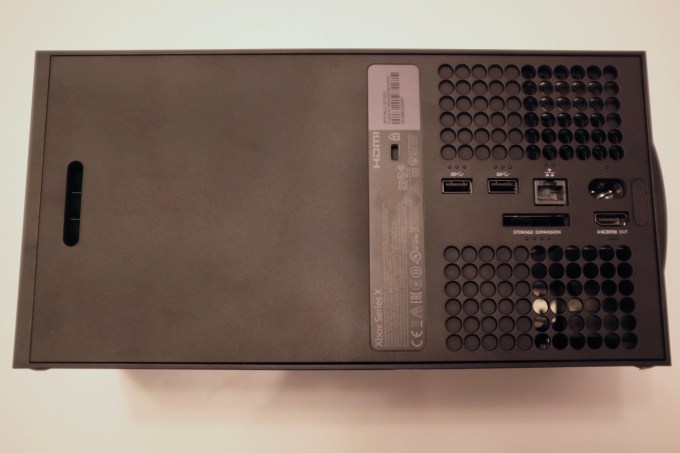
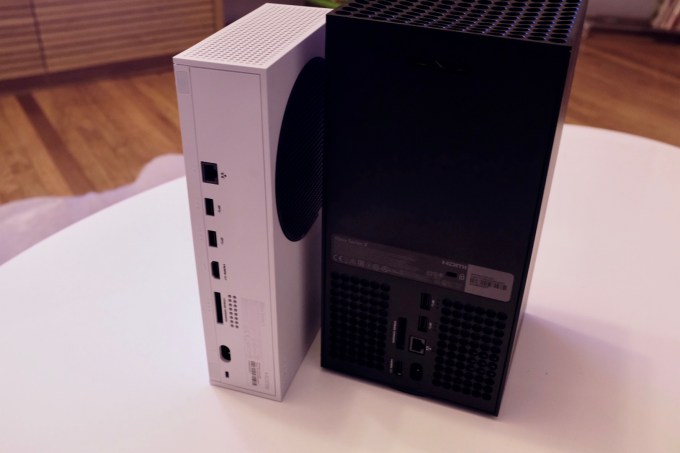
They definitely look different. The Series X itself is quite large (though not quite as hulking as the PS5) and will require plenty of prospective owners to bust out the measuring tape and check if it can even fit horizontally in their media cabinet. It feels more like a well-designed gaming PC than a console. The chassis is very solid and dense, it’s one of the least fragile designs I’ve seen on a console. On the note of hardware, I will also say that while the Series X/S controllers are very similar to the previous-generation, I think that the subtle improvements, especially in regards to the feel and texturing of it, are going to be popular with users.

Most of the people reading this, I’m sure, already have a pretty solid idea whether or not they’re going to buy the Series X and many of those people will buy it simply because it is new and they know that regardless of whether they currently need the power or are able to harness it with their other gear, they are getting access to new titles and future-proofing themselves. That’s certainly not a bad reason.
Others might be on the fence about getting a Series X/S or a PlayStation 5. Much like American politics, I’m not so convinced there are quite as many undecideds here as is believed. People have a good idea of what franchises are PlayStation exclusives and what titles are only going to ship on Xbox. There have been decades to drill down the flavors that both Sony and Microsoft are pushing though Microsoft has been getting more aggressive about studio acquisitions over the past couple years so that list of exclusives is likely going to start getting longer more quickly as they seek to build up a huge library of titles for their Game Pass subscription service.

But, yeah, most of the people on the fence end up going for the system that is going to have the games on it that they really, really want to play. But it’s a little harder to tell that right now because chances are there isn’t a launch title for the PS5 or Series X that you’re dying to play, or at least one that couldn’t also be played on a previous-gen console, albeit in less optimized fashion. The promised Series X holiday showstopper Halo Infinite was delayed until 2021, and the reality is a game that really shows off this hardware probably won’t be coming around until late next year.

Really most people won’t be able to take full advantage of the Series X until next year anyway. There’s an overwhelming chance that your TV or AV receiver are not positioned to maximize what the Series X can offer, namely 8K gaming or high frame rate (120fps) 4K gaming. Hitting the high end requires a technology called HDMI 2.1 which only a select few newer TVs have adopted. It’s likely to be more standard across the board come next year, but for the time being there aren’t many of these TVs or AV receivers that are actually in people’s homes. With HDMI 2.0, which your 4K TV does support, you can play Series X titles at 4K resolution at up to 60fps, closer to what the previous-generation Xbox One X was capable of.

Being super early to a technology as a consumer often leads to tradeoffs, and that’s definitely the case with the Series X/S. While operating at the cutting edge of video standards will benefit the console’s longevity, it does mean that consumers might be in a less optimal spot for a bit if they don’t have the latest AV hardware. What will be more frustrating to day-one buyers is the generally light library of new content. There are some multi-platform hits that will be landing, but it doesn’t seem like there will be a must-play title that makes the most of its power. For consumers that are buying a system so focused on performance, that’s disappointing, but over time, I have few doubts that the Series X/S library will grow robust, the questions for consumers is whether all of the quality-of-life improvements are enough for them to take the plunge in 2020.


WordPress Image Lightbox Plugin