Yearly Archives: 2020

News: Apple Music adds 10 new playlists aimed at Gen Z, including one with TikTok hits

Apple Music is targeting Gen Z users in its battle with Spotify . On Friday, Apple launched ten new Apple Music playlists focused on the music interests of Gen Z users — including one playlist that features the latest tracks to go viral across social media apps like TikTok. Other playlists feature emerging artists and

Apple Music is targeting Gen Z users in its battle with Spotify . On Friday, Apple launched ten new Apple Music playlists focused on the music interests of Gen Z users — including one playlist that features the latest tracks to go viral across social media apps like TikTok. Other playlists feature emerging artists and sounds, experimental or cross-genre selections, or music by mood — like playlists for getting energized to go out or one to destress, for example.

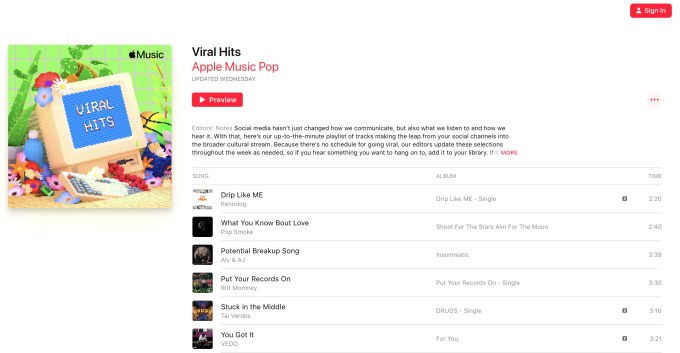
One of the more interesting additions from this new group — at least from a technology perspective — is the new editorial playlist, “Viral Hits.” While Apple doesn’t specifically mention TikTok by name here, the short-form video app’s influence is apparent.

TikTok’s music-laden memes and trends today heavily influence what younger users are listening to. The app has also long-since proven its ability to break new artists and send tracks, both new and old, up to the top of the streaming charts across Spotify and Apple Music, as well as the Billboard charts, at times.

With the “Viral Hits” playlist, Apple will round-up the songs that are making the leap from social media channels to “the broader cultural stream,” the company explains.

“Social media hasn’t just changed how we communicate, but also what we listen to and how we hear it,” says Apple.

Image Credits: Apple Music, screenshot by TechCrunch

Because of the nature of viral trends, there’s no set schedule as to when the “Viral Hits” playlist will update. Instead, Apple Music editors will updated the selections throughout the week, as needed.

Currently, there are 98 songs representing nearly 5 hours of music on the playlist, including many tracks that are also now on Apple Music’s top charts. But the tracks on “Viral Hits” aren’t ranked by number of plays they’re receiving — it’s an editorial selection, not a chart.

Apple isn’t alone in formally acknowledging the power TikTok has over popular music. Spotify last week launched a new feature for artists that would allow them to promote tracks that were going viral on TikTok.

Image Credits: Apple

In addition to “Viral Hits,” the other new Apple Music playlists aimed at a Gen Z demographic include the following additions:

  • Superbloom: Apple describes this playlist as a “new home for young, risk-taking visionaries who think about music differently.” The selections will feature artists who often have developed grass-roots followings across social media, where they’ve experimented and sparked trends.
  • Lifted: This cross-genre playlist is a melting pot of music Apple describes as “a little underground, but too dynamic for the mainstream to ignore.” Tracks will range from the poppy end of the spectrum to hip-hop, R&B, and indie rock, Apple says.
  • Wildflower: This playlist will feature emerging voices across a mix of hip-hop, R&B, dance, indie pop and rock.
  • Glow: An upbeat playlist of “feed-good, mood-boosting” tracks.
  • The Nerve: This playlist features “downcast hybrids” of hip-hop, pop punk, emo, and grunge that are “a little too raw for broader audiences.” Apple says the music can be “bleak.”
  • The Sound: A playlist featuring the best in new rock.
  • Verified Hits: Another cross-genre playlist, this one featuring hit songs from genres including pop, indie, arty R&B, and electronic.
  • Catching Feelings: Music for chilling that’s a little slow moody, mellow and low-key.
  • Do Not Disturb: Music on this playlist aims to help listeners not feel alone when dealing with mental health issues, like the ups, downs, crashes and the coping, says Apple.

Apple says the new playlists were created specifically with the needs of Gen Z users in mind, describing this young group as “tech savvy, social media mavens” as well as “rabid music lovers.”

In addition to the Gen Z playlists, Apple Music released 24 brand-new playlists aimed at helping users center and find a few moments of calm. These playlists follow what has been a tense week in the U.S., particularly, due to the 2020 Presidential Elections and their delayed results.

News: Riverside.fm launches its video podcasting platform

Riverside.fm is a new startup with an easy-to-use platform for recording professional-quality video podcasts. In fact, although the company only recently came out of stealth, it already has a number of high-profile customers including TechCrunch’s parent company Verizon Media and Hillary Clinton, who’s using Riverside.fm to record her new podcast “You and Me Both With

Riverside.fm is a new startup with an easy-to-use platform for recording professional-quality video podcasts.

In fact, although the company only recently came out of stealth, it already has a number of high-profile customers including TechCrunch’s parent company Verizon Media and Hillary Clinton, who’s using Riverside.fm to record her new podcast “You and Me Both With Hillary Clinton.”

“Just imagine, we needed a recording platform that could help us make a podcast during a pandemic, and, boy, did they step up,” Clinton said in a statement.

The startup was founded by brothers Nadav and Gideon Keyson — Nadav, who serves as CEO (Gideon is CTO), explained that they first created a platform where politicians could participate video debates, but then realized that there was a more promising business model for a broader podcasting tool.

In addition to officially launching, Riverside.fm is announcing that it has raised $2.5 million in seed funding led by Oren Zeev .

Gideon gave me a quick demo of the platform, showing me that it’s a fairly straightforward recording experience — the host just shares a link with the guests, no software installation necessary. There are plenty of other browser-based podcasting tools (for example, Zencastr recently expanded beyond audio with video support), but the Keysons suggested that they’ve spent a lot of time solving common technical issues for podcasters.

For one thing, each participants’ audio and video is recorded as a separate track on their device, so that a bad internet connection won’t affect recording quality. The recording is uploaded during the session, so you don’t have to have a long wait for files to upload. And there are automatic backups, in case someone’s browser or computer freezes.

“Stability … is so important,” Nadav said. “[Otherwise,] you could spend half year to get a certain guest and then you lose their recording.”

Despite its simplicity, Riverside.fm supports 4K video and uncompressed WAV audio. It also includes an interface where podcast producers can monitor each guest’s equipment and adjust audio levels.

“We do really make it easy for the beginner and faster for the professionals,” Nadav said.

Gideon added that Riverside.fm isn’t interested in getting involved in the podcast distribution, but instead focuses on being a reliable production platform, as well as providing cross-platform analytics.

“We don’t want to start competing with Spotify and YouTube,” he said — in fact, Spotify is already a Riverside.fm customer.

The brothers also suggested that even if you’re not interested in creating a full-fledged video podcast, Riverside.fm is still the right choice for recording audio. Plus, you could still use the video recordings to create promotional clips for YouTube and social media.

News: Transportation on the ballot, Softbank parks its money in REEF and Tesla Tequila arrives

The Station is a weekly newsletter dedicated to all things transportation. Sign up here — just click The Station — to receive it every Saturday in your inbox. Welcome back to The Station, a newsletter dedicated to all the present and future ways people and packages move from Point A to Point B. What.A.Week. Shall we

The Station is a weekly newsletter dedicated to all things transportation. Sign up here — just click The Station — to receive it every Saturday in your inbox.

Welcome back to The Station, a newsletter dedicated to all the present and future ways people and packages move from Point A to Point B.

What.A.Week. Shall we dig in?

Email me anytime at kirsten.korosec@techcrunch.com to share thoughts, criticisms, offer up opinions or tips. You can also send a direct message to me at Twitter — @kirstenkorosec.

Transportation on the ballot

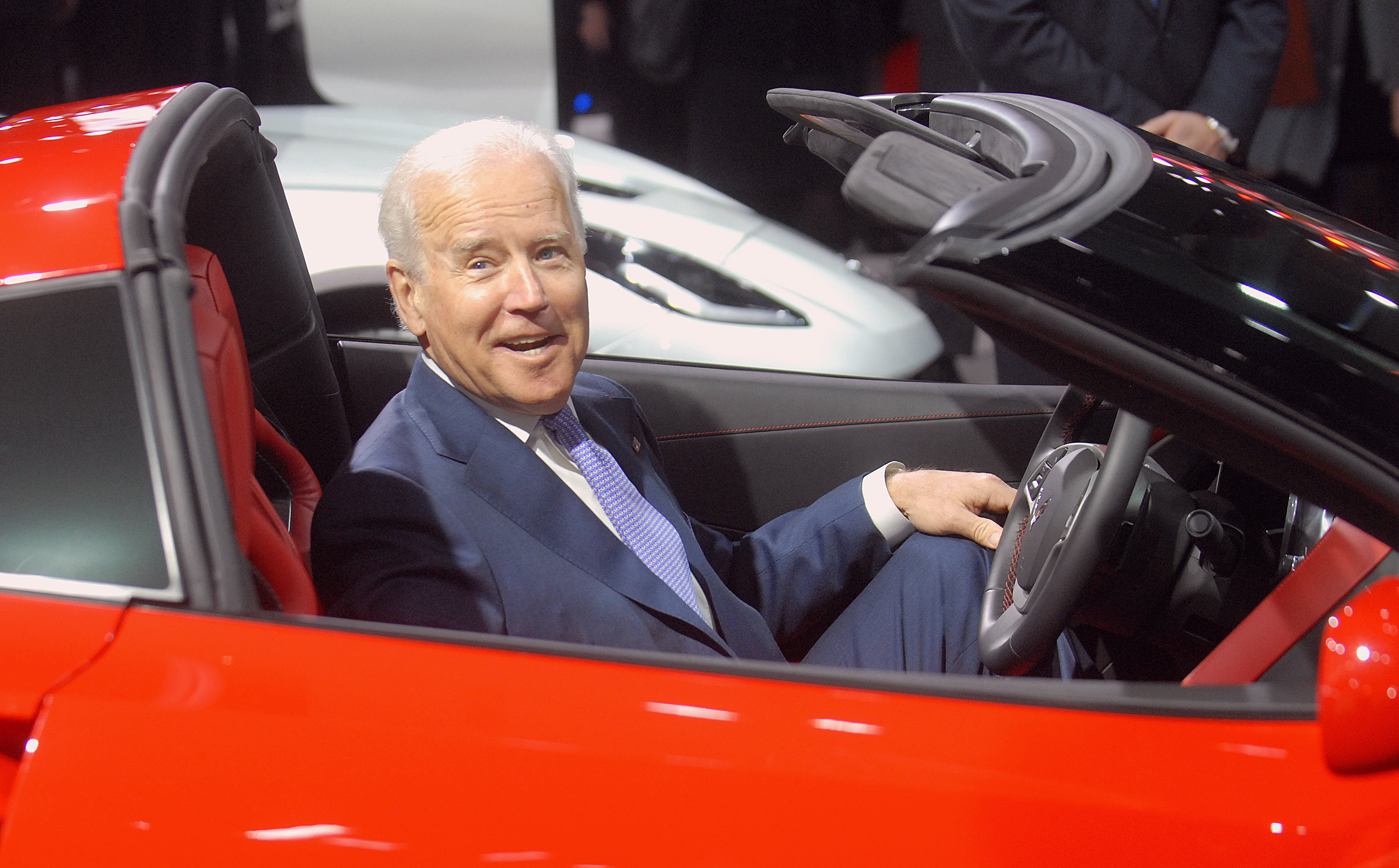
Joe Biden NAIAS Auto Show 2014

Image Credits: Getty Images

Election Day turned into Election Week as the presidential race tightened and the world waited to see if President Trump would remain in office or if Joe Biden would become the 46th leader of the country.

On Saturday morning, AP, Fox News and every other major news outlets called the race, naming Joe Biden president-elect. The ballot counts will still continue and eventually lead to each state’s Electoral College electors formally casting their votes for president and vice president on December 14, as dictated by our election process.

Assuming Biden is sworn in as the next president of the United States, transportation will likely not be his first area of focus. However, it will be interesting to see how his personal experience of losing his first wife and daughter in a car crash, views on climate change and love for Corvettes as well as Amtrak might shape federal transportation policy. The country has deep infrastructure needs, a rail service in crisis and an emerging tech sector focused on commercializing automated vehicle technology.

Election Day was, of course, about more than Trump and Biden. Ballots throughout the U.S. contained dozens of transportation-related measures, including public transit funding, a car owner’s right to repair and whether gig economy workers should be classified as employees or independent contractors. 

Prop 22, the California ballot measure, might have been the most visible campaign thanks to the tens of millions of dollars that Uber, Lyft and other gig worker-reliant companies contributed to help garner support and get it passed. Voters approved Prop 22, which means that gig workers will continue to be classified as independent workers. Companies that use gig workers will be required to provide an earnings guarantee of at least 120% of minimum wage, 30 cents per engaged miles for expenses, a healthcare stipend, occupational accident insurance for on-the-job injuries, protection against discrimination and sexual harassment and automobile accident and liability insurance.

Fresh off of its success on Election Day, Uber signaled that it will continue to push laws similar to the Prop 22. The ride-hailing company’s ambitions for laws that preserve its business model are global. Uber CEO Dara Khosrowshahi said Thursday during an earnings call with analysts that the company will “more loudly advocate for laws like Prop 22.” He later added that it will be a priority of the company “to work with governments across the U.S. and the world to make this a reality.”

There were at other transportation-related measures that were decided by voters in California, Georgia, Massachusetts, Michigan Oregon and Washington. Of the 19 measures related to public transit, 15 passed, two failed and one in Gwinnett County, Georgia is still “too close to call.” The Center for Transportation Excellence created a handy spreadsheet tracking Election 2020 ballot measures related to public transit.

telematics, concept of smart car technology

Image Credits: Jackie Niam / Getty Images

Finally, another ballot measure, which received a lot of attention and lobbying dollars, was Question 1 in Massachusetts. The ballot measure, which was approved by 75% of voters, amends and broadens a law that gives consumers in Massachusetts the right to repair the vehicles they own.

Automakers that sell vehicles with telematics systems in Massachusetts will now have to equip them with a standardized open data platform beginning with model year 2022. This standardized open data platform has to give vehicle owners and independent repair facilities direct access and the ability to retrieve mechanical data and run diagnostics through a mobile-based application.

Importantly, this measure covers the data that telematics systems collect and wirelessly transmit. And it not only gives access to the mechanical data, it allows owners and independent mechanics to send commands to the vehicle for repair, maintenance and diagnostic testing.

The upshot? While this ballot measure is restricted to Massachusetts, there is precedent that it will expand to the rest of the country. The initial Right to Repair law went into effect in Massachusetts in 2013. By 2014, the industry agreed in a memorandum of understanding to expand that bill and cover the rest of the country.

Deal of the week

money the station

Transportation isn’t just about the movement between places; it’s also about the less active moments like parking. Which brings us to one eye-popping deal this week.

REEF Technology, the Miami-based company that started its life as ParkJockey, raked in $700 million from a group of investors that included Softbank and Mubadala Corp.

REEF provides hardware, software and management services for parking lots. But it more recently added other services such as providing infrastructure for cloud kitchens, healthcare clinics, logistics and last-mile delivery and even brick-and-mortar retail and experiential consumer spaces.

The company said that the money will be used to scale from 4,800 locations to 10,000 new locations around the country and to transform the parking lots into “neighborhood hubs,” according to Ari Ojalvo, the company’s co-founder and chief executive. Private equity and financial investment giants Oaktree, UBS Asset Management and the European venture capital firm Target Global also participated in the round.

As TechCrunch’s Jonathan Shieber noted in his coverage of the REEF round, like WeWork, REEF leases most of the real estate it operates and upgrades it before leasing it to other occupants (or using the spaces itself). Unlike WeWork, the business actually has a fair shot at working out — especially given business trends that have accelerated in response to the health and safety measures implemented to stop the spread of the COVID-19 pandemic.

Other deals that got my attention …

ANOTHER LIDAR SPAC! Aeva is the latest company to eschew the traditional IPO path and go public via a merger with a special purpose acquisition company. It’s also the third lidar company, following Velodyne and Luminar, to take this route to the public markets.

Aeva is a Mountain View, California-based lidar company started by two former Apple engineers and backed by Porsche SE. The company announced it was merging with special purpose acquisition company InterPrivate Acquisition Corp., with a post-deal market valuation of $2.1 billion. The deal with InterPrivate is expected to close by early 2021.

Logisly, a Jakarta-based startup that describes itself as a “B2B tech-enabled logistics platform,” announced today it has raised $6 million in Series A funding to help streamline logistics in Indonesia. The round was led by Monk’s Hill Ventures.

Marshmallow, a UK startup aiming to take on legacy insurance giants with a new approach to determining risk, raised $30 million in a Series A round. The company has a post-fundraising valuation of $310 million.

Pony.ai, the autonomous vehicle company that operates in California and China, is now valued at $5.3 billion following a fresh injection of $267 million in funding. The round was led by TIP, an innovation fund within the Ontario Teachers’ Pension Plan Board that focuses on late-stage venture and growth equity investments in companies that deliver disruptive technology. Existing partners Fidelity China Special Situations PLC, 5Y Capital (formerly Morningside Venture Capital), ClearVue Partners and Eight Roads also participated in the round.

Provizio, which developed a sensory platform it says can perceive, predict and prevent car accidents in real time and beyond the line-of-sight, closed a seed investment round of $6.2 million. Bobby Hambrick, the founder of Autonomous Stuff, the founders of Movidius, the European Innovation Council (EIC) and ACT Venture Capital participated in the round.

Scale AI, a startup that uses software and people to process and label image, lidar and map data for companies building machine learning algorithms such as Toyota and Zoox, is on the brink of becoming a company valued $3 billion, The Information reported. The company founded and led by 230year-old Alexandr Wang reportedly received an offer of investment from Tiger Global Management valuing Scale at $3.2 billion pre-money, or triple its prior valuation.

Notable reads and other tidbits

the-station-delivery

All the other stuff you should know about …

Amazon has started operations at its first European Amazon Air hub, based out of the Leipzig/Halle Airport in Germany. The new facility spans 20,000 square meters and will host two Amazon-branded Boeing 737-800 aircraft, bringing the company’s total operational air fleet to more than 70 aircraft.

Bentley Motors has begun its long farewell to the 12-cylinder combustion engines that have been the cornerstone of the 100-year-old company. The ultra luxury automaker under VW Group said it will only produce plug-in hybrid and all-electric cars starting in 2026 with an aim to drop all combustion engines in the next decade. Its entire lineup will be all-electric by 2030. The British manufacturer said two plug-in hybrid models will come out next year and its first all-electric vehicle will come to market in 2025.

CarGurus’ 2020 Pickup Truck Sentiment Study revealed that COVID-19 pandemic might have helped spur sales, thanks to young buyers. More than 26% of pickup truckers owners surveyed for the study said they had not planned to buy this category of vehicle. Other results, include 34% said they will  probably/definitely own an electric pickup truck in the next 10 years and 23% in the next five years.

Gen Z/millennial truck owners are over two times more likely to expect to own an electric truck in the next five years when compared to older truck owners (30% vs. 12%). The same age cohort of younger consumers are also two times more likely to consider a truck from category-newcomers like Tesla (32% vs. 14%), Rivian (11% vs. 4%) or Hummer (13% vs 6%) when compared to older truck owners, the study found.

GM is starting to hire people for more than 1,100 new jobs for its nearly 3 million-square-foot Ultium Cells LLC battery cell manufacturing facility in Lordstown, Ohio. Ultium Cells LLC is a joint venture with LG Chem that will mass-produce Ultium battery cells for electric vehicles. The plant is still under construction, but GM said it will begin actively hiring for “key positions.”

Tesla officially launched Teslaquila, a company-branded liquor that originally co-starred in CEO Elon Musk’s controversial April Fool’s Day joke about the automaker filing for bankruptcy. The Tesla Tequila costs $250 and is already sold out.

Uber reported earnings this week. As Alex Wilhelm and I wrote, the company’s two core segments were a tale of two cities: Uber’s ride-hailing (Mobility) business shrank, but made money, while Uber’s food delivery (Delivery) business grew, but continued to lose money.

News: Equity Monday: Vaccine news scrambles the stock market, shakes up startups

Hello and welcome back to Equity, TechCrunch’s venture capital-focused podcast where we unpack the numbers behind the headlines. This is Equity Monday, our weekly kickoff that tracks the latest big news, chats about the coming week, digs into some recent funding rounds and mulls over a larger theme or narrative from the private markets. You can

Hello and welcome back to Equity, TechCrunch’s venture capital-focused podcast where we unpack the numbers behind the headlines.

This is Equity Monday, our weekly kickoff that tracks the latest big news, chats about the coming week, digs into some recent funding rounds and mulls over a larger theme or narrative from the private markets. You can follow the show on Twitter here and myself here — and don’t forget to check out last Friday’s episode that we wound up titling “Fortnite is actually a SaaS company.”

It makes sense in context, I promise.

Anyway, here’s what’s on today’s show:

  • Joe Biden was elected President and the stock market is not mad about divided government.
  • Positive vaccine news sent many stocks sharply higher this morning, but not all. Some pandemic-favored tech companies instantly dropped double-digit percentage points of value.
  • Esign raised $151 million, showing strength in the Chinese startup market, and the esignature space.
  • And this neat Series B for Cellwize caught our attention this morning.
  • Finally, a warning. The stuff that is changing lately may begin to change a bit less. We’ve lived in the pandemic economy long enough now that it’s hard to recall what life was like before. But, we’d best start remembering as there’s a lot that is going to change in the next few quarters.

This has been a wild to start the week, but with good news.

I suppose a vaccine was always going to eventually make it to this step, but, that said, the United States is seeing record COVID-19 cases today. So mask up and let’s get as many of us across the line as we can.

Equity drops every Monday at 7:00 a.m. PDT and Thursday afternoon as fast as we can get it out, so subscribe to us on Apple PodcastsOvercastSpotify and all the casts.

News: Apple Magsafe Duo Charger Review: Useful, but expensive and underwhelming 

In addition to the new iPhone 12 mini and the iPhone 12 Pro Max, I was able to try out Apple’s new MagSafe Duo Charger. It’s a folding dual travel charger that will hold both an iPhone using MagSafe and an Apple Watch using its more traditional magnetic charger. Does it work? Yep, works exactly

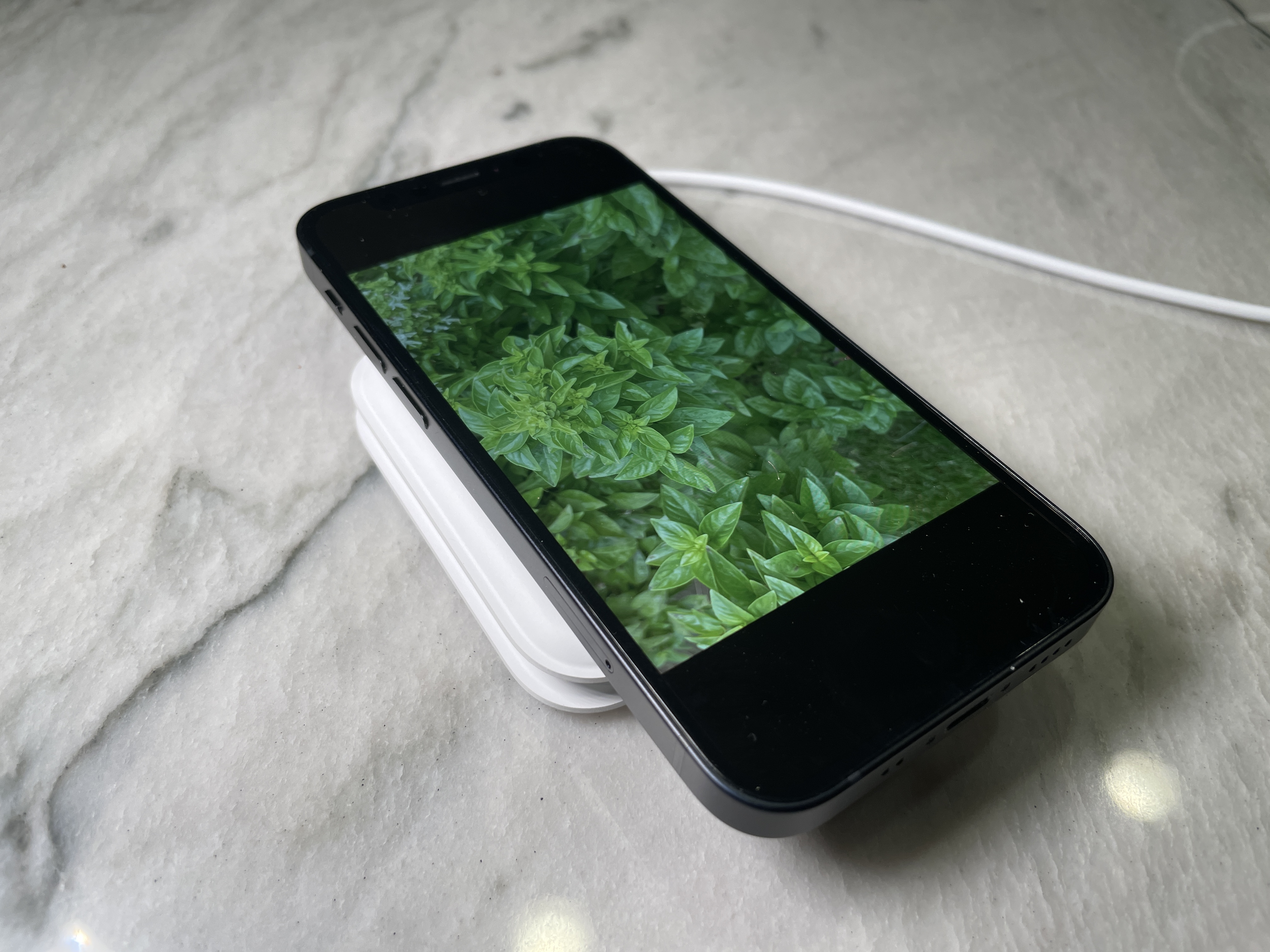
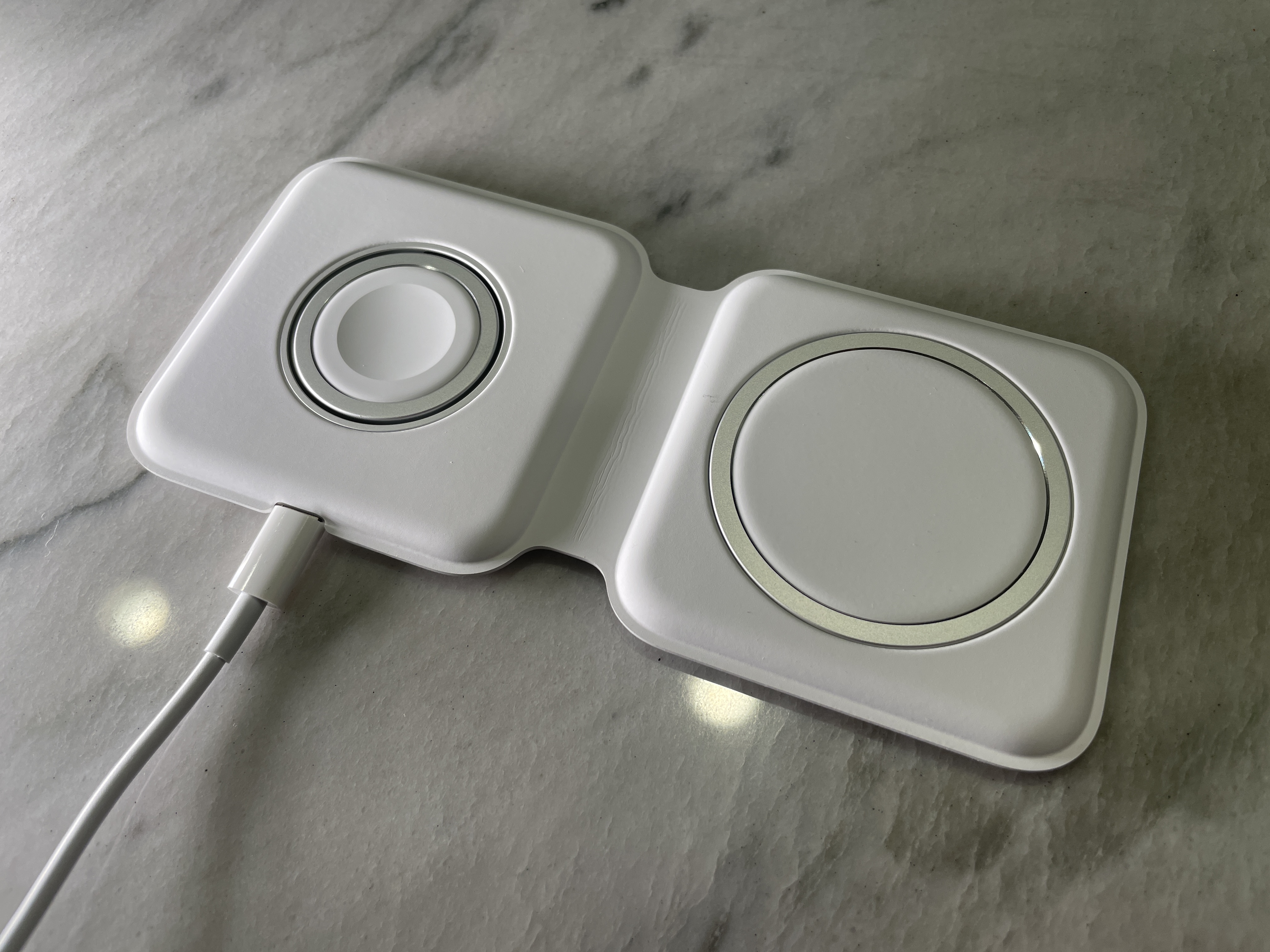
In addition to the new iPhone 12 mini and the iPhone 12 Pro Max, I was able to try out Apple’s new MagSafe Duo Charger. It’s a folding dual travel charger that will hold both an iPhone using MagSafe and an Apple Watch using its more traditional magnetic charger.

Does it work? Yep, works exactly as advertised. Your iPhone will rest comfortably on the MagSafe side of the charger, aligning using the internal magnets. The Apple Watch side pops up and out to allow easy access for closed loop bands. The whole unit folds over to make it easier to travel with and will even fold over backwards if you don’t need one side or the other. It works, for sure.

But that folding is where we start to get to the iffy stuff. For context, you have to understand that this thing is $129 but feels like it should be $70. When you realize that it is a charger that doesn’t come with a power adapter, I would not be shocked if you mentally downgraded it to $40. 

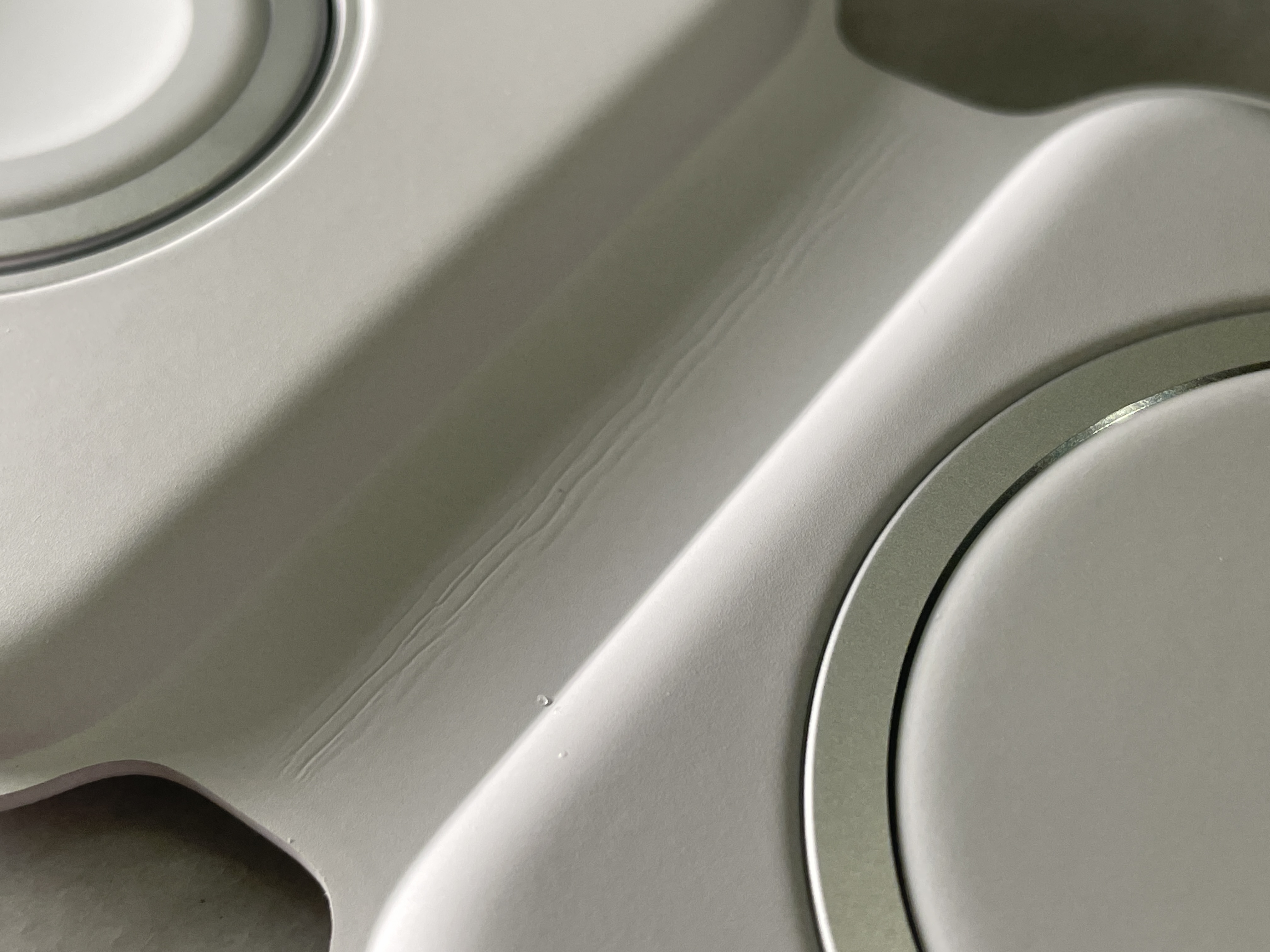
The hinge and casing are coated in soft touch rubber that is sort of press molded on. While the hinge works fine, it is wobbly and immediately creases. The rubber is thick enough that it doesn’t give the impression that it will rip immediately or anything — but it’s not exactly confidence inducing. This is an inexpensive hinge solution that you would expect to see from a price conscious third-party accessory, not from Apple. 

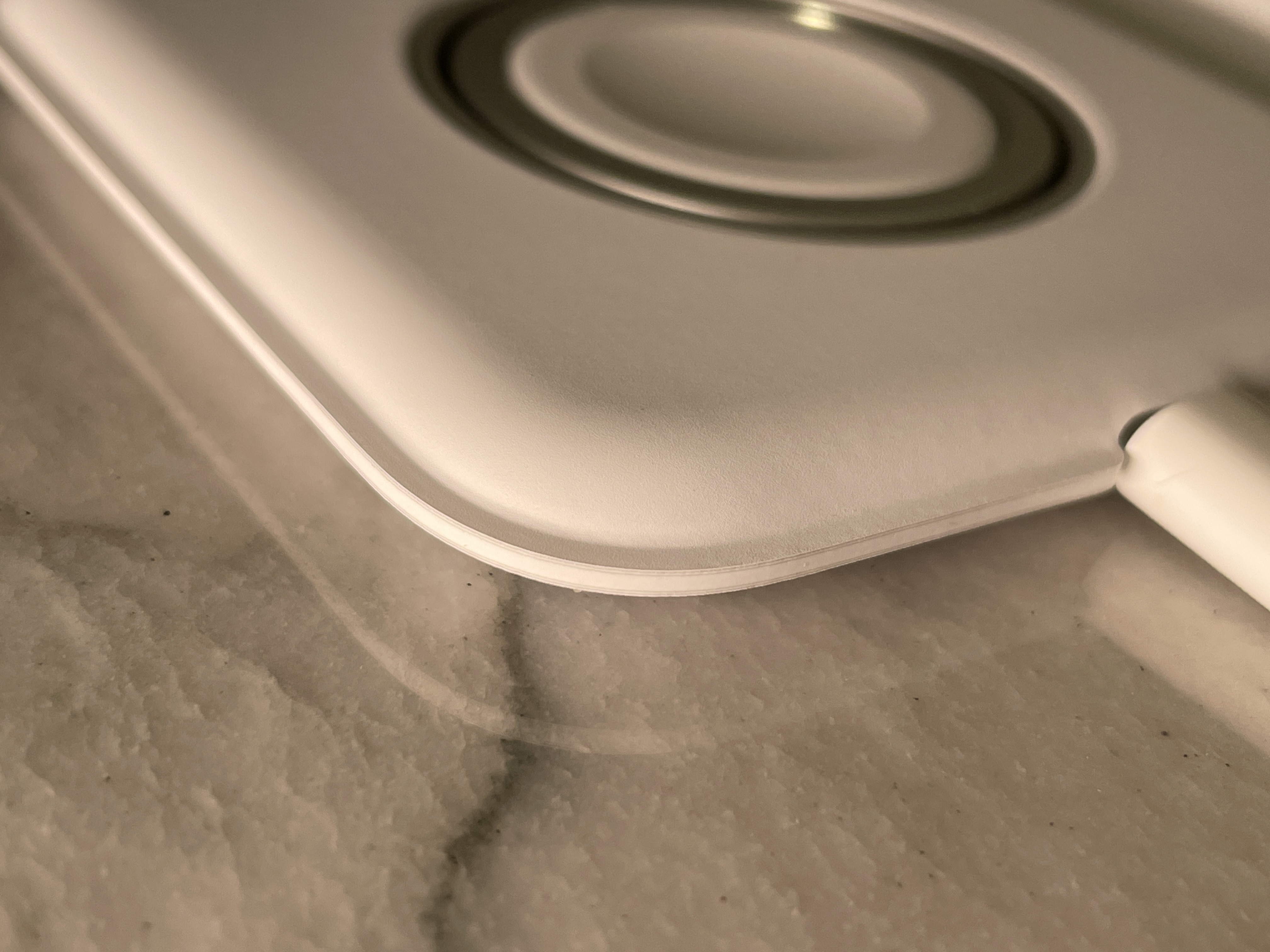
Because the whole thing is press molded, there is also this ridge that runs around the exterior of the unit. It has a basic seal on it but you can see the layers of lamination if you look closely. It looks ripe to nick, fray, bend and get dirty. Not great for something that’s meant to throw in a bag. 

White also a bad choice there, mine’s already getting dingy and I can’t even travel anywhere right now.  

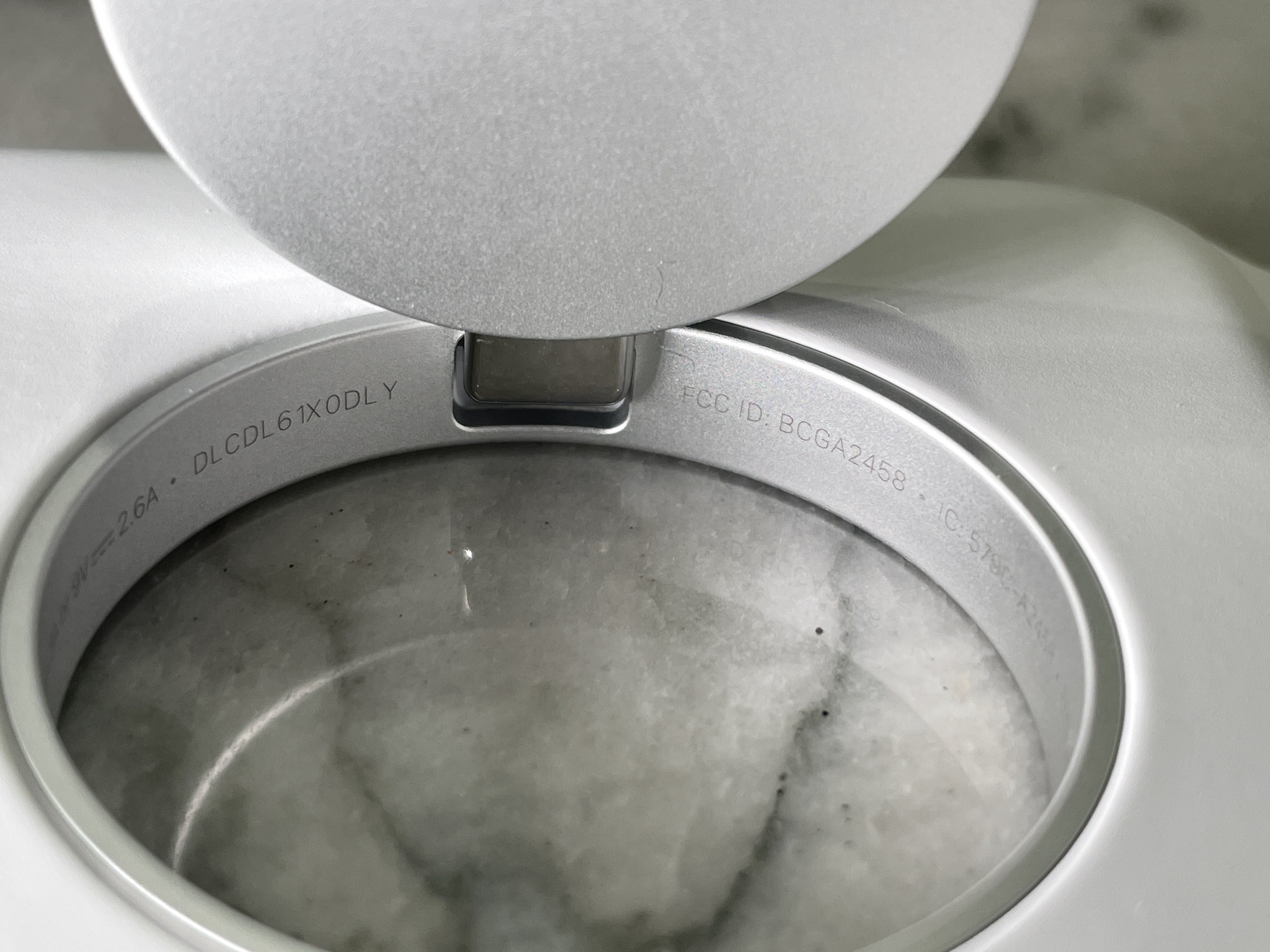
The thing charges adequately fast and the devices lock on well. The Watch charging part of it feels the most premium with its smooth little chrome hinge. The MagSafe Pad and Watch charger are Apple’s typically nicely peened aluminum, and the whole thing has a decent amount of heft to it. For what it’s worth, I was unable to test one thing which is whether it will charge an Apple Watch and an iPhone in fast charge at the same time with the 20W power adapter. I’ll try to update this review with that info.

Of course, because the iPhone side is magnetic, you do get the MagSafe benefit of being able to pick the phone up if it’s attached, but that’s more awkward when it’s a big bundle of charger vs when it’s a slim MagSafe puck on the back of your phone. Fine for a quick alarm check in your hotel maybe.

But I’m sorry to say that I find the whole thing a bit underwhelming after the hype of AirPower and its eventual demise. Apple may very well have had this thing planned the whole time that it was trying to make AirPower happen, but the arc of that story landing on this device is sad trombone indeed.

The MagSafe Duo does work, and there are a couple of engineering bright spots. But you will not feel that it’s worth the money by the time you purchase the $129 charger and the $19 20W power brick to go with it, and there are many third party accessories on the market that do this job just fine.

News: India opens antitrust case against Google over its payments app

India’s antitrust watchdog has opened an investigation into Google for allegedly abusing the dominant position of its app store to promote its payments service in the world’s second largest internet market. In its Monday announcement (PDF) about opening an antitrust case against Google, Indian watchdog Competition Commission of India said it would review the claim

India’s antitrust watchdog has opened an investigation into Google for allegedly abusing the dominant position of its app store to promote its payments service in the world’s second largest internet market.

In its Monday announcement (PDF) about opening an antitrust case against Google, Indian watchdog Competition Commission of India said it would review the claim whether Google Play Store is favoring Google Pay app over other competing payments services.

The informant alleged that Google prominently showcases Google Pay app in Google Play Store “to the disadvantage of both i.e. apps facilitating payment through UPI, as well as users,” the Indian watchdog said.

If the allegation provided by the informant, who has not been identified, is found credible, Google’s practice could be in violation of various provisions of Section 4 of India’s Competition Act of 2002.

Google Pay, formerly known as Tez, is one of the most popular payments services in India. It competes with Walmart’s PhonePe, Paytm, and a range of other apps. As of last month, Walmart’s PhonePe was slightly ahead of Google Pay in India. Both the apps individually process roughly 40% of all transactions on UPI, a payments infrastructure built by large banks in the country. UPI is the most popular digital payments solution in India.

Google Play Store supports a range of payments methods, including credit cards, mobile wallets, internet banking, and UPI. But, as the informant alleges, “UPI based digital payment apps are more convenient, secured, economical, etc. over other digital payment solutions.” Based on such distinct features, the Indian watchdog said, “the Informant has averred that the market for apps facilitating payment through UPI is a separate relevant market as users do not regard apps facilitating payment through UPI as interchangeable or substitutable with other modes of digital payment.”

The new antitrust case is the latest headache for Google in India, its biggest market by users. In recent months, the dominant position of Android — which powers roughly 99% smartphones in the country, according to research firm Counterpoint, has also irked many startups in the country, who have formed an informal coalition to fight back the Android maker.

Google did not immediately respond to a request for comment.

More to follow…

News: Qumulo update adds NvME caching for more efficient use of flash storage

Qumulo, the Seattle-based data storage startup, announced a bunch of updates today including support for NvME caching, an approach that should enable customers to access faster flash storage at a lower price point. NvME flash storage development is evolving quickly, driving down the price with higher performance, a win-win situation for large data producers, but

Qumulo, the Seattle-based data storage startup, announced a bunch of updates today including support for NvME caching, an approach that should enable customers to access faster flash storage at a lower price point.

NvME flash storage development is evolving quickly, driving down the price with higher performance, a win-win situation for large data producers, but it’s still more expensive than traditional drives. Qumulo CEO Bill Richter pointed out that the software still has to take advantage of these changing flash storage dynamics.

To that end, the company claims with its new NvME caching capability, it is giving customers the ability to access faster flash storage for the same price as spinning disks by optimizing the software to more intelligently manage data on its platform and take advantage of the higher performance storage.

The company is also announcing the ability to dynamically scale using the latest technologies such as chips, memory and storage in an automated way. Further, it’s providing automated data encryption at no additional charge and new instant updates, which it says can be implemented without any down time. Finally, it has introduced a new interface to make it easier for customers to move their data from on premises data storage to Amazon S3.

Richter says that the company’s mission has always been about creating, managing and consuming massive amounts of file-based data. As the pandemic has taken hold, more companies are moving their data and applications to the cloud.

“The major secular trends that underpin Qumulo’s mission — the massive amount of file-based content, and the use of cloud computing to solve the content challenge, have both accelerated during the pandemic and we have received really clear signs of that,” he said.

Qumulo was founded back in 2012 and has raised $351 million. Its most recent raise was a hefty $125 million last July on a valuation over $1.2 billion.

News: iPhone 12 mini Review: Tiny package, big bang

Reviewing the iPhone 12 mini and the iPhone 12 Pro Max at the same time has been an exercise in extremes. I noted in my earlier reviews of the iPhone 12 and iPhone 12 Pro that it was difficult to evaluate the middle of the lineup without having the extreme ends of the scale available

Reviewing the iPhone 12 mini and the iPhone 12 Pro Max at the same time has been an exercise in extremes. I noted in my earlier reviews of the iPhone 12 and iPhone 12 Pro that it was difficult to evaluate the middle of the lineup without having the extreme ends of the scale available to contrast them. 

Now that I have had a chance to examine those extremes, I have come away incredibly impressed with the job that Apple has done on the whole lineup this year. These phones are extremely well sized, highly crisp from a design perspective and generously appointed with features. Aside from a handful of small items, there are no glaring examples here of artificial cliffs on the feature side or price side that attempt to push people upwards in the lineup. Something that has been the case in some years. 

The most impressive of all of the iPhones 12 this year should be, by all rights, the iPhone 12 Pro Max. It’s big screen and beautiful casing make it very attractive and it has the best camera I’ve ever seen in a phone. 

But in my opinion, the iPhone 12 mini is the most attractive phone in the lineup. The dark horse that makes a strong case for itself outside of the ‘I just want a small phone’ crowd. 

The size

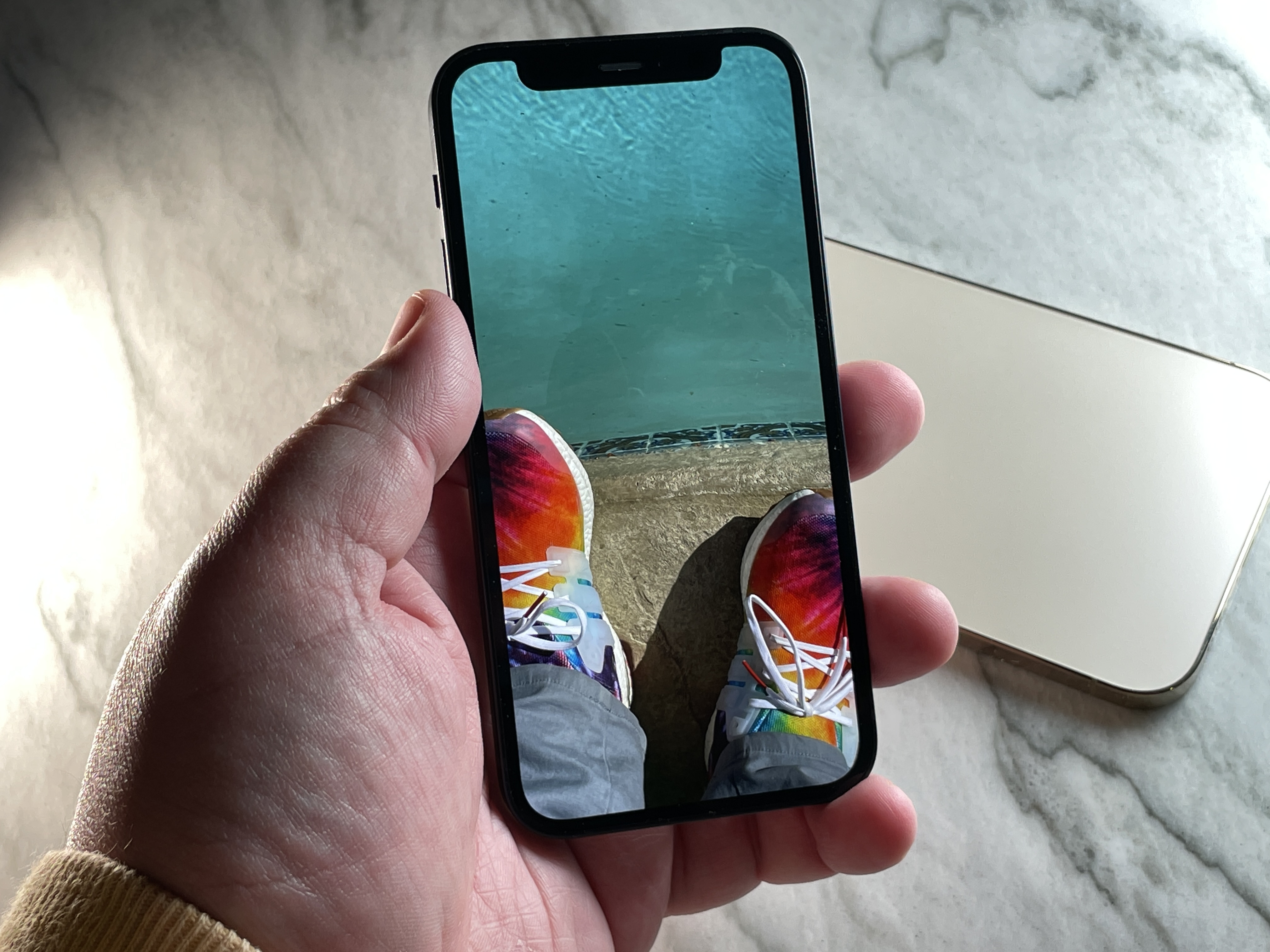
The iPhone mini is 20% smaller and 18% lighter than the iPhone 12 and about half the size of the iPhone 11. It really hits a nicely sweet note for fit, and the lack of a home button means that the screen can accommodate quite a bit more content on display at once. 

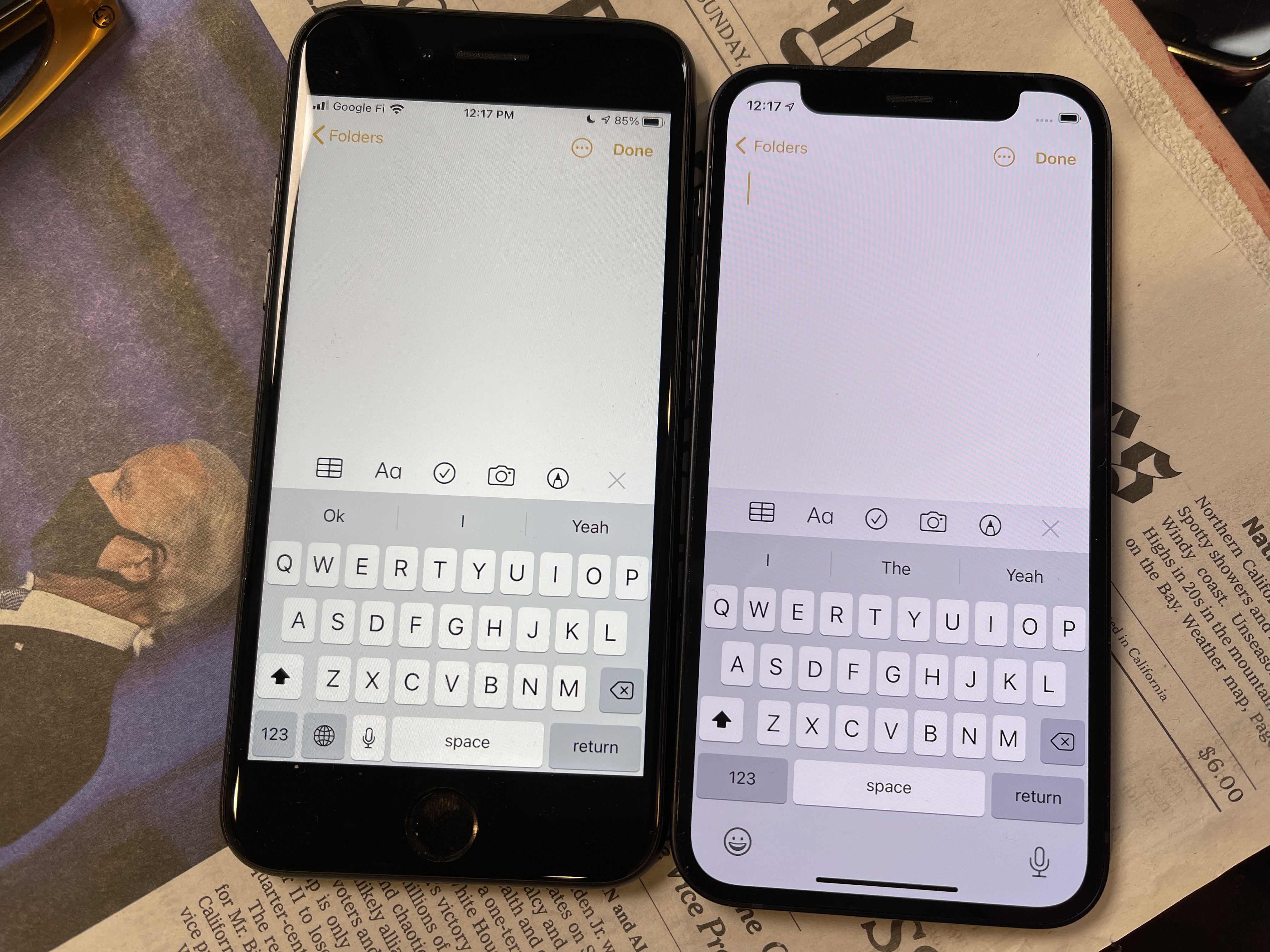
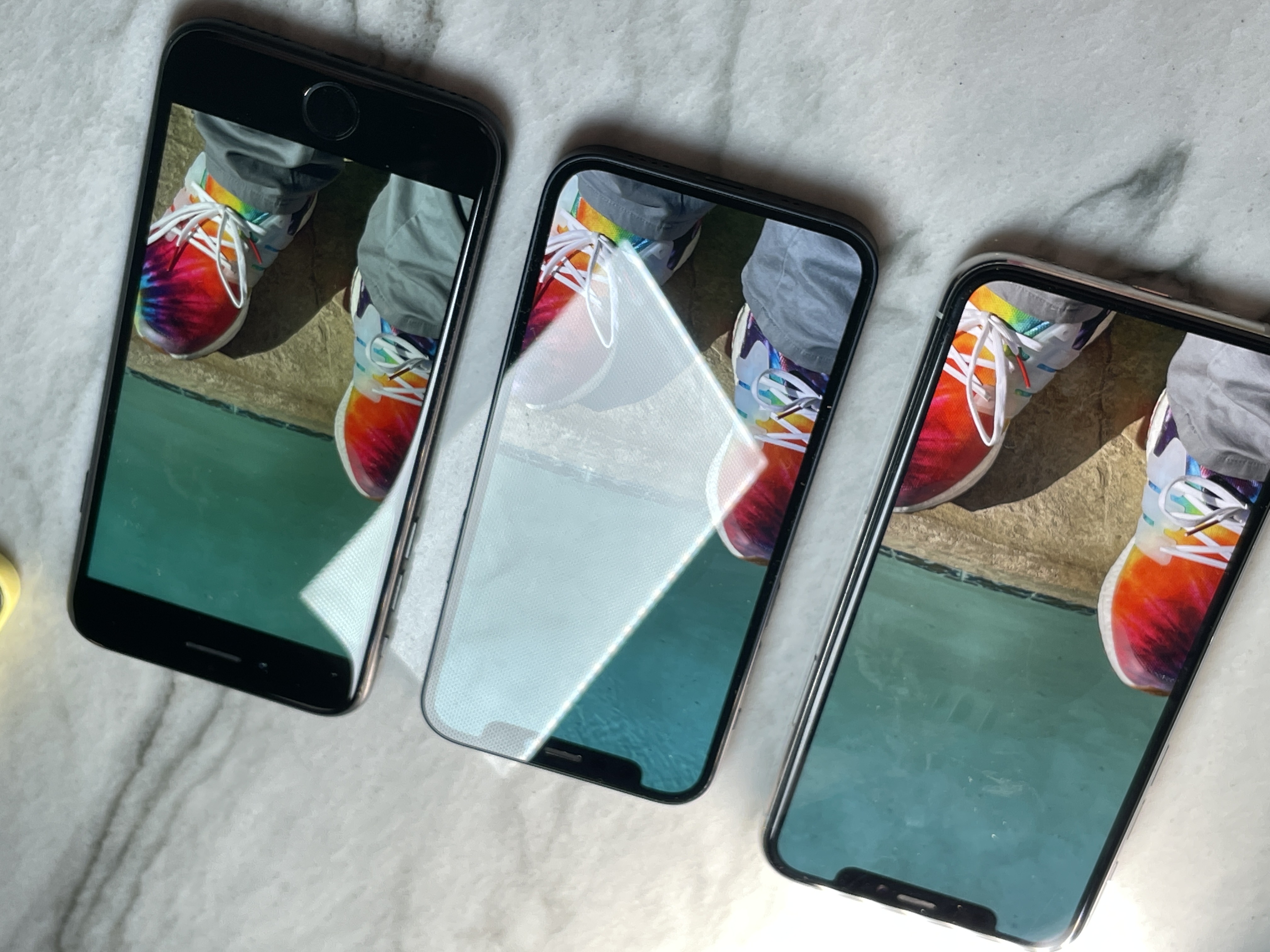
Though my larger hands do feel a bit more comfortable on the iPhone 12, I am happy to report that the typing experience on the iPhone 12 mini is far superior to the 4.0” first generation SE. It even gets a leg up on the 4.7” iPhone SE introduced earlier this year because the screen is the same width but taller — letting it pull of the Tardis trick of being smaller with a bigger screen. This allows the Emoji keyboard toggle and the voice dictation button to drop out of the bottom row of keys, relaxing spacing on the return, space and number pad buttons. This additional size, especially for the spacebar, improves the typing experience measurably. The key spacing is a bit less generous than the iPhone 12, but this is a workable situation for typing.

If you look at this and an iPhone 11, because of the way that the screen is rendered, you’re going to see pretty much the same amount of content. 

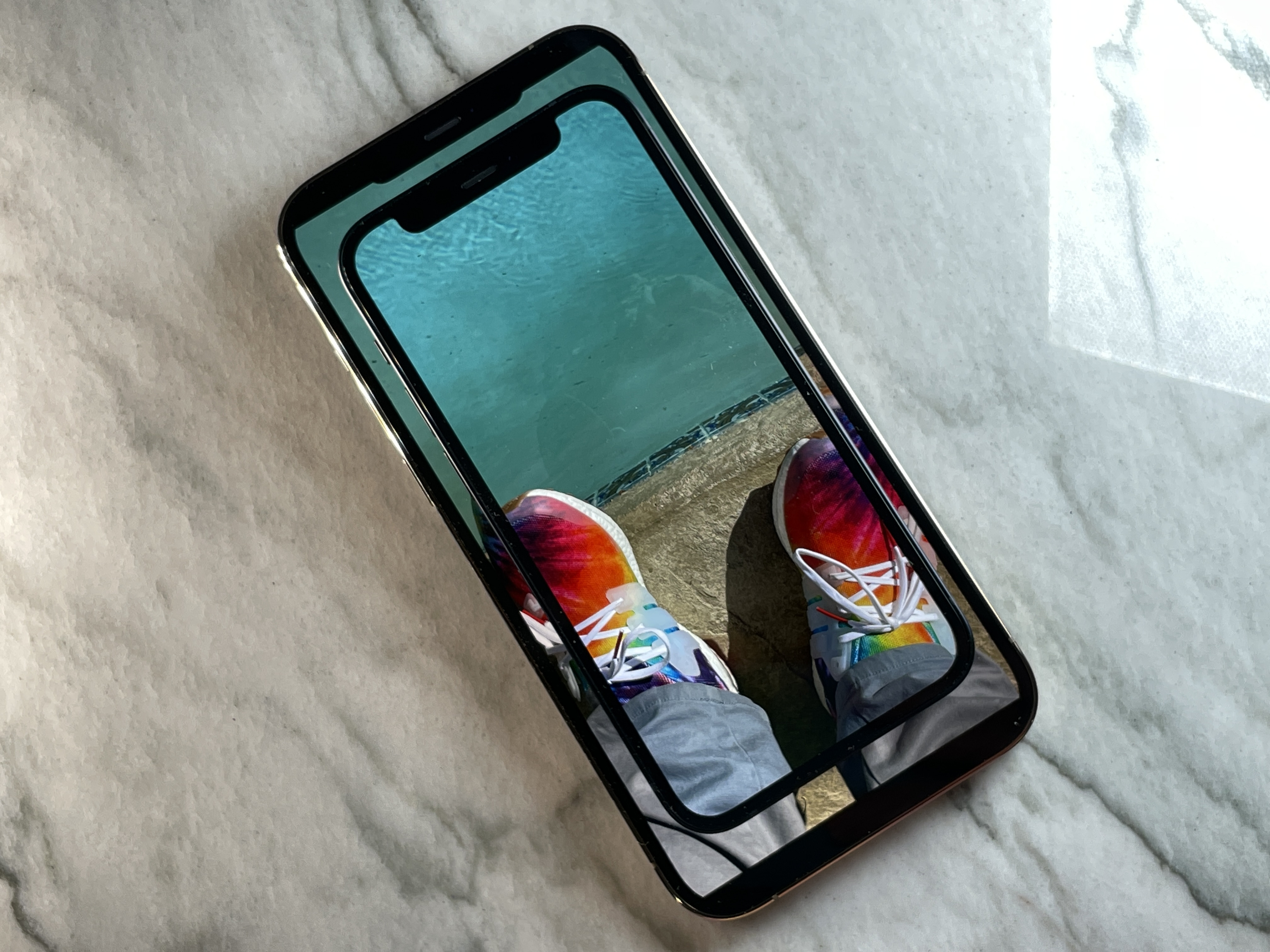
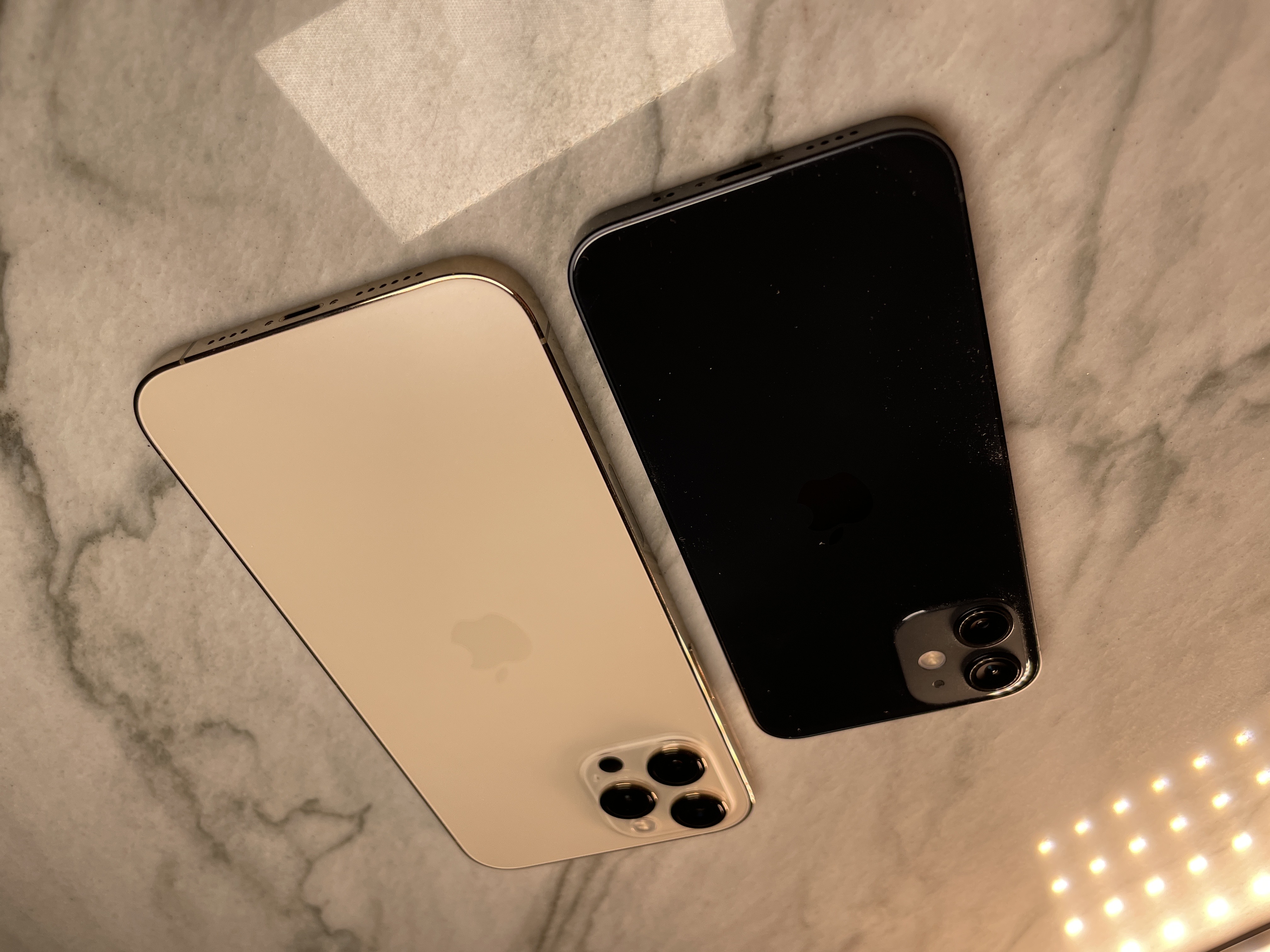
The iPhone 12 mini on top of an iPhone 12 Pro Max

On top of an iPhone 12 Pro Max

Speaking of rendering, the iPhone 12 mini is scaled, which means that it is displaying at roughly .96 of its ‘native’ screen resolution of 2340×1080. In my testing, this scaling was not apparent in any way. Given that the mini has a resolution of 476ppi in a smaller screen than the iPhone 12 which clocks in at 460ppi that’s not too surprising. iPhones have been doing integral scaling for years with their magnification features so Apple has plenty of practice at this. I didn’t notice any artifacting or scrolling, and most apps looked just fine proportionally, though some developers that do not take advantage of Apple’s native frameworks that support various screen sizes may have to do a bit of tweaking here and there. 

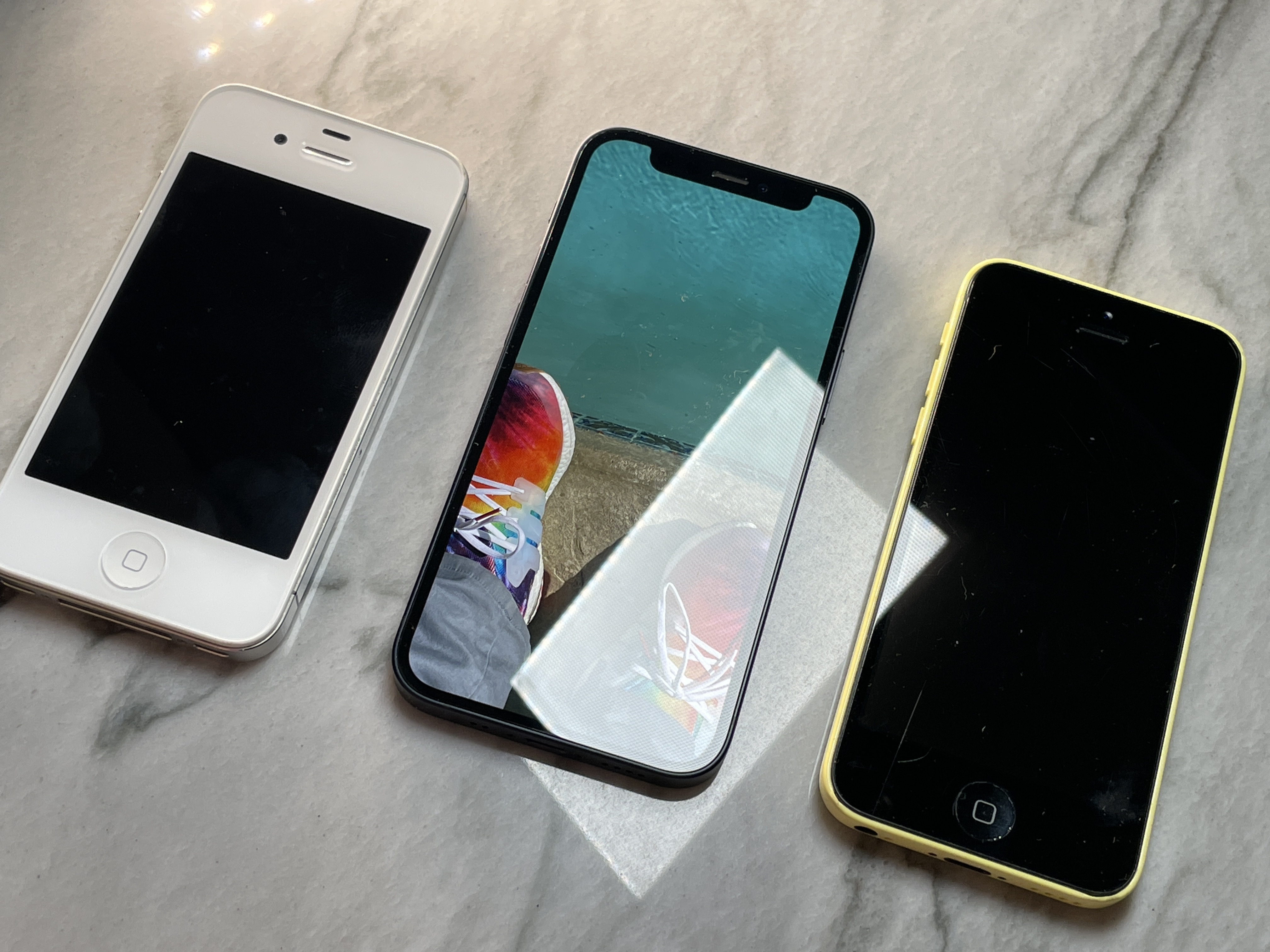
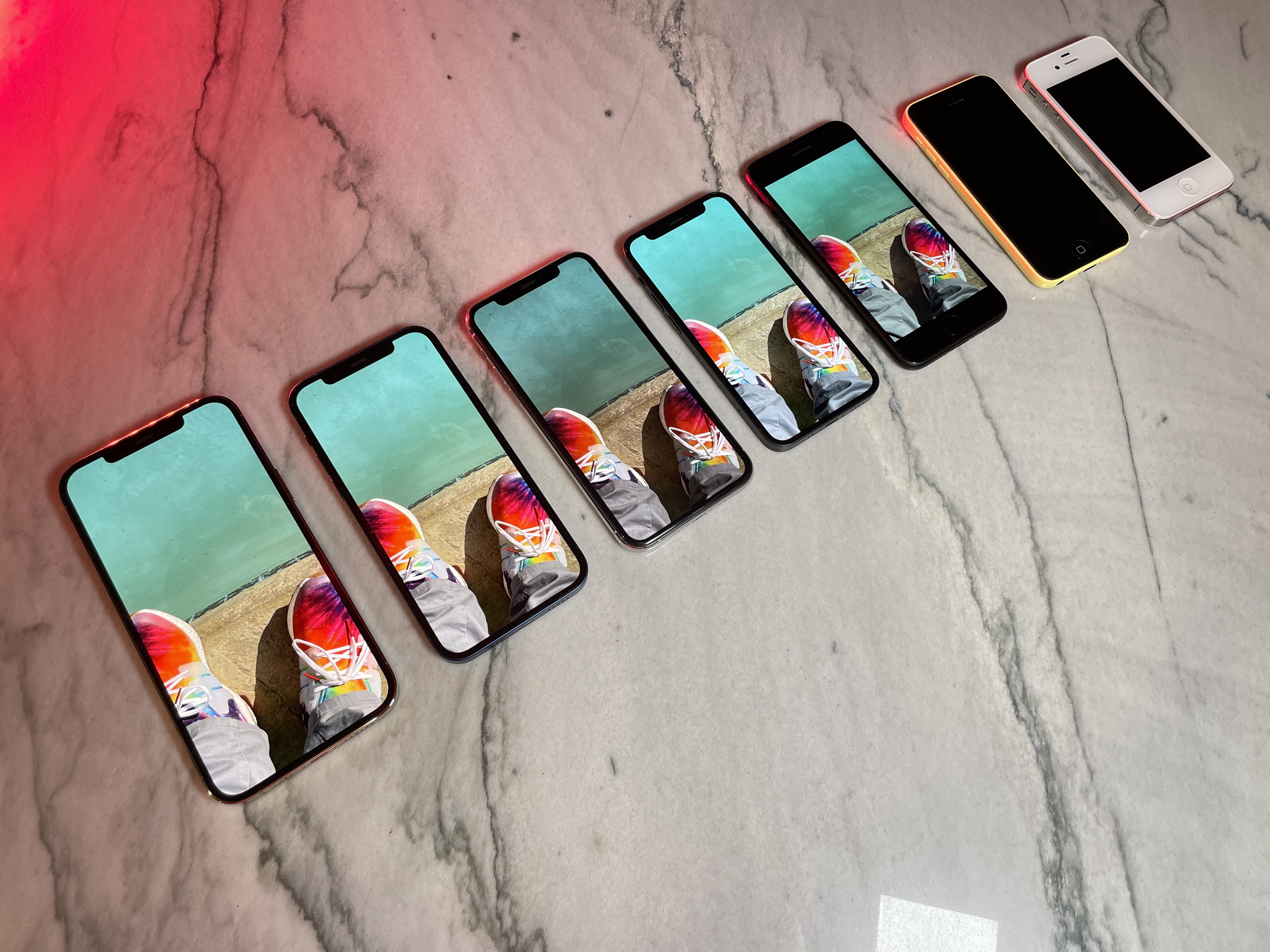
The iPhone mini has a nice lightweight compactness to it. In order to get a read on its vibe I compared it to the iPhone 4S, which felt far denser, the iPhone 5 which felt a bit more airy and the iPhone 5C which still feels fun but cheap. It shares pedigree with all of these devices but feels far more assured and integral. The iPhone 12 design language doesn’t feel like multiple materials sandwiched together in the way that these earlier devices do. It feels grown, rather than made. 

That integral quality does wonders when it’s such a small device because every millimeter counts. Apple didn’t cheap out on the casing or design and gave it an exterior to match its very performant interior. 

The speaker and microphone grills, I’m sad to say, are asymmetric on the iPhone 12 mini. Ding.

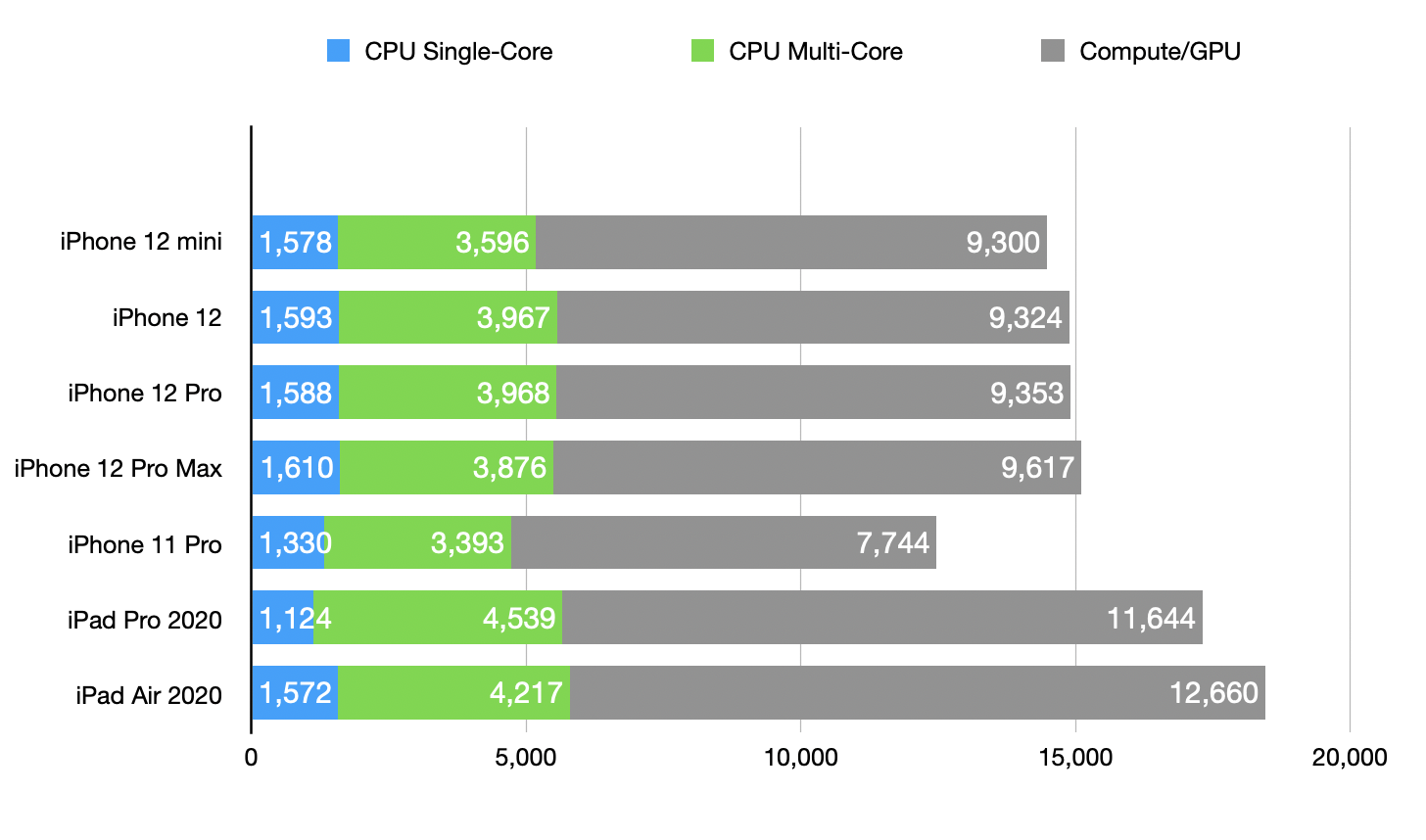
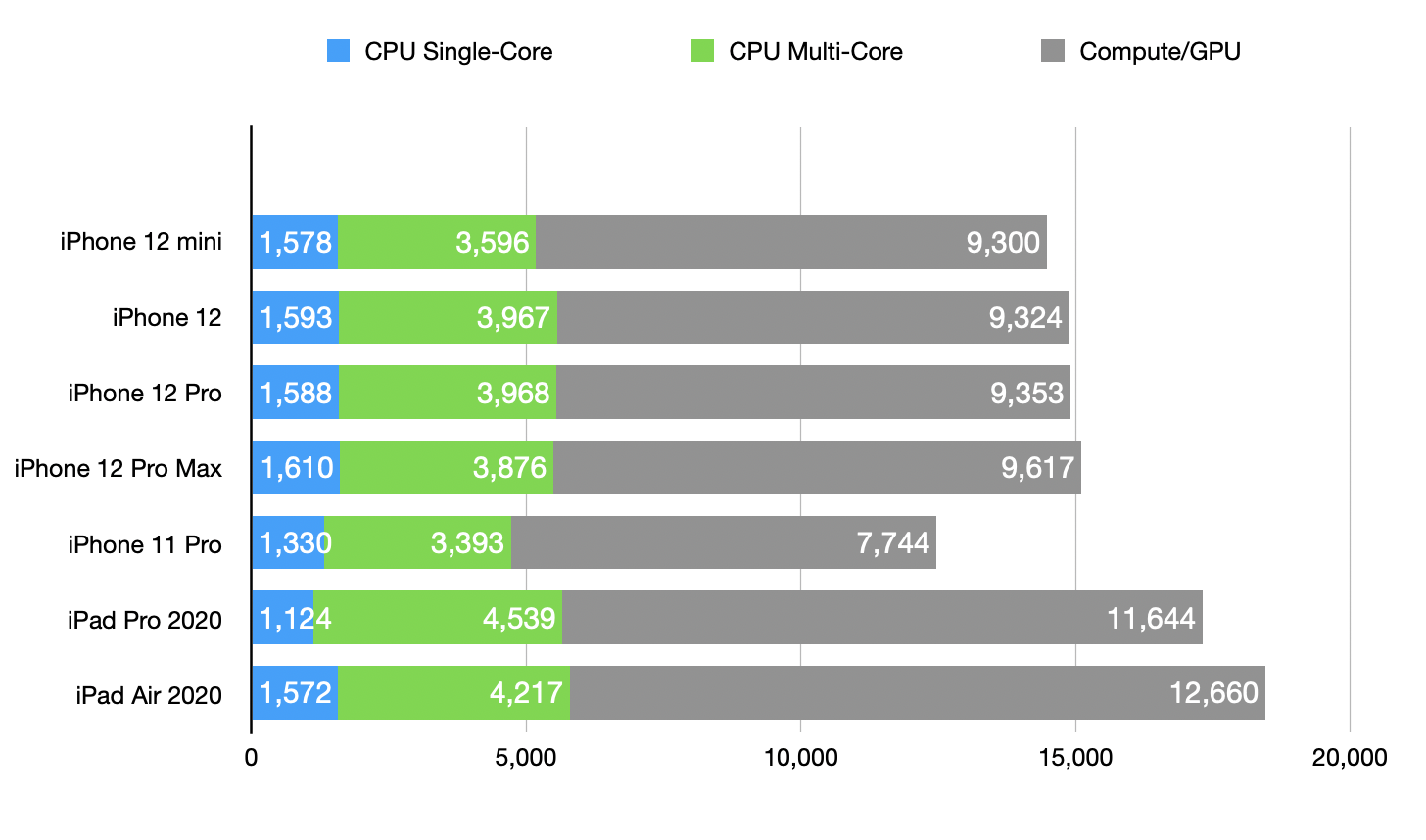
And don’t think you miss out on anything performance related when you go to the mini. While it appears that either heat management, scaling or power management in general has made Apple tweak the processor ever so slightly, the benchmarks are close enough to make it a wash. There is zero chance you ever see any real-world difference between the iPhone 12 mini and any other iPhone 12.

For what it’s worth, the iPhone 12 mini has 4GB of RAM, same as the iPhone 12. The iPhone Pro and iPhone 12 Pro Max have 6GB. The biggest real world effect of RAM that I have found on iPhone is less dumping of Safari tabs in the background so if you’re a pro browser take that into account.

The iPhone 12 mini is basically identical in the photography department to the iPhone 12. You lose nothing, it’s a great camera. Nothing much to see there though so I’m not spending any time on it. You will have a world class phone camera, just no telephoto.

If you’re a camera-oriented iPhone user, your usage of the telephoto lens is probably the most crisp deciding factor between the iPhone 12 Pro and the iPhone 12. The LiDAR benefits are there, and they absolutely make a big difference. But not having a telephoto at all could be an easy make-or-break for some people. 

Cribbing from my iPhone 12 Pro review here, one easy way to judge is to make a smart album in Photos on a Mac (or sort your photos using another tool that can read metadata) specifying images shot with a telephoto lens. If that’s a sizeable portion of your pics over the last year, then you’ve got a decision to make about whether you’re comfortable losing that option. 

When I did this, just about 19% of my iPhone 11 Pro shots were taken with the telephoto lens. Around 30% of those were portrait shots. So for me, 1 in every 5 images was shot with that tighter framing. It’s just something I find attractive. I like a little bit more precise of a crop and the nice amount of compression (for closer subjects) that comes with the longer focal length.

You don’t get 4k/60fps video but you still can shoot 4K/30fps Dolby Vision video in this super tiny device, which is wild. It’s more than I think any normal iPhone 12 mini user will ever need.

Apple says that the iPhone 12 mini’s battery life is better than the 4.7” iPhone SE and that bore out in my testing. I got through a day easily, with maybe a few percentage points difference between the iPhone 12 mini and the iPhone 12. I didn’t have enough time to run a comparison against the battery king, the iPhone 11, but I doubt it would come anywhere near unseating it just from a physics perspective. This thing is small so the battery pack is small and the processor is not being majorly throttled in any way. 


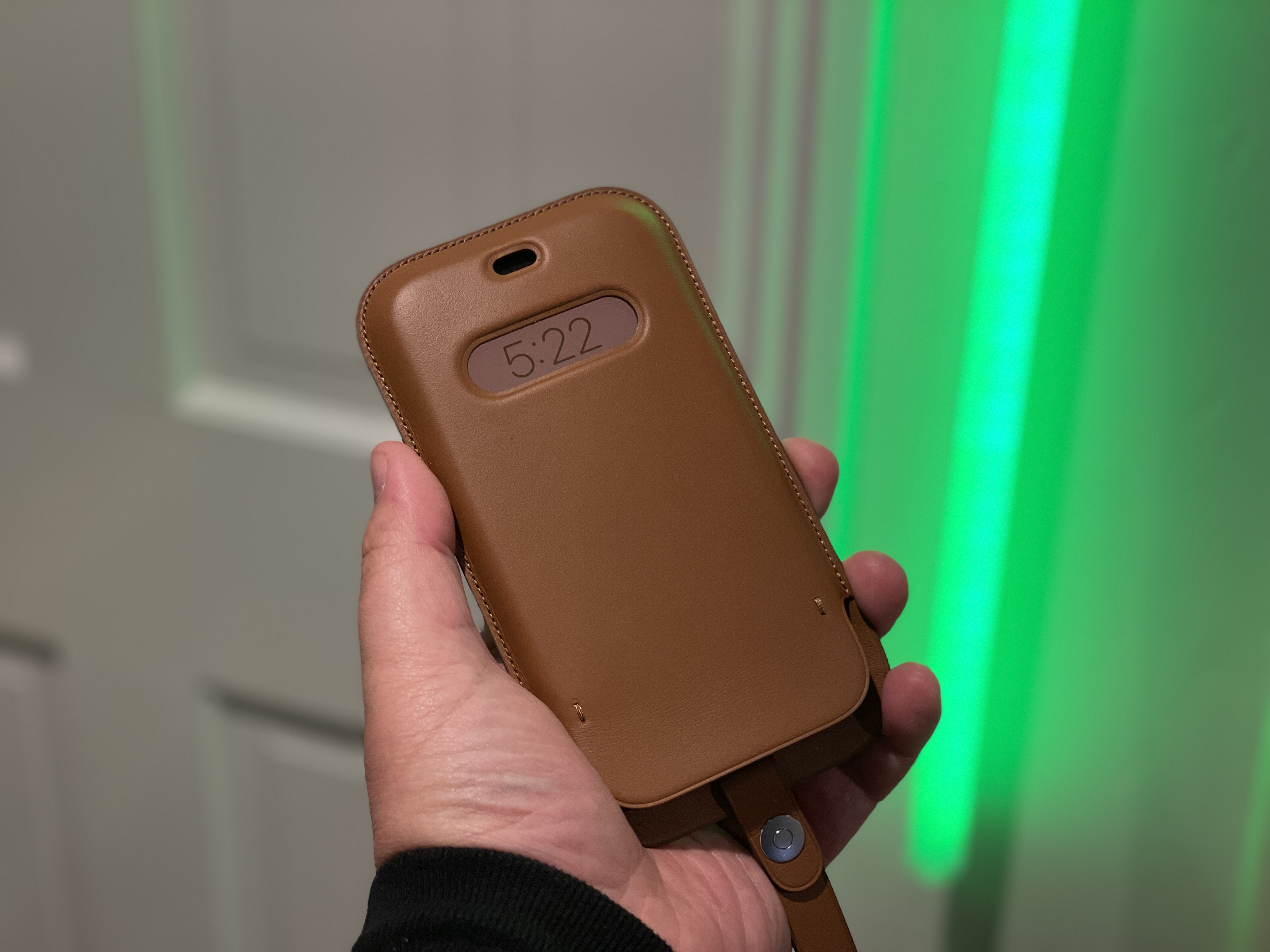
I did have a chance to try the iPhone 12 mini slip case and I thought it was well made and clever, though absolutely positively not for me. I use my iPhone too much to be sliding it into a sleeve and back out again, it would be an exercise in futility. But if you are in the market for this kind of case, I hold that the Apple version shows off the company’s earned expertise in leather. It’s well trimmed, it has nice edge finishing and a clever clasp. 

It integrates Apple’s MagSafe magnet array to display a live clock on the OLED screen with a space for the ambient light sensor. The clock display is pretty clever. It has a lightly colored background that matches the leather color of the case using the same NFC trick as the silicon cases which display a color matched ring when you put them on. The clock fades in two stages over a few seconds but will turn on when the ambient light sensor knows it’s not in your pocket and the motion coprocessor in the A14 senses movement. 

So a quick lift will flip the time on and let you check it. It also still allows tap-to-wake in the clock window, showing you the color matched time. 

There’s also a hidden card slot for maybe 1 credit card or ID card inside the mouth of the case. Like I said, it’s not for me, but I can appreciate that a lot more is going on in this little case than meets the eye, and it shows off some of the sophistication that could be coming to other MagSafe accessories in the future. 

The conclusion

In my iPhone 12/12 Pro review I noted my rubric for selecting a personal device:

  • The most compact and unobtrusive shape.
  • The best camera that I can afford.

And this is the conclusion I came to at the time:

The iPhone 12 Pro is bested (theoretically) in the camera department by the iPhone 12 Pro Max, which has the biggest and best sensor Apple has yet created. (But its dimensions are similarly biggest.) The iPhone 12 has been precisely cloned in a smaller version with the iPhone 12 mini. By my simple decision-making matrix, either one of those are a better choice for me than either of the models I’ve tested. If the object becomes to find the best compromise between the two, the iPhone 12 Pro is the pick.

Now that I have had both of those devices in my hand, I can say that my opinion hasn’t changed, but my definitions of the lineup have a bit. 

Because the iPhone 12 mini has no appreciable compromises in feature set from the iPhone 12, I consider these one device with two screen sizes. Yes, this may feel like a ‘duh’ moment but I didn’t want to jump to this place without actually using the mini for an extended period. Most critically, I needed to get a feel for that typing experience. 

The iPhone mini is by far the best value per dollar in Apple’s 2020 lineup. With this you get all of the power and advances of the iPhone 12, everything but the telephoto camera (and 60fps/4k video) of the iPhone 12 Pro and everything but the new sensor in the iPhone 12 Pro Max. Those additions will cost you anywhere from $300-$400 more over the life of your device if you choose to step up. 

I’ve been thinking hard about what a clear break point would be between deciding on the iPhone 12 and the iPhone 12 mini. If you are someone who really likes or ergonomically needs a smaller screen, you’re being treated to a device with no compromises in core functionality. But if you’re not a “small boi” fan then what is the deciding factor?

For me, it comes to this decision flow.

  • Is the iPhone your only camera and do you use it constantly for images? Then choose the iPhone 12 Pro. 
  • Are you an iPhone photographer that regularly prints images or edits them heavily? Choose the iPhone 12 Pro Max.
  • Are neither of those true, but it is true that the iPhone is your only mobile computing device? Go with the iPhone 12.
  • If that’s not true and you regularly carry an iPhone alongside a laptop or iPad, then go with the mini. 

Here, I even made you a handy flowchart if that kind of thing is your bag:

This is one of the best years ever for the iPhone lineup. The choices presented allow for a really comfortable picking routine based on camera and screen size with no majorly painful compromises in raw power or capability. These are full featured devices that are really well made from end to end. 

I hope that this template in sizing sticks around for a while as the powerful camera tech creeps its way down the lineup over time, invalidating at least the photography side of my flowchart above. Until then, this is still one of the better “small” iPhones Apple has ever produced, and certainly one with the least overall compromise.

News: Review: The iPhone 12 Pro Max is worth its handling fee

The iPhone 12 Pro Max is probably the easiest of all of the new iPhone 12 models to review. It’s huge and it has a really, really great camera. Probably one of the best cameras ever in a smartphone if not the best. For those of you coming from an iPhone “Max” or “Plus” model

The iPhone 12 Pro Max is probably the easiest of all of the new iPhone 12 models to review. It’s huge and it has a really, really great camera. Probably one of the best cameras ever in a smartphone if not the best. For those of you coming from an iPhone “Max” or “Plus” model already, it’s a no brainer. Get it, it’s fantastic. It’s got everything Apple has to offer this year and it’s even a bit thinner than the iPhone 11 Pro Max. 

For everyone else — the potential upsizers — this review has only a single question to answer: Do the improvements in camera and screen size and potentially battery life make it worth dealing with the hit in handling ergonomics from its slim but thicc build?

The answer? Yes, but only in certain conditions. Let’s get into it.

Build

I’m not going to spend a ton of time on performance or go through a feature-by-feature breakdown of the iPhone 12 Pro Max. I’ve published a review of the iPhone 12 and iPhone 12 Pro here and just today published a review of the iPhone 12 mini. You can check those out for baseline chat about the whole lineup. 

Instead, I’m going to focus specifically on the differences between the iPhone 12 Pro Max and the rest of the lineup. This makes sense because Apple has returned us to a place that we haven’t been since the iPhone 8. 

Though the rest of the lineup provides a pretty smooth arc of choices, the iPhone 12 Pro Max introduces a pretty solid cliff of unique features that could pull some people up from the iPhone 12 Pro. 
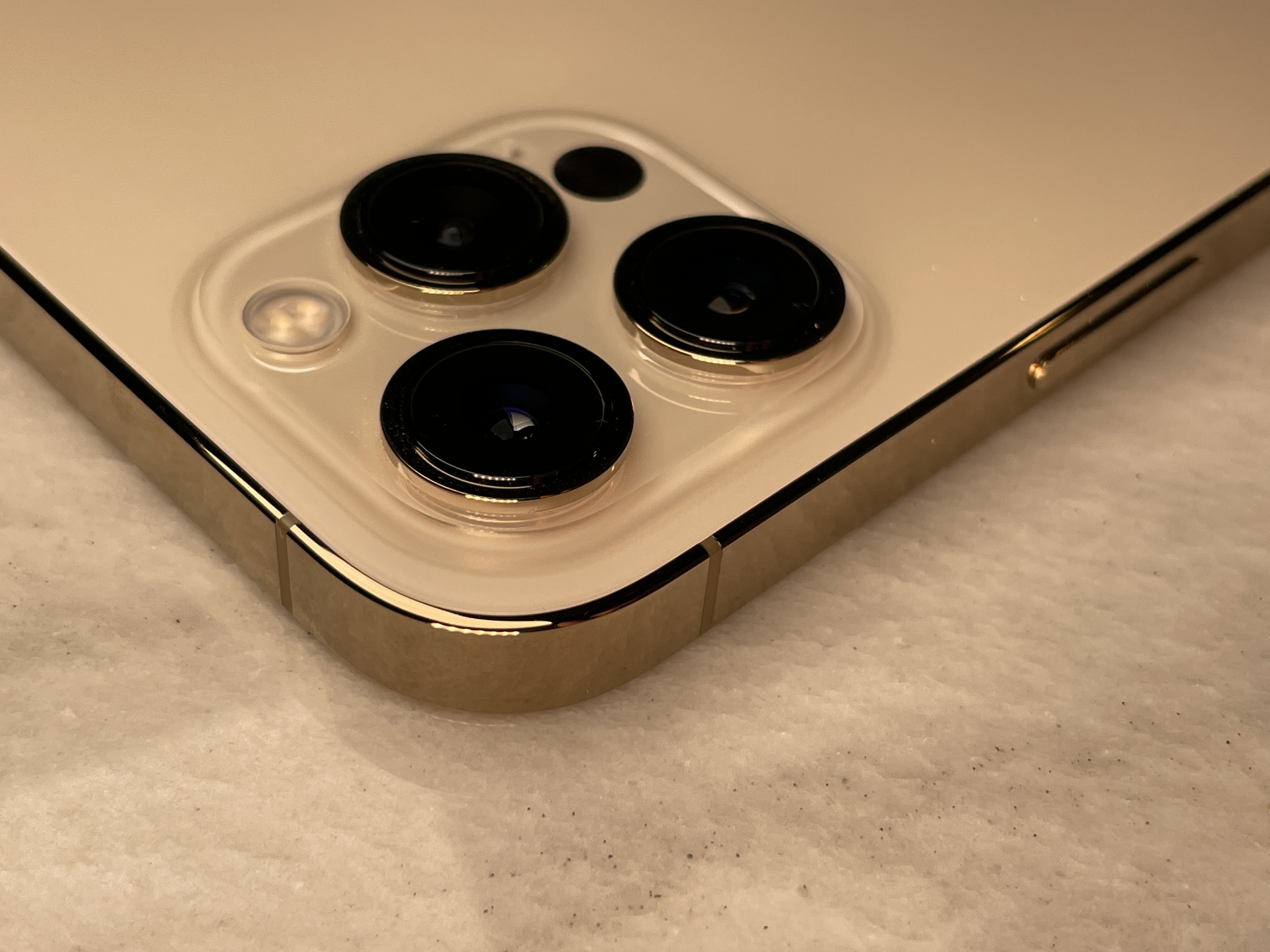
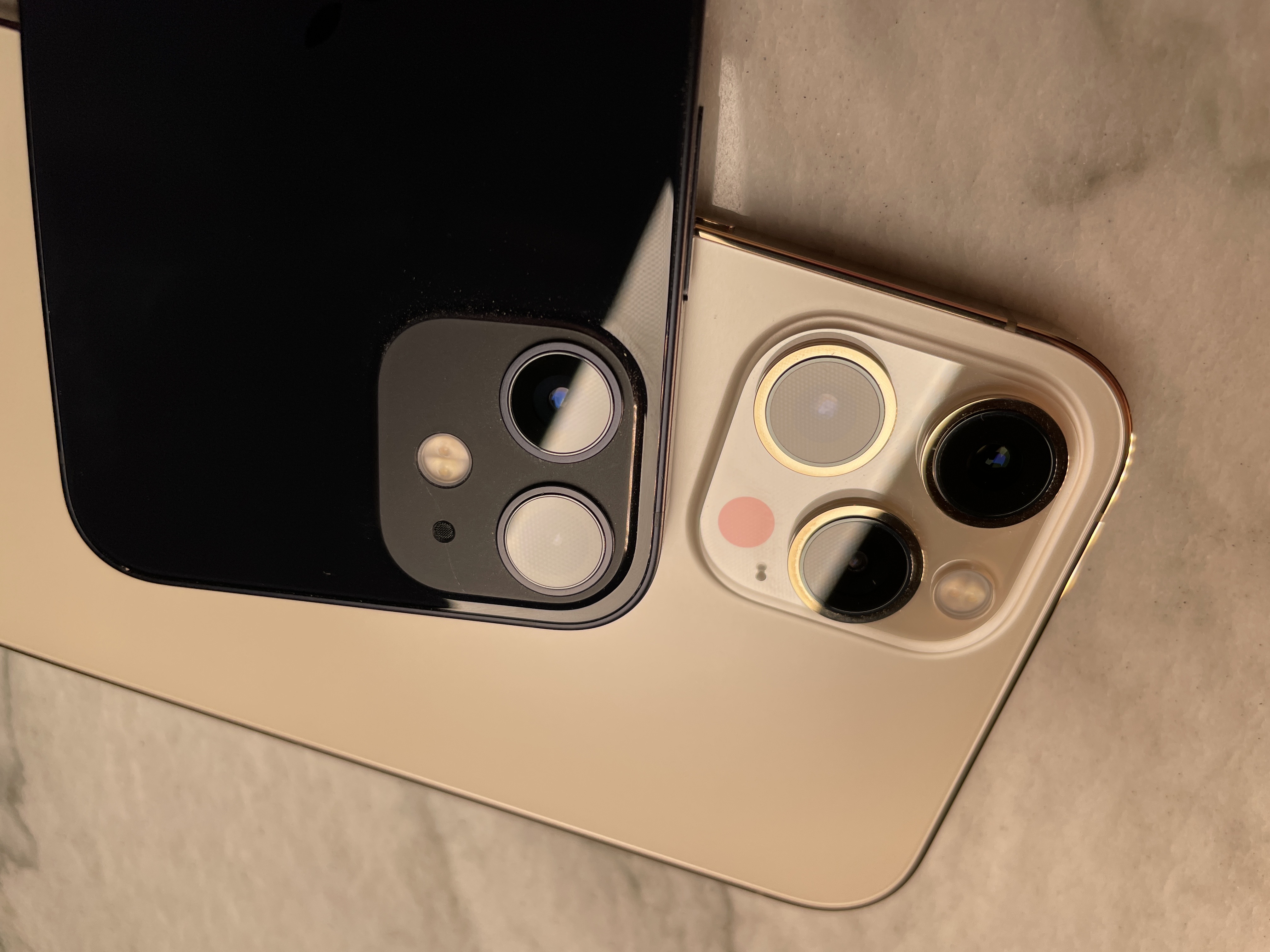
The larger size sets off all of the work Apple did to make the iPhone 12 Pro look like a jewel. Gold coated steel edges and the laminated clear and frosty back with gold accent rings around the cameras and glossy logo. All of it screams posh. 

Some of you may recall that there was a period of time where there existed a market for ultra-luxury phone makers like Vertu to use fine materials to “elevate” what were usually pretty poorly implemented Symbian or Android phones at heart. Leather, gold, crystal and even diamond were used to craft veblen goods for the über rich just so they could stay ‘above’ the proles. Now, Apple’s materials science experimentation and execution level is so high that you really can’t get anything on the level of this kind of pure luxe manifestation in a piece of consumer electronics from anyone else, even a ‘hand maker’. 
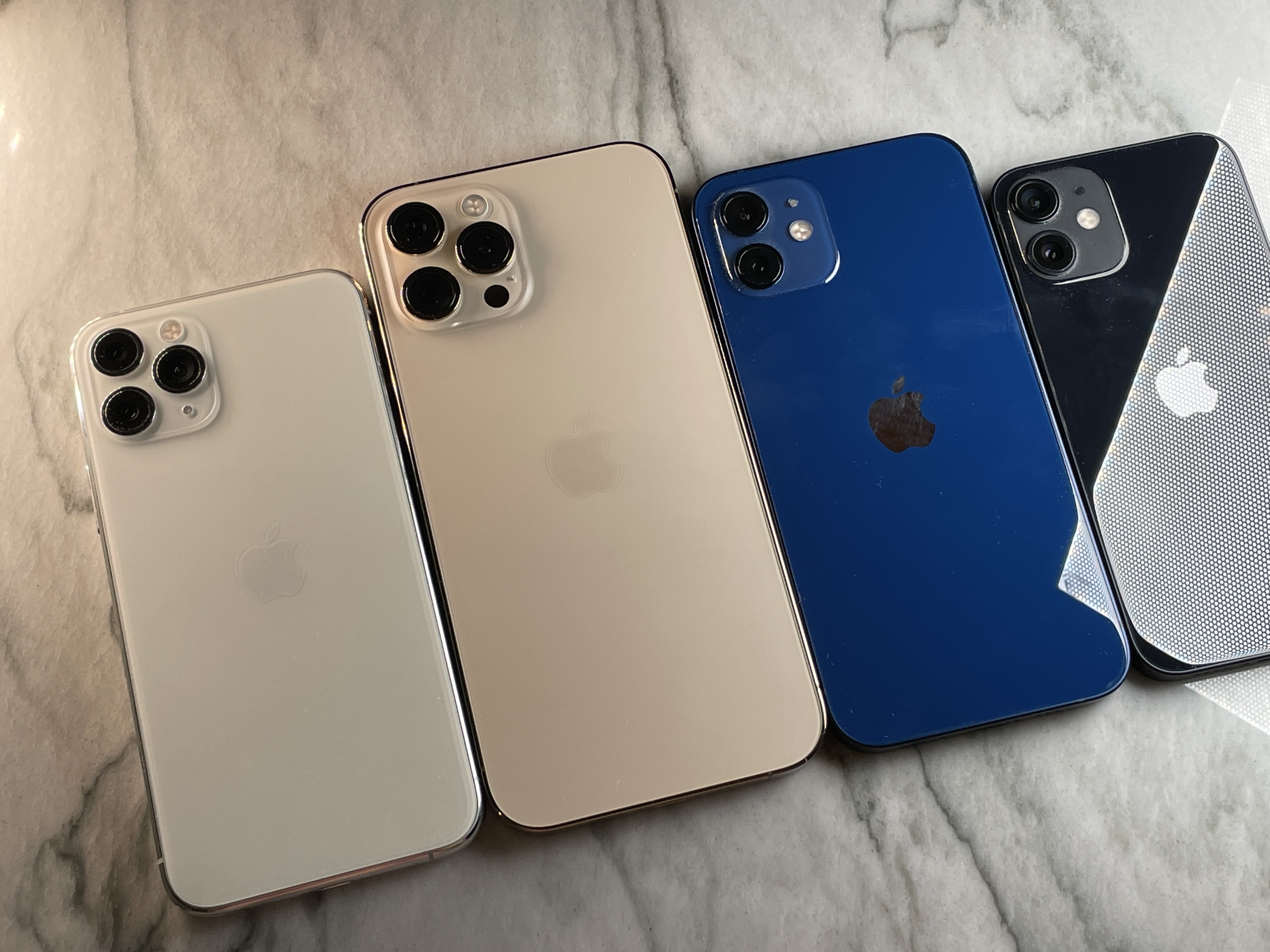
To be fair, Vertu and other makers didn’t die because Apple got good at gold, they died because good software is needed to invest life into these bejeweled golems. But Apple got better at what they did faster than they could ever get good at what Apple does. 

This is a great piece of kit and as mentioned even thinner than previous Max models with the same size screen but it’s about the same width (.3mm wider). And in my opinion, the squared off edges of this year’s aesthetic make this phone harder to hold, not easier at this size. This is essentially the opposite effect from the smaller models. For a phone this size I’d imagine everyone is going to use a case anyway so that’s probably moot, but it’s worth noting. 
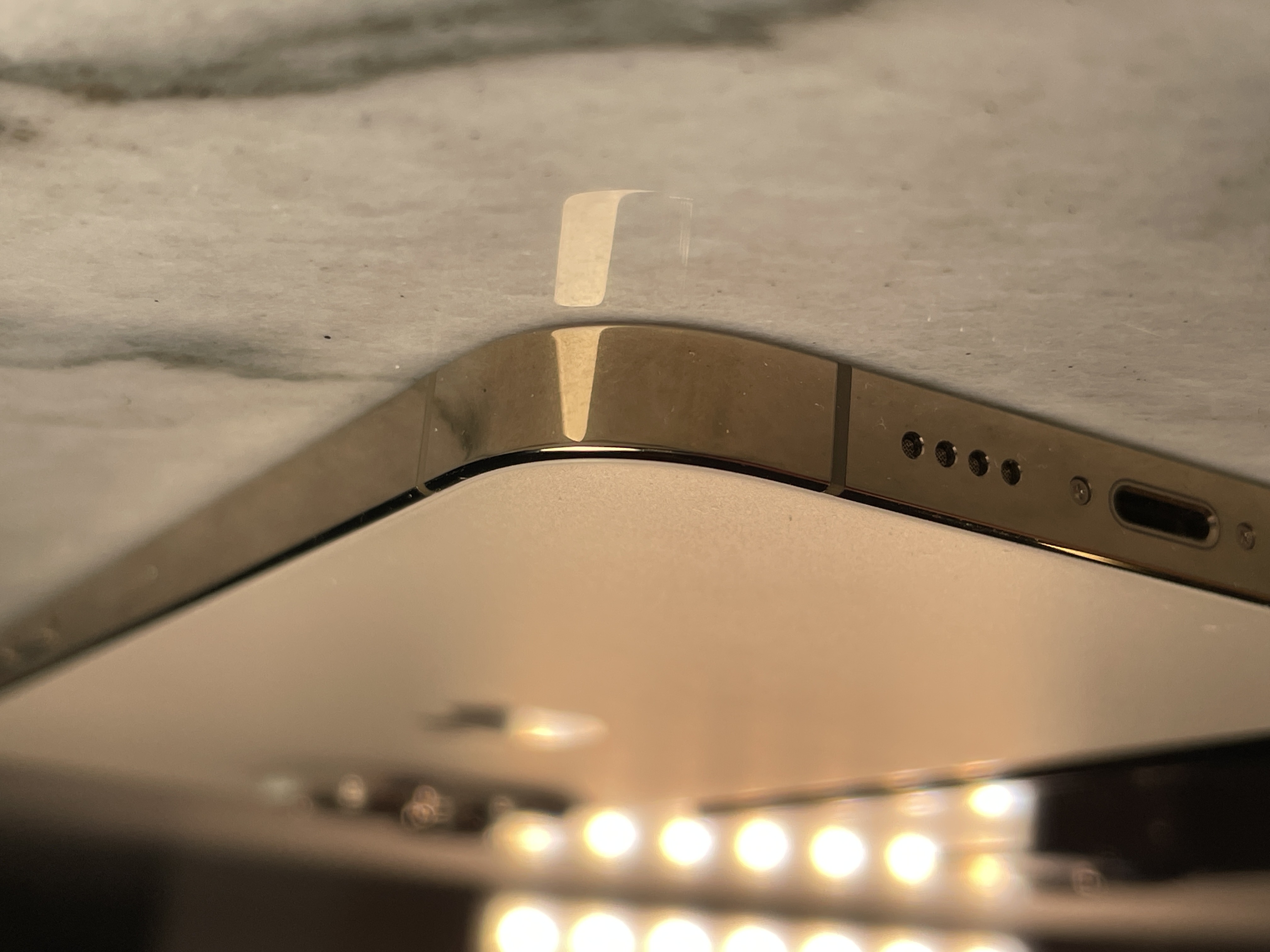
My feelings on the larger iPhones, which I haven’t used as a daily driver since the iPhone 8, remain unchanged: these are two-handed devices best used as tablet or even laptop replacements. If you run your life from these phones then it makes sense that you’d want a huge screen with plenty of real-estate for a browser and a pip video chat and a generous keyboard all at once. 

The differences 

When we’re talking about whether or not to move up to this beast I think it’s helpful to have a list of everything here that is different, or you think might be but isn’t, from the iPhone 12 Pro. 

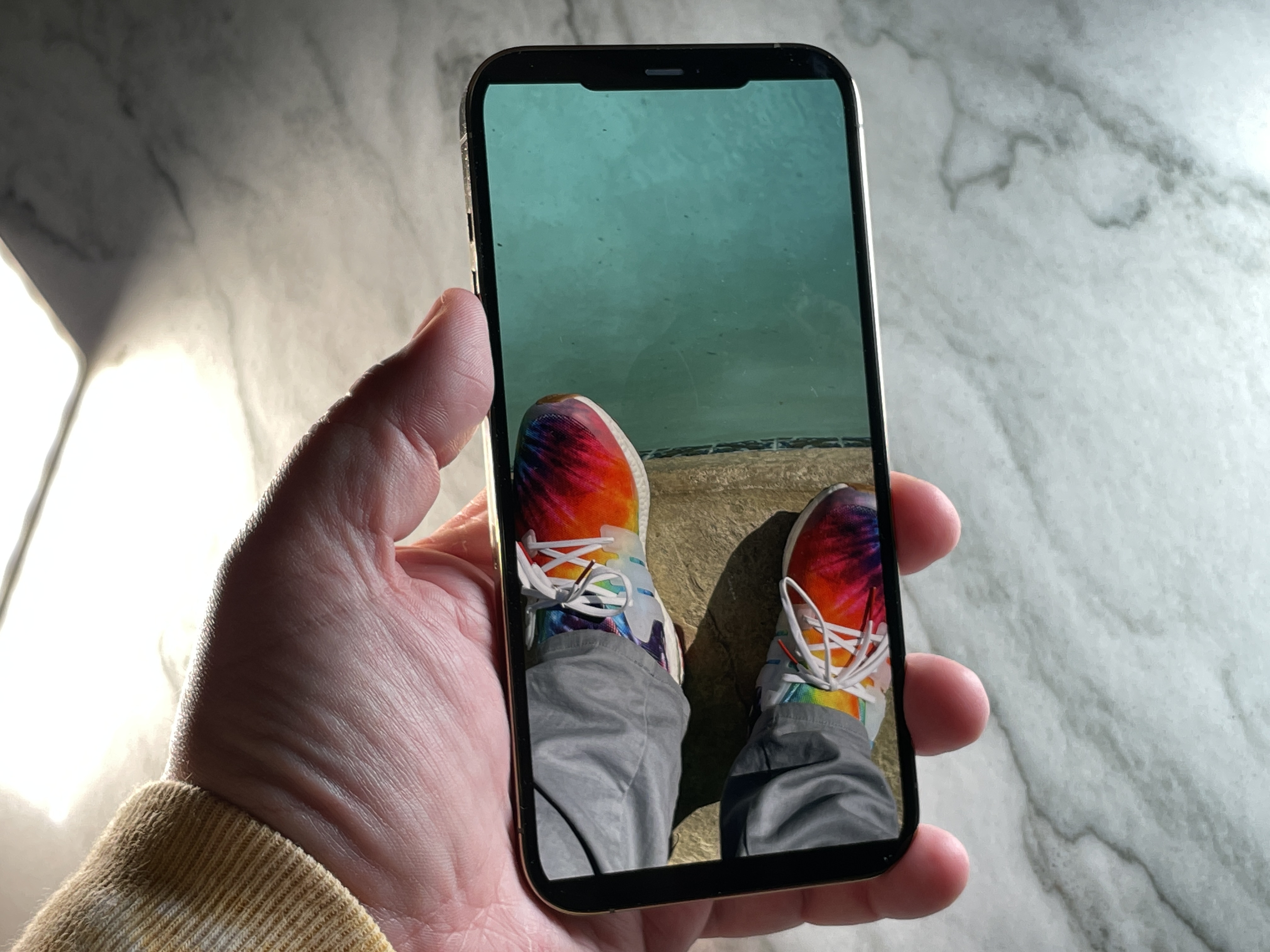
Screen. The 6.7” iPhone 12 Pro Max screen has a resolution of 2778×1284 at 458 ppi. That’s nearly identical but slightly under the iPhone 12 Pro’s 460ppi. So though this is a difference I’d count it as a wash. The screen’s size, of course, and the software support that some Apple and third-party apps to take advantage of the increased real-estate are still a factor. 
Performance. The iPhone 12 Pro Max performs exactly as you’d expect it to in the CPU and GPU department, which is to say exactly the same as the iPhone 12 Pro. It also has the same 6GB of RAM on board. Battery performance was comparable to my iPhone 11 Pro Max testing which is to say it outlasted a typical waking day though I could probably nail it in a long travel day. 
Ultra wide angle camera. Exactly the same. Improved over the iPhone 11 Pro massively due to software correction and the addition of Night Mode, but the same across the iPhone 12 Pro lineup.

Telephoto camera. This is a tricky one because it uses the same sensor as the iPhone 12 Pro, but features a new lens assembly that results in a 2.5x (65mm equivalent) zoom factor. This means that though the capture quality is the same, you can achieve tighter framing at the same distance away from your subject. As a heavy telephoto user (I shot around 30% of my pictures over the last year in the iPhone 11 Pro’s telephoto) I love this additional control and the slightly higher optical compression that comes with it. 
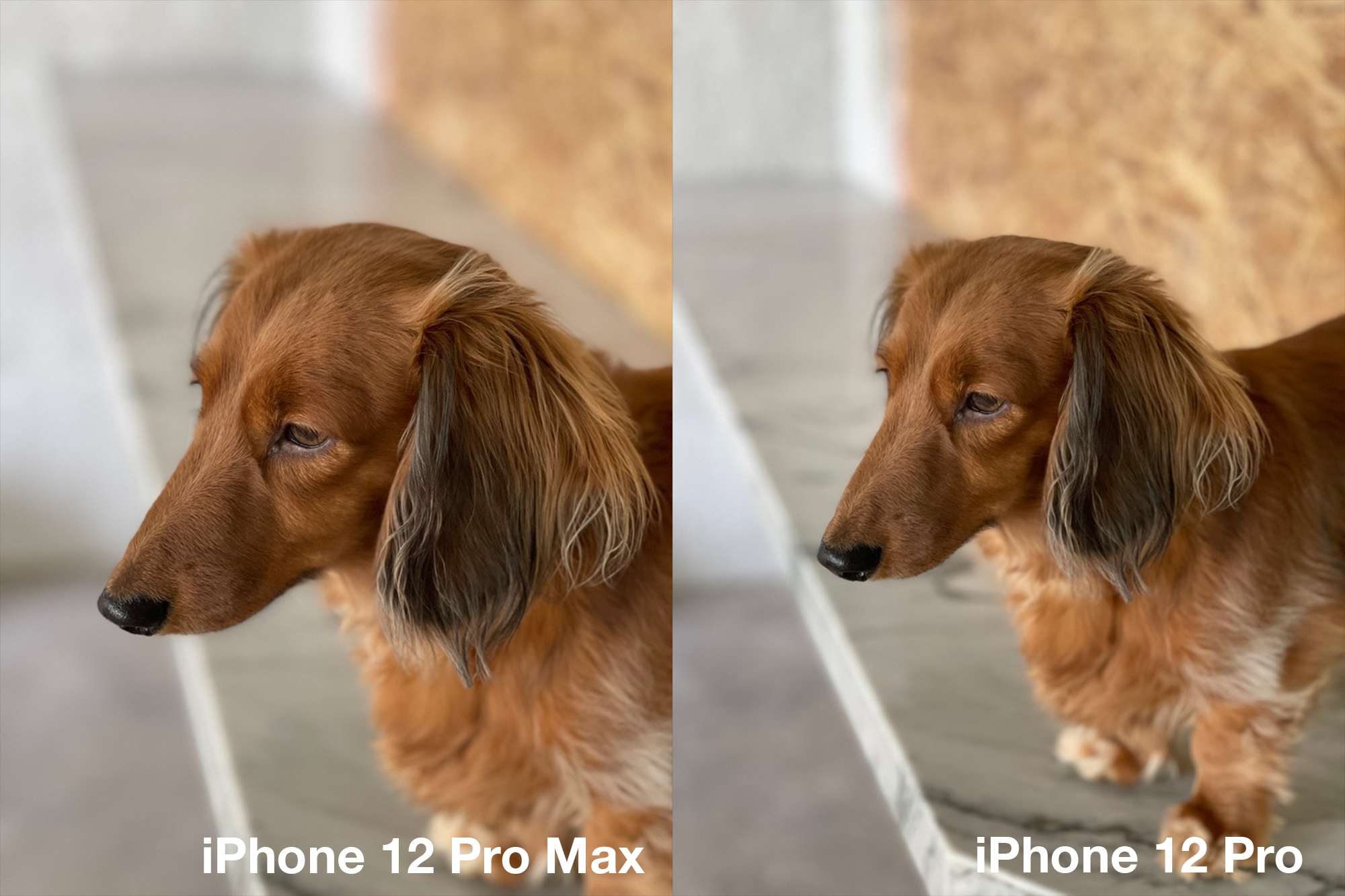
The framing control is especially nice with portraits. 
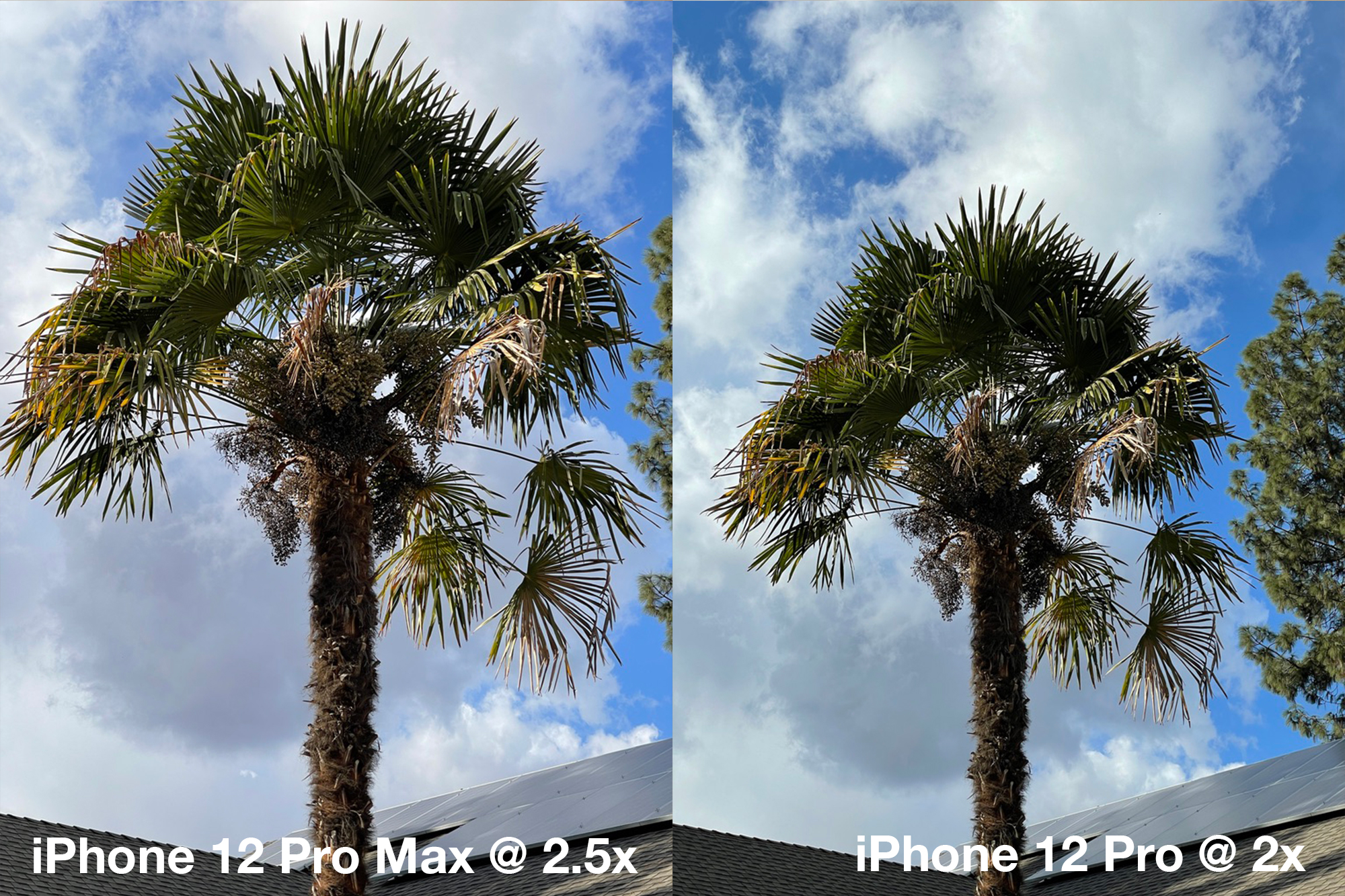
Though it comes in handy with distant subjects as well.

There is also one relatively stealthy (I cannot find this on the website but I verified that it is true) update to the telephoto. It is the only lens other than the wide angle across all of the iPhone 12 lineup to also get the new optical stabilization upgrades that allow it to make 5,000 micro-adjustments per second to stabilize an image in low light or shade. It still uses the standard lens-style stabilization, not the new sensor-shift OIS used in the wide angle lens, but it goes up 5x in the amount of adjustments it can make from the iPhone 11 Pro or even the iPhone 12 Pro. 
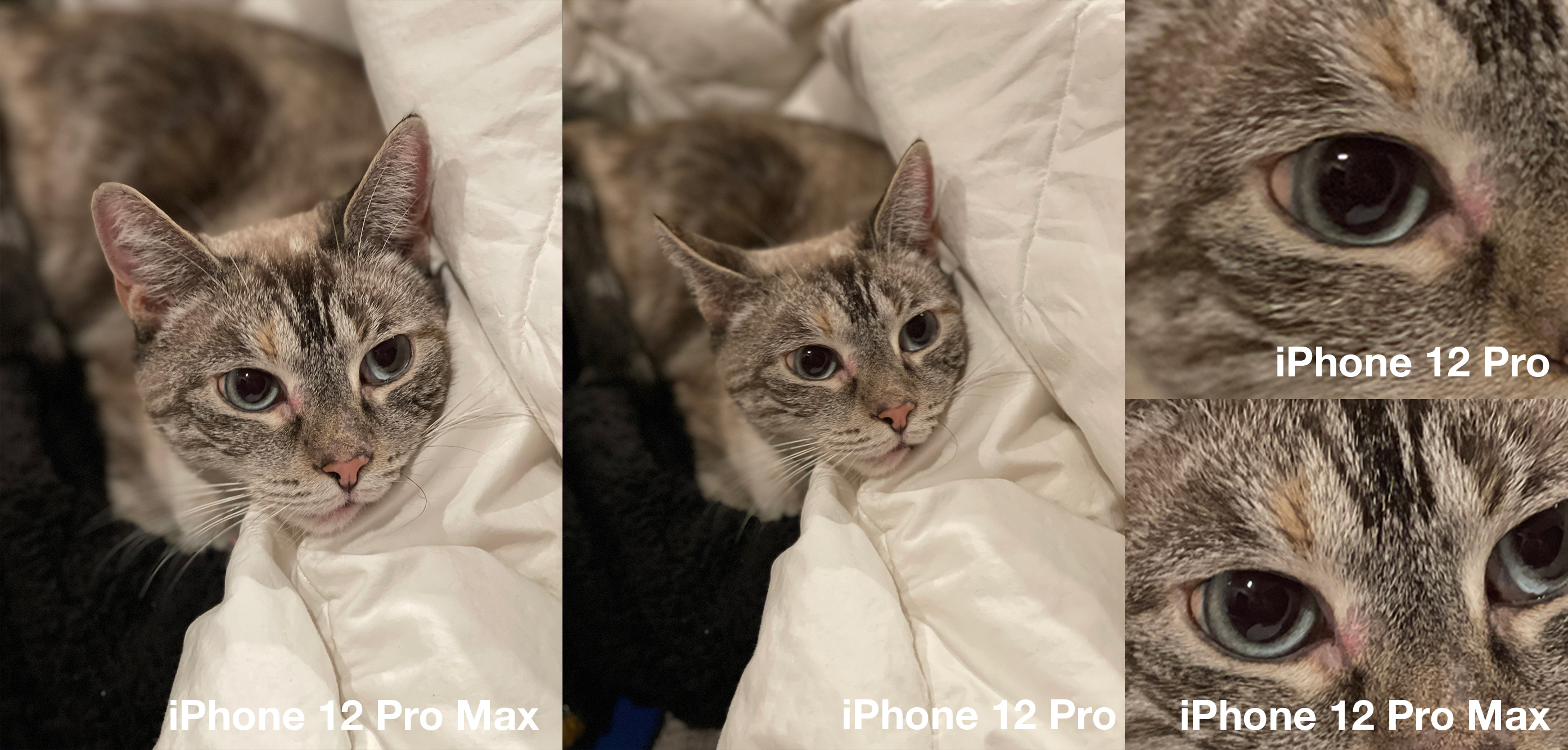
The results of this can be seen in this shot, a handheld indoor snap. Aside from the tighter lens crop, the additional stabilization adjustments result in a crisper shot with finer detail even though the base sensor is identical. It’s a relatively small improvement in comparison to the wide angle, but it’s worth mentioning and worth loving if you’re a heavy telephoto user.  

Wide angle camera. The bulk of the iPhone 12 Pro Max difference is right here. This is a completely new camera that pushes the boundaries of what the iPhone has been capable of shooting to this point. It’s actually made up of 3 big changes:

  • A new f1.6 aperture camera. A larger aperture is plain and simple a bigger hole that lets more light in.
  • A larger sensor with 1.7 micron pixels (bigger pixels mean better light gathering and color rendition), a larger sensor means higher quality images.
  • An all-new sensor-shift OIS system that stabilizes the sensor, not the lens. This is advantageous for a few reasons. Sensors are lighter than lenses, which lets the adjustments happen faster because it can be moved, stopped and started again with more speed and precision. 

Sensor-shift OIS systems are not new, they were actually piloted in the Minolta Dimage A1 back in 2003. But most phone cameras have used lens shift technology because it is very common, vastly cheaper and easier to implement. 

All three things work together to deliver pretty stellar imaging results. It also makes the camera bump on the iPhone 12 Pro Max a bit taller. Tall enough that there is actually an additional lip on the case meant for it made by Apple to cover it. I’d guess that this additional thickness stems directly from the wide angle lens assembly needing to be larger to accommodate the sensor and new OIS mechanism and then Apple being unwilling to let one camera stick out further than any other. 
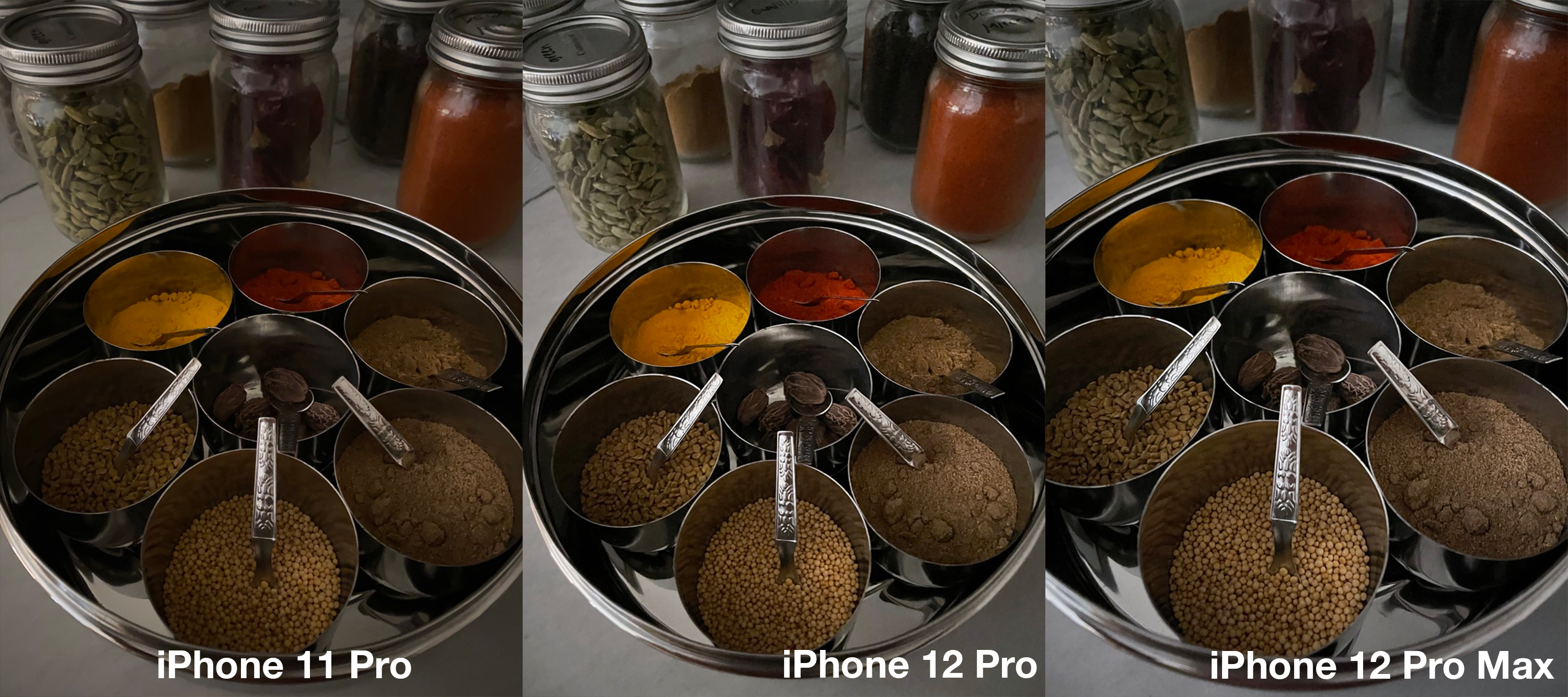
These are Night Mode samples, but even there you can see the improvements in brightness and sharpness. Apple claims 87% more light gathering ability with this lens and in the right conditions it’s absolutely evident. Though you won’t be shooting SLR-like images in near darkness (Night Mode has its limits and tends to get pretty impressionistic when it gets very dim) you can absolutely see the pathway that Apple has to get there if it keeps making these kinds of improvements. 

Wide angle shots from the iPhone 12 Pro Max display slightly better sharpness, lower noise and better color rendition than the iPhone 12 Pro and much more improvement from the iPhone 11 Pro. In bright conditions you will be hard pressed to tell the difference between the two iPhone 12 models but if you’re on the lookout the signs are there. Better stabilization when handheld in open shade, better noise levels in dimmer areas and slightly improved detail sharpness. 
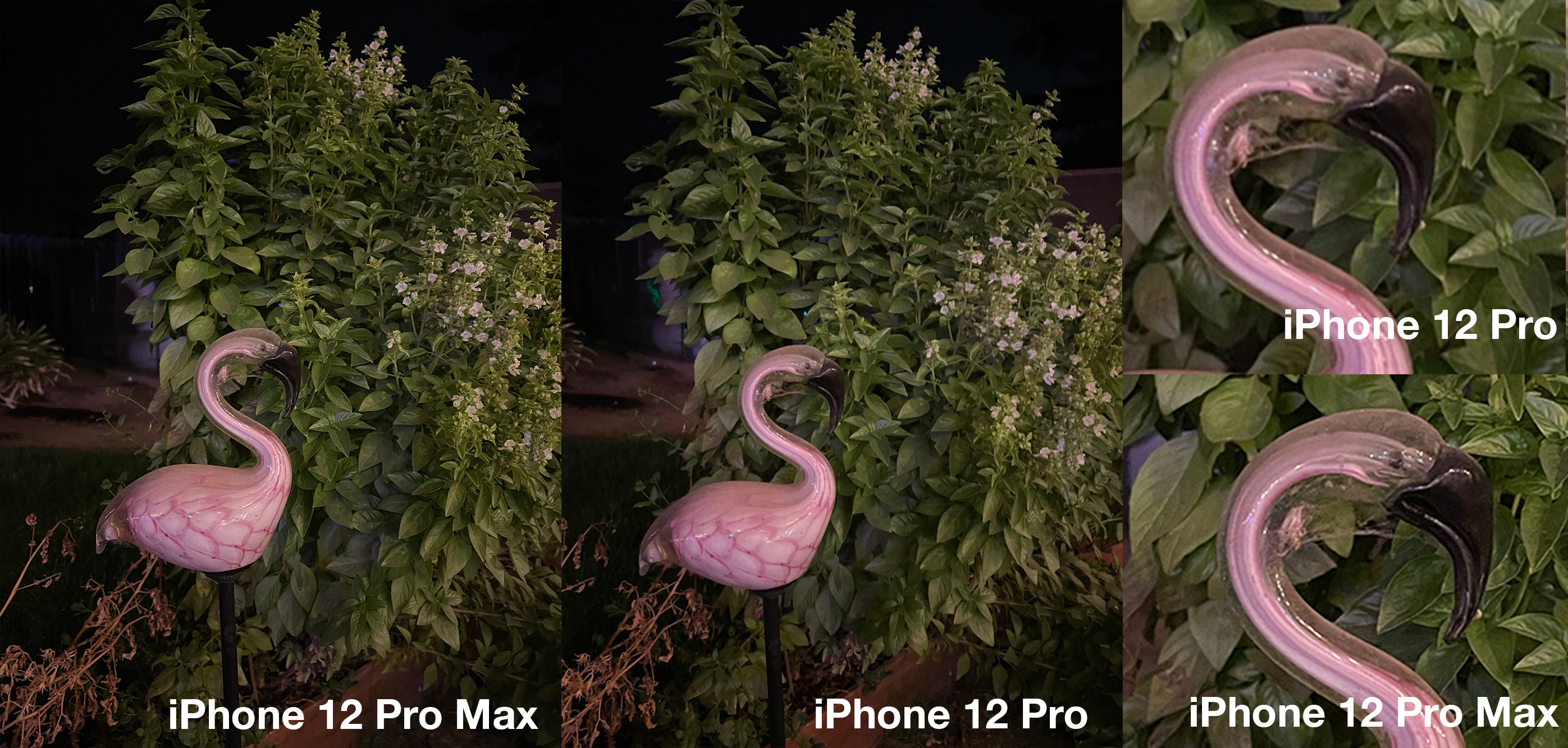
The iPhone 12 Pro already delivers impressive results year on year, but the iPhone 12 Pro Max leapfrogs it within the same generation. It’s the most impressive gain Apple’s ever had in a model year, image wise. The iPhone 7 Plus and the introduction of Apple’s vision of a blended camera array was forward looking, but even then image quality was pretty much parity with the smaller models that year. 

A very significant jump this year. Can’t wait for this camera to trickle down the lineup.

LiDAR. I haven’t really mentioned LiDAR benefits yet, but I went over them extensively in my iPhone 12 Pro review, so I’ll cite them here.

LiDAR is an iPhone 12 Pro and iPhone 12 Pro Max only feature. It enables faster auto-focus lock-in in low light scenarios as well as making Portrait Mode possible on the Wide lens in Night Mode shots. 
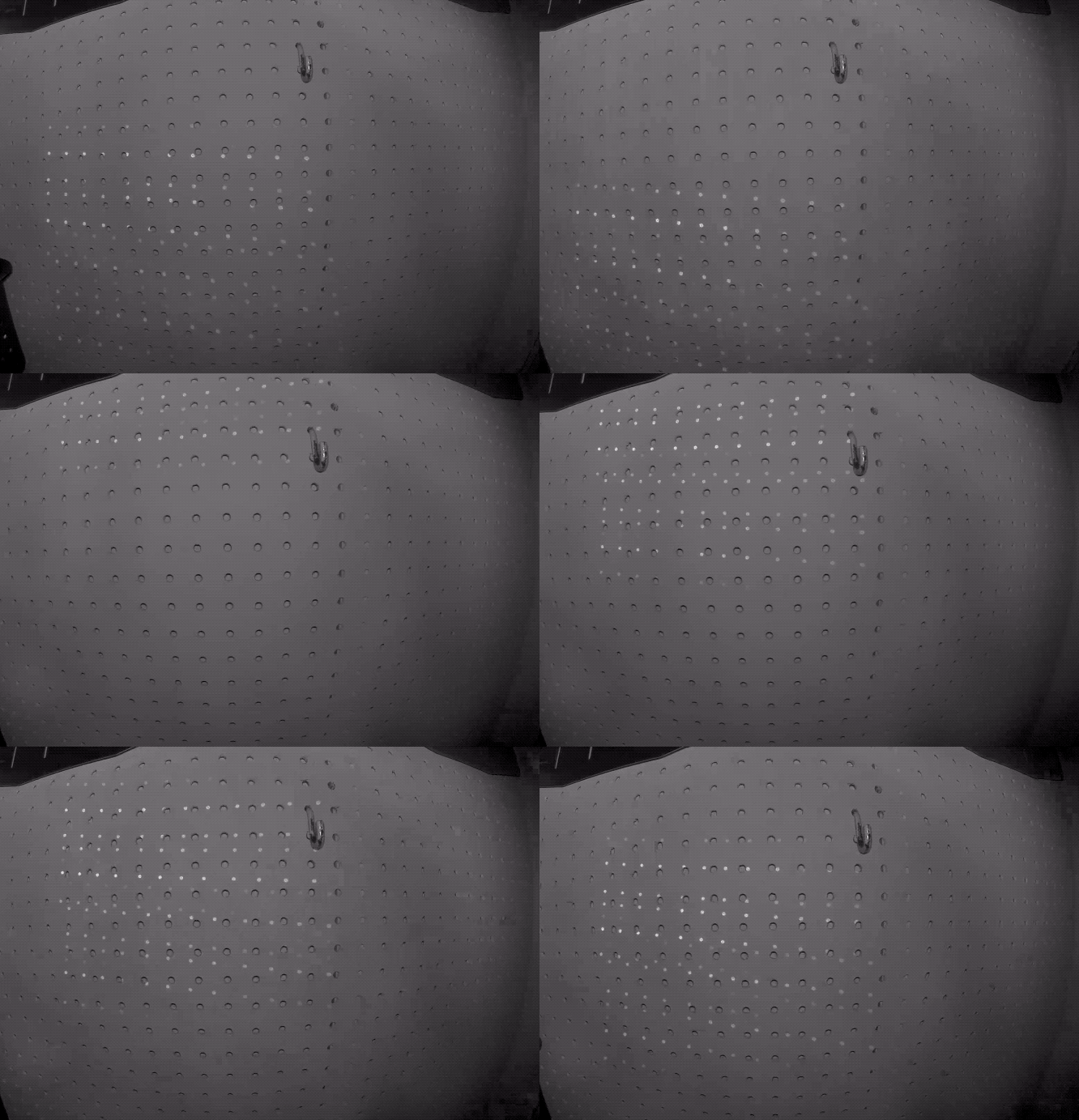
First, the auto-focus is insanely fast in low light. The image above is what is happening, invisibly, to enable that. The LiDAR array constantly scans the scene with an active grid of infrared light, producing depth and scene information that the camera can use to focus. 

In practice, what you’ll see is that the camera snaps to focus quickly in dark situations where you would normally find it very difficult to get a lock at all. The LiDAR-assisted low light Portrait Mode is very impressive, but it only works with the Wide lens. This means that if you are trying to capture a portrait and it’s too dark, you’ll get an on-screen prompt that asks you to zoom out. 

These Night  Mode portraits are demonstrably better looking than the standard portrait mode of the iPhone 11 because those have to be shot with the telephoto, meaning a smaller, darker aperture. They also do not have the benefit of the brighter sensor or LiDAR helping to separate the subject from the background — something that gets insanely tough to do in low light with just RGB sensors.

As a note, the LiDAR features will work great in situations under 5 meters along with Apple’s Neural Engine, to produce these low-light portraits. Out beyond that it’s not much use because of light falloff. 

Well lit Portrait Mode shots on the iPhone 12 Pro Max will still rely primarily on the information coming in through the lenses optically, rather than LiDAR. It’s simply not needed for the most part if there’s enough light.

The should I buy it workflow

I’m straight up copying a couple of sections for you now from my iPhone 12 Pro and iPhone 12 mini reviews because the advice applies across all of these devices. Fair warning.

In my iPhone 12/12 Pro review I noted my rubric for selecting a personal device:

  • The most compact and unobtrusive shape.
  • The best camera that I can afford.

And this is the conclusion I came to at the time:

The iPhone 12 Pro is bested in the camera department by the iPhone 12 Pro Max, which has the biggest and best sensor Apple has yet created. (But its dimensions are similarly biggest.) The iPhone 12 has been precisely cloned in a smaller version with the iPhone 12 mini. By my simple decision-making matrix, either one of those are a better choice for me than either of the models I’ve tested. If the object becomes to find the best compromise between the two, the iPhone 12 Pro is the pick.

But now that I’ve had time with the Pro Max and the mini, I’ve been able to work up a little decision flow for you:
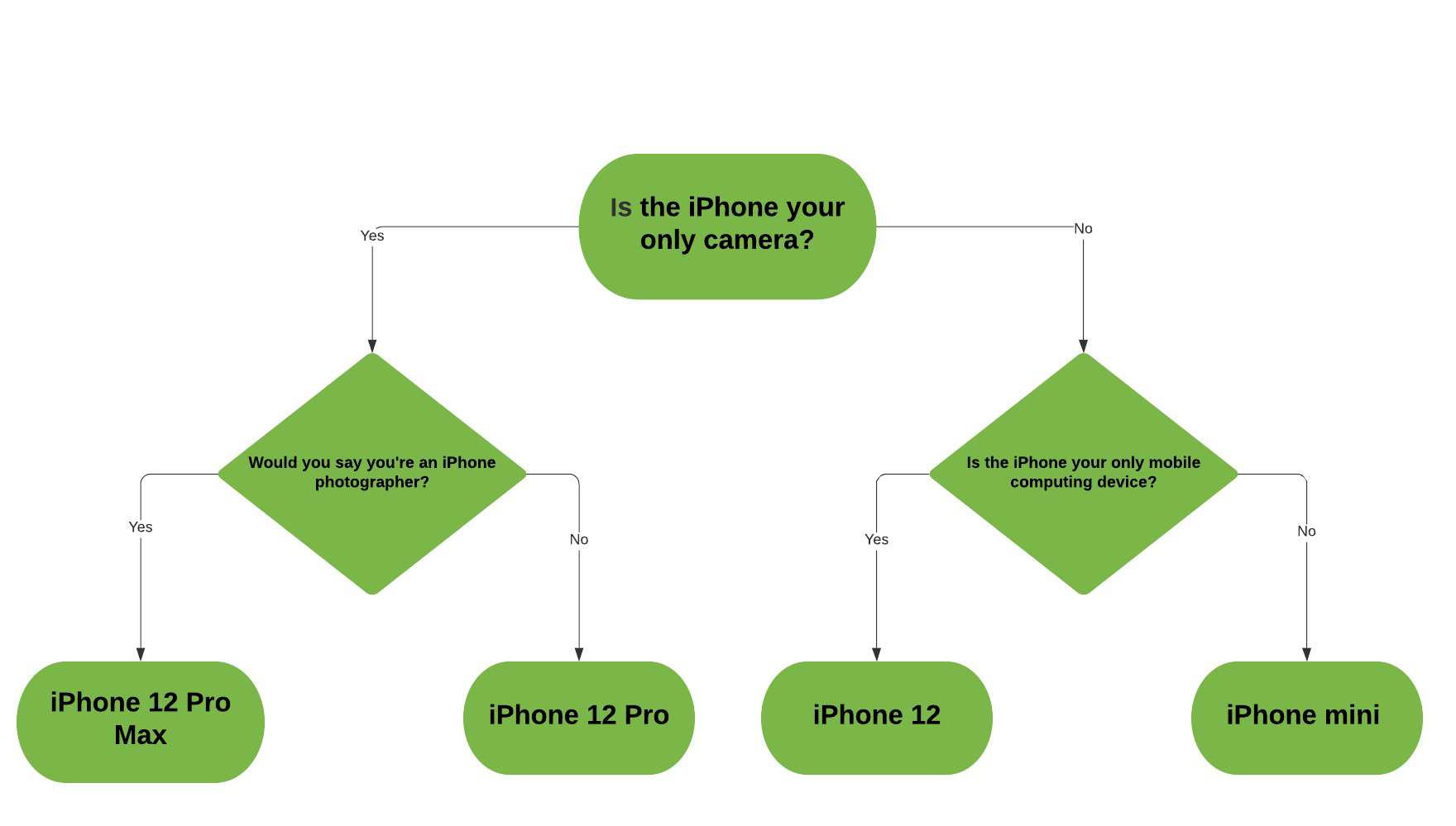
If you haven’t gathered it by now, I recommend the iPhone 12 Pro Max to two kinds of people: the ones who want the absolute best camera quality on a smartphone period and those who do the bulk of their work on a phone rather than on another kind of device. There is a distinct ‘fee’ that you pay in ergonomics to move to a Max iPhone. Two hands are just plain needed for some operations and single-handed moves are precarious at best. 

Of course, if you’re already self selected into the cult of Max then you’re probably just wondering if this new one is worth a jump from the iPhone 11 Pro Max. Shortly: maybe not. It’s great but it’s not light years better unless you’re doing photography on it. Anything older though and you’re in for a treat. It’s well made, well equipped and well priced. The storage upgrades are less expensive than ever and it’s really beautiful. 

Plus, the addition of the new wide angle to the iPhone 12 Pro Max makes this the best camera system Apple has ever made and quite possibly the best sub compact camera ever produced. I know, I know, that’s a strong statement but I think it’s supportable because the iPhone is best in class when it comes to smartphones, and no camera company on the planet is doing the kind of blending and computer vision Apple is doing. Though larger sensor compact cameras still obliterate the iPhone’s ability to shoot in low light situations, the progress over time of Apple’s ML-driven blended system.

A worthy upgrade, if you can pay the handling costs.
News: Moon exploration startup ispace opens new U.S. office and hires SpaceX alum to lead development of next lander

Japanese startup ispace, which is developing lander technology to support exploration of the Moon, is opening an office in Denver, the company announced today. The Colorado location was chosen because of its access to local aerospace engineering talent, and the plan is for the company to quickly staff up a full local engineering team. ispace

Japanese startup ispace, which is developing lander technology to support exploration of the Moon, is opening an office in Denver, the company announced today. The Colorado location was chosen because of its access to local aerospace engineering talent, and the plan is for the company to quickly staff up a full local engineering team. ispace also announced that it has hired Kursten O’Neill, a seven year SpaceX vet, who will oversee development of ispace’s next-generation lunar lander craft.

The U.S. expansion comes as ispace looks to work more closely together with NASA, both through its Commercial Lunar Payload Services (CLPS) program, where ispace is currently partnering with U.S.-based space specialist Draper on its bid to provide lunar lander transportation services for the agency. ispace also hopes to leverage its international footprint to help be a strategic linkage between the U.S. and its international partners more broadly across the Artemis program, which is NASA’s mission series intended to help humans return to the Moon and establish a more permanent presence there for continued science and research purposes.

ispace is set to launch its first lunar landers for its Mission 1 and Mission 2 operations, currently planned to take place starting with a debut launch in 2021. Its planned Mission 3 will be the first to carry its forthcoming next-generation lander, to be designed and manufactured in the U.S. by a team led by O’Neill, which will boast a larger footprint and greater payload capacity.

WordPress Image Lightbox Plugin