
Yearly Archives: 2020

News: Square and PayPal earnings bring good (and bad) news for fintech startups

Earnings season is racing past us, with the big ride-hailing companies’ numbers in, all of the Big Five having wrapped their reporting and lots of SaaS numbers in the market. But amidst all the noise, The Exchange has kept an eye on two companies in particular: PayPal and Square. We’re not really concerned with their overall

Earnings season is racing past us, with the big ride-hailing companies’ numbers in, all of the Big Five having wrapped their reporting and lots of SaaS numbers in the market. But amidst all the noise, The Exchange has kept an eye on two companies in particular: PayPal and Square.

We’re not really concerned with their overall revenue and profit metrics. Instead, we’ve been hunting around in their numbers for hints and notes about what is going on inside of fintech itself. Why? There are a host of hugely valuable fintech unicorns that have to go public in the future that also share some market space with one or both of our public charges.

What can we learn from looking at what PayPal and Square reported to their own investors?


The Exchange explores startups, markets and money. Read it every morning on Extra Crunch, or get The Exchange newsletter every Saturday.


Lots, it turns out.

As TechCrunch reported when PayPal dropped its Q3 numbers, the public company had bullish results from its Venmo service, payment processing and consumer activity metrics. The numbers pointed to strong consumer adoption of fintech services during the pandemic, something that we presumed was not unique to PayPal itself, but was likely indicative of a generally warm environment for consumer fintech services.

Square continued the trend, posting a set of results that contains nearly all positive data for consumer fintech activity — with one critical caveat for Q4 that we’ll get to at the end.

Still, what the majors tell us about the fintech space indicates a warmth in activity that explains why Chime, Robinhood and others have had such fun in 2020, accreting tectonic capital to keep their growth hot.

Digging through Square’s earnings gives us a window into consumer payment activity, card usage, stock purchases and more. Let’s see what we can learn, and to which unicorns it might apply.

A very fintech 2020

Let’s start by talking about the broader fintech market before niching down.
News: Honda to mass-produce Level 3 autonomous cars by March

Honda claims it will be the first automaker to mass-produce vehicles with autonomous capabilities that meet SAE Level 3 standards, with plans to begin producing and selling a version of its Honda Legend luxury sedan with fully approved automated driving equipment in Japan from next March. Honda announced the news via press release (via Reuters)

Honda claims it will be the first automaker to mass-produce vehicles with autonomous capabilities that meet SAE Level 3 standards, with plans to begin producing and selling a version of its Honda Legend luxury sedan with fully approved automated driving equipment in Japan from next March. Honda announced the news via press release (via Reuters) and this follows the approval by the Japanese government of the company’s ‘Traffic Jam Pilot’ autonomous tech, which for the first time will allow drivers to actually take their eyes off the road while it’s engaged.

Honda’s Pro Pilot Assist is the feature that predates this forthcoming one, but it’s a Level 2 feature per the SAE scale, which means that while it can automatically control both speed and steering, drivers behind the wheel have to be constantly ready to take over manual control should the system require it. SAE Level 3 is the first that falls under a categorization that most experts feels qualifies as actually autonomous – wherein a driver can fully allow their vehicle to take over control. Level 3 still requires that a driver be able to take over driving when the system requests, while Levels 4 and 5 have no such requirement.

Tesla has also launched its own ‘full self-driving’ feature in its vehicles in a beta program that it’s expanding to more drivers gradually, but critics suggest that despite it’s name, it’s not actually a fully autonomous system, and it isn’t yet classified as such according to regulations. Honda’s launch of its Level 3 Legend in March 2021 will be one watched by regulators and ordinary drivers alike around the world as one of the first true tests of a mass-produced and regulator-approved autonomous vehicle system.

News: Fishtown Analytics raises $29.5M Series B for its data engineering platform

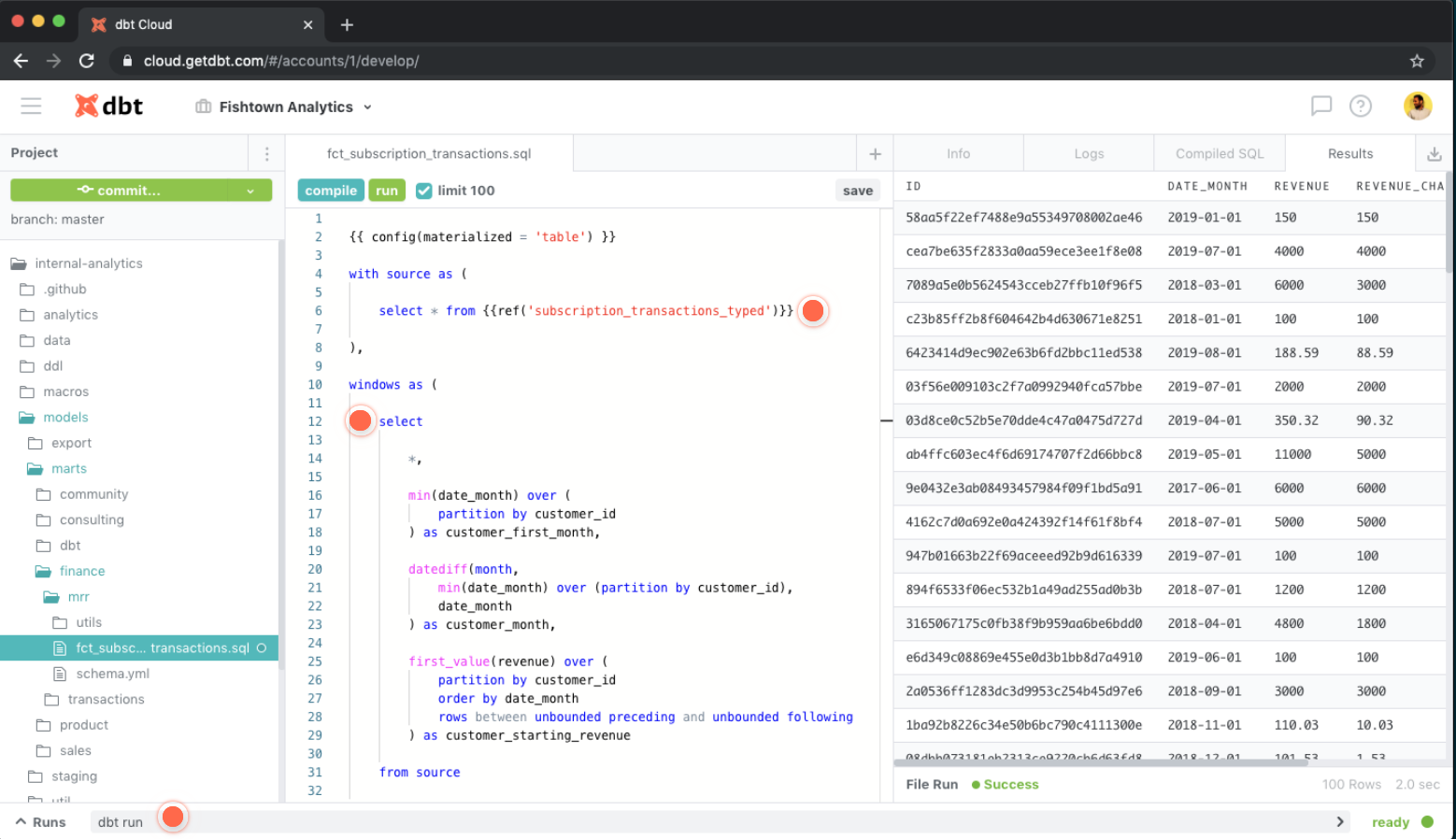
Fishtown Analytics, the Philadelphia-based company behind the dbt open-source data engineering tool, today announced that it has raised a $29.5 million Series B round led by Sequoia Captial, with participation from previous investors Andreessen Horowitz and Amplify Partners. The company is building a platform that allows data analysts to more easily create and disseminate organizational

Fishtown Analytics, the Philadelphia-based company behind the dbt open-source data engineering tool, today announced that it has raised a $29.5 million Series B round led by Sequoia Captial, with participation from previous investors Andreessen Horowitz and Amplify Partners.

The company is building a platform that allows data analysts to more easily create and disseminate organizational knowledge. Its focus is on data modeling, with its dbt tool allowing anybody who knows SQL to build data transformation workflows. Dbt also features support for automatically testing data quality and documenting changes, but maybe most importantly, it uses standard software engineering techniques to help engineers collaborate on code and integrate changes continuously.

If this all sounds a bit familiar, it’s probably because you saw that Fishtown Analytics also announced a $12.9 million Series A round in April. It’s not often we see both a Series A and B round within half a year, but that goes to show how the market for Fishtown’s service is expanding as companies continue to grapple with how to best make use of their data — and how much investors want to be part of that. 

Image Credits: Fishtown

“This was a very productive thing for us,” Fishtown Analytics co-founder and CEO Tristan Handy told me when I asked him why he raised again so quickly. “It’s standard best practice to do quarterly catch-ups with investors and eventually you’ll be ready to fundraise. And Matt Miller from Sequoia showed up to one of these quarterly catch-ups and he shared the 40-page memo that he had written to the Sequoia partnership — and he came with the term sheet.”

Initially, Handy declined. “We’re very bullheaded people, I think, as many founders are. It took some real reflection and thinking about, ‘is this what we want to be doing right now?’”

In the end, though, the team decided to go ahead with this round — mostly because this round allowed the team to think long-term and provided stability and certainty.

One thing Handy has always been very clear about is that he did not found Fishtown to purely build the largest possible company but to solve its users’ problems, even as the market looked at companies like Databricks and Snowflake — and their financial success — as potential analogs. “My worry was that the financial markets were driving things that weren’t necessarily going to be good for our users,” Handy said.

News: MTV partners with Unrd to create a mobile version of ‘Ghosted: Love Gone Missing’

Mobile storytelling startup Unrd is making its first move into adapting existing intellectual property — specifically “Ghosted: Love Gone Missing,” an MTV reality series about ghosting (the dating practice, not anything supernatural). Until now, Unrd (pronounced “unread”) has created original crime, horror and romance stories that are told through characters’ phones, through content like text

Mobile storytelling startup Unrd is making its first move into adapting existing intellectual property — specifically “Ghosted: Love Gone Missing,” an MTV reality series about ghosting (the dating practice, not anything supernatural).

Until now, Unrd (pronounced “unread”) has created original crime, horror and romance stories that are told through characters’ phones, through content like text messages, video footage and more.

Starting next week, on November 16, the app will feature a version of “Ghosted” that — unlike the TV show — is scripted, as users explore characters’ text messages, photos and video calls to discover why they’ve been ghosted. They’ll even get to vote on whether the characters should “ghost” or “make up” before they see the stories’ ending (their votes won’t affect the outcome).

MTV Head of Digital Rory Brown told me that this was a “very close collaboration” between MTV and the Unrd team, led by CEO Shib Hussain.

“This is the first time they’ve partnered with an already established IP — but that didn’t scare us at all, to be that first media partner that they worked with,” Brown said. “There was a strong point of view on our side of the house how to keep it true to the existed format, while the Unrd team helped us reimagine it, and our collaboration met in the middle of that Venn diagram.”

Unrd

Image Credits: Unrd

He also argued that while interactivity can be “a bit of a buzzword in the industry,” Unrd isn’t focusing on “interactivity for interactivity’s sake.” Instead, the aim is to create “a more immersive experience for the user.”

Unrd will feature three stories tied to “Ghosted,” each of them unfolding over six days.

“The key thing that we do different is this notion of real time,” Hussain said. “You can’t just binge it and consume every story in one day. You’ve got to wait with the character for the next message. That’s more immersive, and it also builds that tension and excitement amongst users as well.”

Brown noted that these Unrd stories are launching during a break in the second season of “Ghosted.” The hope is that they’ll keep existing fans engaged while creating new fans as well.

“At MTV, we’re always going to keep looking at ways to test the elasticity of IP,” he said. “I think Unrd is one way to do that. We’re talking to other partners, but Shib and his team have been fantastic to work with and we’d love to keep the relationship going.”

News: Roku rolls out AirPlay 2 and HomeKit support to 4K devices

In September, Roku announced the next version of its TV operating system, Roku OS 9.4, would introduce support for Apple’s AirPlay 2 and HomeKit. This morning, the company says these features have now rolled out across a number of its 4K Roku devices, including the Roku Ultra, Roku Streambar, Roku Smart Soundbar, Roku Streaming Stick+,

In September, Roku announced the next version of its TV operating system, Roku OS 9.4, would introduce support for Apple’s AirPlay 2 and HomeKit. This morning, the company says these features have now rolled out across a number of its 4K Roku devices, including the Roku Ultra, Roku Streambar, Roku Smart Soundbar, Roku Streaming Stick+, and Roku Premiere. The update will arrive on 4K Roku TV next.

With the added support for AirPlay 2, Roku device owners will be able to stream content from their iPhone, iPad or Mac to their Roku — whether that’s personal content from their own library or from other streaming apps that also support AirPlay 2.

This could be a useful feature in the case that a new streaming service doesn’t launch an app for Roku devices or threatens to pull an existing app off Roku as a negotiating tactic in licensing deals, as NBCU did.

These moves by streaming services ultimately hurt Roku customers, so the option to stream content from a supported device, like an iPhone, would help lessen the blow.

For example, HBO Max is currently withholding its app from Roku devices, so the new ability to stream via AirPlay 2 is a nice workaround. But this will also require HBO Max to continue to support AirPlay 2 on iOS going forward.

(If you’re unable to get AirPlay 2 to work just yet, you will soon. Roku says the feature will arrive to 4K streaming players around 12 PM PT today.)

In addition to AirPlay 2, Roku OS 9.4 will bring support for HomeKit, which allows Roku owners to control their device using the Home app and Siri on their iPhone, iPad, Mac, Apple Watch, and HomePod.

Other changes that arrive with 9.4 include a new “Live TV” tile to the home screen, featuring a live guide to The Roku Channel’s over 115 free live channels, as well as features to help users learn how to use voice commands, and updated theme packs that now include optional sounds.


News: Greylock’s Asheem Chandna on ‘shifting left’ in cybersecurity and the future of enterprise startups

Last week was a busy week, what with an election in Myanmar and all (well, and the United States, I guess). So perhaps you were glued to your TV or smartphone, and missed out on our conversation with Asheem Chandna, a long-time partner at Greylock who has invested in enterprise and cybersecurity startups for nearly

Last week was a busy week, what with an election in Myanmar and all (well, and the United States, I guess). So perhaps you were glued to your TV or smartphone, and missed out on our conversation with Asheem Chandna, a long-time partner at Greylock who has invested in enterprise and cybersecurity startups for nearly two decades now, backing such notable companies as Palo Alto Networks, AppDynamics and Sumo Logic. We have more Extra Crunch Live shows coming up.

Enterprise software is changing faster this year than it has in a decade. Coronavirus, remote work, collaboration and new cybersecurity threats have combined to force companies to rethink their IT strategies, and that means more opportunities — and challenges — for enterprise founders than ever before. In some cases, we are seeing an acceleration of existing trends, and in others, we are seeing all new trends come to the forefront.

All that is to say that there was so much on the docket to talk about last week. Chandna and I discussed what’s happening in early-stage enterprise startups, whether vertical SaaS is the future of enterprise investing, data and no-code platforms, and then this rise of “shift left” security.

The following interview has been edited and condensed from our original Extra Crunch Live conversation.

What’s happening today in the early-stage startup world?

Chandna has been a long-time backer of startups at their earliest stages, with some of his investments being literally birthed in Greylock’s offices. So I was curious how he saw the landscape today given all that prior experience.

TechCrunch: What sort of companies are exciting for you today? Are there particular markets you’re particularly attuned to?

Asheem Chandna: One is digital transformation. Every company is trying to figure out how to become more digital, and this has been accelerated by COVID-19. Second is information technology today and its journey to the cloud. I would say we might be about 10% or 15% of the way there. Some of the trends are clear, but the journey is actually still relatively early, and so there’s just a ton of opportunity ahead.

The third one is leveraging data for better predictability along with analytics. Every CEO is looking to make better decisions. And you know, most leaders make decisions based on gut instinct and a combination of data. If the data can tell a story, if the data can help you better predict, there’s a lot of potential here.

I view these as three macro trends, and then if one was to add to that, I would say cybersecurity has never been more important than it is today. I’ve been around cyber for over two decades, and just the prominence and importance and priority has never been more important than today. So that’s kind of another key area.

I want to dive into your first category, digital transformation. This is a phrase that I feel like I’ve heard for a decade now, with “Data is the new oil” and all these sorts of buzzwords and marketing phrases. Where are we in that process? Are we at the beginning? Are we at the end? What’s next from a startup perspective?

Due to COVID-19 and because of the way people are working today, digital’s become the primary medium. I would still say we’re early, and you can literally look sector by sector to see how much more work there is to do here.

Take enterprise sales itself, which is early in what I consider digitalization. It’s even more important today than it was a year ago. I’m using video to basically communicate, and then the next piece would basically be trialing of software. Can I allow even complex software to be self trials and can I measure the customer journey through that trial? Then there’s the contracting of the software, and we go to the sale process, can all that be done digitally?

So even when you take something as very mundane as enterprise sales, it’s being transformed. Winning teams, winning software entrepreneurs, they understand this well, and they’d be wise to examine every step of this process, and instrument it and digitize it.

Vertical versus horizontal plays in enterprise

News: Boostrapped Clearfind wants to cut your software spend, for a small fee

Software is eating the world, and that grub can be costly. As the market for enterprise tools and software continues to balloon, organizations are spending more and more on that software across an increasingly complicated and rapidly evolving landscape. That’s where Clearfind comes in. Clearfind was founded (and bootstrapped) by James Layfield and Jocelyn Simons.

Software is eating the world, and that grub can be costly. As the market for enterprise tools and software continues to balloon, organizations are spending more and more on that software across an increasingly complicated and rapidly evolving landscape.

That’s where Clearfind comes in.

Clearfind was founded (and bootstrapped) by James Layfield and Jocelyn Simons. The startup aims to provide clarity and transparency to organizations looking to buy enterprise software. Over the past two years, Clearfind has been building out its backend, which is a mix of machine learning and humans, to distill a software offering down to its features.

When clients join the Clearfind platform, they give the startup access to their backend through integrations with products like Sage, Quickbooks, SAP, etc. so that Clearfind can take a look at their overall software spend. CIOs or CTOs can then see if there are any redundancies in their current software suite. These executives can also input the use case they’re looking to solve and Clearfind will deliver a detailed report on which SaaS products have the features to solve for it.

Before Clearfind, this process could be incredibly manual or costs tens and sometimes hundreds of thousands of dollars through a consultancy. And even then, those consultants may likely be recommending the products that have paid for top placement, not necessarily the best fit.

Image Credits: Clearfind

Clearfind makes money by charging 1.2 cents per dollar of annual software spend. The company says that it usually reduces spend by about 30 percent for most of the companies it works with by helping them optimize their software ecosystem and eliminate redundancies.

Clearfind also generates revenue through referral fees that come from search within Clearfind. Layfield and Simons were clear that vendors can not pay to influence search results or for placement on the Clearfind front-end, but rather pay for the leads that come through. These fees vary from vendor to vendor.

“When a vendor gets a lead from us, they prioritize it because it’s the most qualified lead they’ll ever get,” said Layfield. “That vendor will know everything. about the buyer and that the buyer is looking for all the criteria their product meets, and how much the buyer is willing to pay. That’s a level of qualified lead that just does not exist.”

Layfield explained there is an even more important reason for vendors to pay a referral fee, which is the implied LTV of a Clearfind lead. A customer that actually wants and needs the product, and the features it provides, is far less likely to churn.

Clearfind isn’t alone in the space. YC-backed Vendr, which is already profitable, is also looking to reduce SaaS spend and Intello, which doesn’t just give a view of software in use but also includes a compliance component.

News: Palo Alto Networks to acquire Expanse in deal worth $800M

Palo Alto Networks has been on buying binge for the last couple of years, and today it added to its haul, announcing a deal to acquire Expanse for $800 million in cash and equity awards. The deal breaks down to $670 million in cash and stock and another $130 million in equity awards to Expanse

Palo Alto Networks has been on buying binge for the last couple of years, and today it added to its haul, announcing a deal to acquire Expanse for $800 million in cash and equity awards. The deal breaks down to $670 million in cash and stock and another $130 million in equity awards to Expanse employees.

Expanse provides a service to help companies understand and protect their attack surface, where they could be most vulnerable to attack. It works by giving the security team a view of how the company’s security profile could look to an attacker trying to gain access.

The plan is to fold Expanse into Palo Alto’s Cortex Suite, an AI-driven set of tools designed to detect and prevent attacks in an automated way. Expanse should provide Palo Alto with a highly valuable set of data to help feed the AI models.

“By integrating Expanse’s attack surface management capabilities into Cortex after closing, we will be able to offer the first solution that combines the outside view of an organization’s attack surface with an inside view to proactively address all security threats,” Palo Alto Networks chairman and CEO Nikesh Arora said in a statement.

Expanse sees the acquisition as a way to accelerate the company road map using the resources of a larger company like Palo Alto, a typical argument from companies being acquired. “Joining forces with Palo Alto Networks will let us achieve our most important business goals years ahead of schedule. During the course of conversations with Palo Alto Networks leadership, we shared optimism that the right combination of technology and people can solve many cybersecurity challenges that to date have seemed intractable,” the startup’s founders wrote in a blog post announcing the deal.

The two co-founders, Dr. Tim Junio and Dr. Matt Kraning, will be joining Palo Alto under the terms of the deal, which is expected to close in Palo Alto’s fiscal second quarter, assuming it passes regulatory muster.

Expanse was founded in 2012 and has raised $130 million, according to Crunchbase data. Its most recent raise was a $70 million Series C last year, which was led by TPG.

Today’s acquisition is Palo Alto’s third in 2020 and the 10th since 2018. Palo Alto stock was up 2.15% in early trading.

News: Inside Silicon Valley’s SPAC psychology

A SPAC discussion is coming to your email inbox, Zoom or board meeting soon; are you prepared to lead this conversation?

Jim Cook
Contributor

Jim Cook is the CFO Leadership Coach at Velocity Group, the current CFO at Orbital Insight and was on the founding teams and growth stages of Intuit, Mozilla (Firefox) and Netflix.

The SPAC (special purpose acquisition company) hype is the latest financial engineering offering to quickly hit both mainstream media and the backrooms of Silicon Valley.

Wall Street is now “printing” 15 new SPAC IPOs each week while mainstream media prints 15 articles a week on the subject. Perhaps it’s time to explore the psychological motivations driving SPAC-mania.

I’m not going to cover the architecture or the mechanics of SPACs. The concept is the more familiar “reverse merger” where a public company acquires a more valuable private company to increase the public company’s valuation. With SPACs, the public company is literally a blank-check IPO company and the sole goal is for the acquired private company to become the operating public company.

SPAC IPO investors of the blank-check company also intend to include a PIPE (a third legal/financial structuring of a private investment in a public entity) to ensure that the resulting public company is fully funded for at least the next five years.

SPAC psychology

The psychology of how such hype develops and the pattern-matching that determines how it is likely to play out can be discovered through private conversations inside Sand Hill Road VC offices, in Silicon Valley boardrooms and on Wall Street. Here are the three investment themes I’m predominantly hearing:

  • New market creation and market-timing psychological forces.
  • Fear versus greed and risk rationalization psychology.
  • The FOMO flywheel effect.

Theme 1:  Wall Street and Silicon Valley created a new product for Main Street

Money, like water, finds the lowest ground and follows the path of least resistance.

Wall Street is currently awash in cash seeking a return. Effective 0% interest rates have stimulated new financial engineering ideas with relatively low risk, reviving a decades-old “financing vehicle”  known as the SPAC “blank check” IPO company. Wall Street has linked up with private markets to allow for a faster path to liquidity and higher value exits to create a tasty new investment product. Frost with a classic VC fund-like structure (2+2+20) to reduce risk for SPAC sponsors and initial investors, and the product sells like hotcakes!

Finally, put a for limited time only clock on the whole structure and the resulting rush to jump through a new IPO window before it closes creates a new investment race where there will be clear winners, laggards and losers.

As with most great new investment products, the idea is to sell this product to Main Street at a much higher valuation while creating a classic win-win-win mindset and a “buyer beware” undertone.

Notes:

  • (2+2+20) consists of a typical 2% management underwriting fee + $2 million of management operating expenses to fund the SPAC sponsors’ private company search, plus a 20% negotiated discount of the private company’s shares the SPAC is acquiring in return for taking them public at a higher valuation.
  • SPAC IPO companies are required by the SEC to find an acquisition target typically within 24 months or the structure is delisted and all remaining cash is returned to the original investors.

Theme 2:  Fear versus greed and risk rationalization psychology

News: Mozart Data lands $4M seed to provide out-of-the-box data stack

Mozart Data founders Peter Fishman and Dan Silberman have been friends for over 20 years, working at various startups, and even launching a hot sauce company together along the way. As technologists, they saw companies building a data stack over and over. They decided to provide one for them and Mozart Data was born. The

Mozart Data founders Peter Fishman and Dan Silberman have been friends for over 20 years, working at various startups, and even launching a hot sauce company together along the way. As technologists, they saw companies building a data stack over and over. They decided to provide one for them and Mozart Data was born.

The company graduated from the Y Combinator Summer 2020 cohort in August and announced a $4 million seed round today led by Craft Ventures and Array Ventures with participation from Coelius Capital, Jigsaw VC, Signia VC, Taurus VC and various angel investors.

In spite of the detour into hot sauce, the two founders were mostly involved in data over the years and they formed strong opinions about what a data stack should look like. “We wanted to bring the same stack that we’ve been building at all these different startups, and make it available more broadly,” Fishman told TechCrunch.

They see a modern data stack as one that has different databases, SaaS tools and data sources. They pull it together, process it and make it ready for whatever business intelligence tool you use. “We do all of the parts before the BI tool. So we extract and load the data. We manage a data warehouse for you under the hood in Snowflake, and we provide a layer for you to do transformations,” he said.

The service is aimed mostly at technical people who know some SQL like data analysts, data scientists and sales and marketing operations. They founded the company earlier this year with their own money, and joined Y Combinator in June. Today, they have about a dozen customers and six employees. They expect to add 10-12 more in the next year.

Fishman says they have mostly hired from their networks, but have begun looking outward as they make their next hires with a goal of building a diverse company. In fact, they have made offers to several diverse candidates, who didn’t ultimately take the job, but he believes if you start looking at the top of the funnel, you will get good results. “I think if you spend a lot of energy in terms of top of funnel recruiting, you end up getting a good, diverse set at the bottom,” he said.

The company has been able to start from scratch in the midst of a pandemic and add employees and customers because the founders had a good network to pitch the product to, but they understand that moving forward they will have to move outside of that. They plan to use their experience as users to drive their message.

“I think talking about some of the whys and the rationale is our strategy for adding value to customers […], it’s about basically how would we set up a data stack if we were at this type of startup,” he said.

WordPress Image Lightbox Plugin