
Yearly Archives: 2020

News: Malaysia-based inventory management platform Food Market Hub raises $4 million from Go-Ventures, SIG

Food Market Hub co-founders Anthony See and Shayna Teh Many restaurants still rely on spreadsheets to track their inventory of produce, meat and other ingredients. But using manual methods often results in food wastage and higher costs. Malaysia-based Food Market Hub is a cloud-based platform that connects food and beverage (F&B) outlets directly to suppliers,

Food Market Hub co-founders Anthony See and Shayna Teh

Many restaurants still rely on spreadsheets to track their inventory of produce, meat and other ingredients. But using manual methods often results in food wastage and higher costs. Malaysia-based Food Market Hub is a cloud-based platform that connects food and beverage (F&B) outlets directly to suppliers, making it easier to communicate and manage orders. The startup announced today it has closed a Series A round of $4 million from Go-Ventures, the investment arm of Gojek, and SIG.

This brings Food Market Hub’s total funding to $4.7 million so far. Founded in 2017 by Anthony See and Shayna Teh, Food Market Hub is currently used by about 2,000 food and beverage outlets in Malaysia, Singapore, Hong Kong and Taiwan. The platform handles about $200 million in purchase orders on an annual basis and is used by well-known brands like Din Tai Fung, Kentucky Fried Chicken and Putien.

Food Market Hub automates purchasing and inventory tracking by connecting food and beverage outlets with central kitchens and suppliers. Orders can be placed through the platform or by email and WhatsApp. The platform also uses AI-based tech to forecast purchasing needs by analyzing past data.

Part of Food Market Hub’s Series A will be used to expand into Indonesia, Thailand and Vietnam. Teh told TechCrunch that the company chose those three countries because they are the largest food and beverage markets in Southeast Asia, and share many similarities with Malaysia.

“The F&B sector does not use digitized procurement and inventory management solutions, which leads to inefficiency and significant added costs,” she said.

Several other startups focused on digitizing the food supply chain in those countries have also recently raised venture capital funding, including Thailand’s FreshKet, Indonesia’s Eden Farm and TaniHub, and Singapore-based Glife.

Teh said Food Market Hub doesn’t view those companies as competitors, because they focus on supplying produce and other ingredients to restaurants. Instead, Food Market Hub’s core business “is a communication platform that allows restaurants to communicate with and place orders to their existing suppliers,” she said.

“In fact, our customers will likely use our platform to place orders to these companies in the future,” she added.

Food Market Hub’s target clientele include restaurants that are growing into chains or franchises, which means manual purchase orders and inventory management quickly becomes inefficient. Before they started using Food Market Hub, many clients relied on Excel spreadsheets and notebooks to track inventory level and placed orders through phone calls, emails or WhatsApp, Teh said.

The company claims close to zero churn, with clients sticking to the platform unless their restaurant shuts down. Unfortunately, many food and beverage businesses have been forced to close because of the COVID-19 pandemic, including some of Food Market Hub’s customers. On the other hand, the pandemic underscored the importance of controlling inventory closely to manage costs.

“Restaurant owners and managers embraced technology at a much faster rate than ever before and we have been a beneficiary,” said Teh. “We have seen record demand for our products in recent months and are onboarding hundreds of outlets each month and expect this to only accelerate going forward.”

News: Payments app True Balance raises $28 million to reach more underbanked users in India

True Balance, a South Korean startup which runs an eponymous financial services app aimed at tens of millions of users in small cities and towns in India, said on Wednesday it has raised $28 million in a new financing round and expects to turn a profit next year. SoftBank Ventures Asia, Naver, BonAngels, Daesung Private

True Balance, a South Korean startup which runs an eponymous financial services app aimed at tens of millions of users in small cities and towns in India, said on Wednesday it has raised $28 million in a new financing round and expects to turn a profit next year.

SoftBank Ventures Asia, Naver, BonAngels, Daesung Private Equity, and Shinhan Capital financed the five-year-old startup’s Series D financing round. The startup, which has headquarters in Seoul and Gurgaon, has raised about $90 million to date.

True Balance began its life as an app to help users easily find their mobile balance, or top up pre-pay mobile credit. But in its five-year journey, the startup has added a range of financial services including online lending and ability to pay utility bills. Online lending is its core business today.

In an interview with TechCrunch, Charlie Lee, founder and chief executive of True Balance, said the startup has disbursed over $13.5 million in small loans to over 6.7 million consumers. The size of these loans vary from $6.75 to $675, he said.

Its customers don’t have a credit score, which makes it complicated for them to get a loan from financial institutions such as banks. Lee explained that True Balance, which formerly operated as Balancehero India, looks at alternative data to determine a user’s credit worthiness.

Hundreds of millions of Indian today don’t have a credit score, and without this, they can’t avail a range of services from banks. Scores of startups in India and Southeast Asia are experimenting with alternative data such as a phone a consumer owns and the transactions she makes and hundreds of other data points to determine these users’ credit worthiness.

Lee did not reveal how many users it has lent money to have returned the amount, but said the figure was so high that the startup is open to engaging with other firms who are looking to make use of alternative data but don’t have the tech stack.

The startup told TechCrunch last year that it was nearing profitability — a milestone it now hopes to reach by the second quarter of next year. Lee said the coronavirus, which has severely impacted the financial services sector, also hurt True Balance’s business.

Payments business in India remains a category that has yet to fully recover from the coronavirus pandemic and the sector at large won’t be profitable for at least another three years, analysts at Goldman Sachs wrote in a report they sent to clients earlier this month.

“Before the coronavirus, our business was growing very fast,” said Lee. “The coronavirus and moratorium (enforced by the nation’s central bank) hit us. We utilized this time to improve our collection process and other aspects of the business.”

In the last three months, True Balance has started to grow again, Lee said, claiming a 300% surge. The startup continues to run a range of other services including the ability to book train tickets and e-commerce and is also working on insurance.

“We will continue focusing on non-online payment users, non-credit score users, people who deserve our help, but need a way to get to it,” he said.

The fresh capital will be deployed to make the startup reach the break-even point and then profitability, he said. True Balance is also working to reach more underbanked users in India.

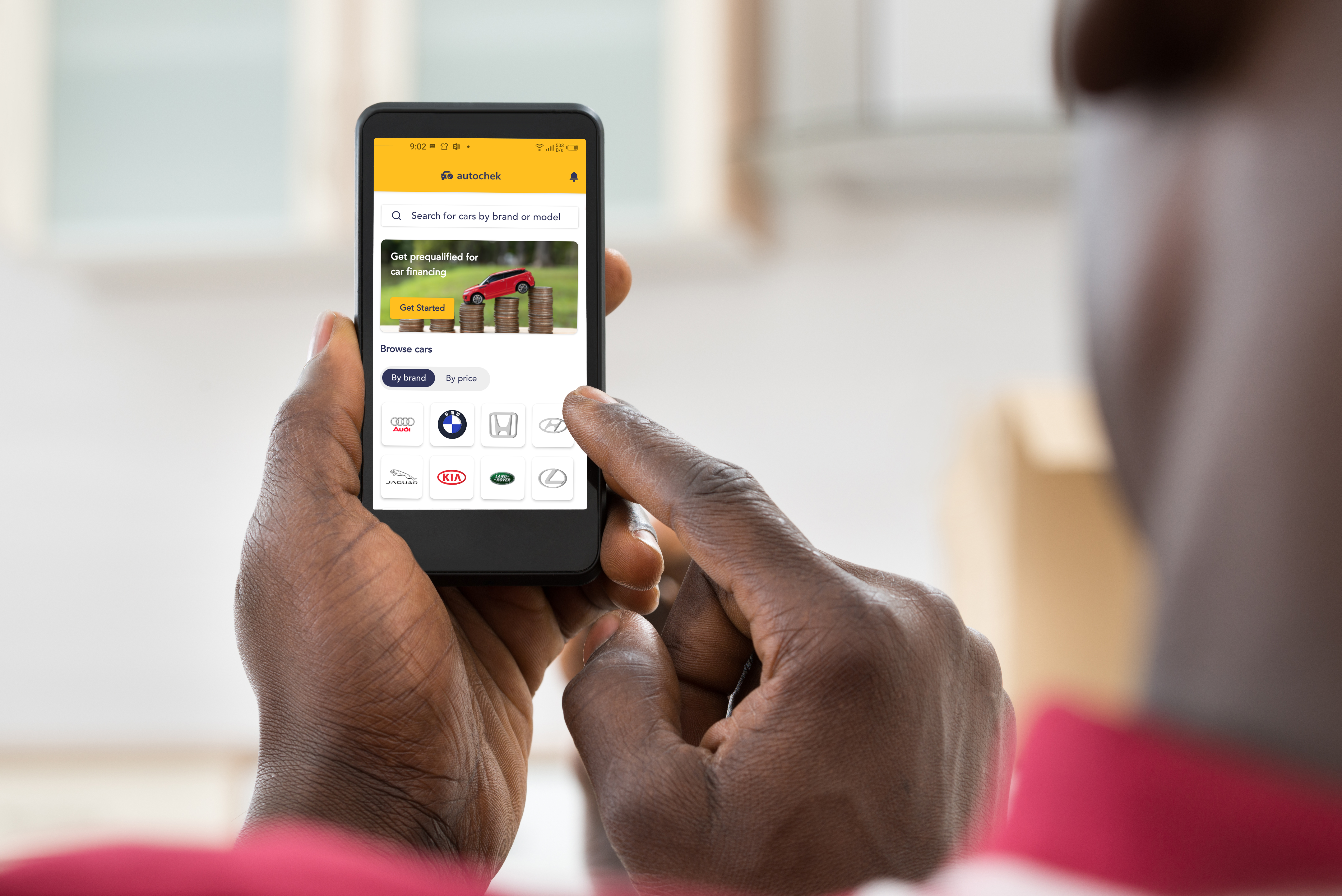
News: Nigeria’s Autochek raises $3.4M for car sales and service platform

Nigeria based startup Autochek looks to bring the sales and servicing of cars in Africa online. The newly founded venture has closed a $3.4 million seed-round co-led by TLcom Capital and 4DX ventures toward that aim. The raise comes fresh off of Autochek’s September acquisition of digital car sales marketplace Cheki in Nigeria and Ghana.

Nigeria based startup Autochek looks to bring the sales and servicing of cars in Africa online. The newly founded venture has closed a $3.4 million seed-round co-led by TLcom Capital and 4DX ventures toward that aim.

The raise comes fresh off of Autochek’s September acquisition of digital car sales marketplace Cheki in Nigeria and Ghana. It also follows the recent departure of Autochek CEO Etop Ikpe from Cars45 — the startup he co-founded in 2016, now owned by Amsterdam based OLX Group.

That’s a lot of news in a short-time for Ikpe. His new company will likely be in direct competition with his previous venture (also located in Nigeria). Still, the Nigerian entrepreneur — who built his early tech credentials at e-commerce startups DealDey and Konga — says Autochek is a new model.

“It’s different in the type of technology we’re building and that it’s asset light. I don’t have any inventory. I don’t buy cars. I don’t transact any [physical] cars. I don’t own any inspection locations. I don’t own any dealerships,” Ikpe told TechCrunch on a call from Lagos.

Autochek’s model, according to its CEO, is aimed at creating the digital infrastructure for a new system to better coordinate sales, servicing, and vehicle records of the car market in Nigeria and broader Africa.

Autochek CEO Etop Ikpe, Image Credit: Autochek

Ikpe characterizes that market as still largely informal and fragmented. “We’re basically focused on technology solutions to build the rails of [Africa’s] automotive sector to run on. We’re focusing on three foundations of the market: transactions and trading, maintenance, and financing,” he said.

Autochek’s platform — managed by a developer team in Lagos and Nairobi — is a network for consumers and businesses to buy cars, sell cars, service cars, and finance cars sales.

On the financing side, the startup launched with 10 bank partnerships in Nigeria and two in Ghana, according to Ikpe. Creating more financing options is both a big opportunity for the startup and consumers, he explained. “The used car market in Africa is a $45 billion a year market that has only a 5% financing penetration rate…so there’s huge upside for growth.”

Image Credit: Autochek

Across its core product offerings, Autochek has created a network of partners and standards. The company generates revenues through fees charged on consumer transactions and commissions paid by dealers and service shops on the platform. Consumers can sign up and use the Autochek app for free.

On the sudden departure from his previous startup, Cars45, “I left because I wanted to build something else,” explained Ikpe. There’s been plenty of speculation in local tech press as to what happened, including reports of forced exits by investors. Ikpe declined to get into the details except to say, “I’ve resigned. I’ve moved on and I’m focused on doing what I’m doing right now.”

In addition to its operations in Nigeria — Africa’s most populous nation, largest economy and top VC destination — Autochek plans to use its seed-financing to expand services and geographic scope. The startup will add associated auto related services, such as insurance and blue book pricing products. Autochek is also eying possible entry in new countries such as Ivory Coast, Senegal, South Africa, Kenya, Egypt and Algeria. More M&A could also be in play. “Acquisitions are going to be a core part of our expansion strategy,” said Ikpe.

TLcom Capital Partner Andreata Muforo confirmed the fund’s co-lead on the $3.4 million seed round. Speaking to TechCrunch on a call from Nairobi, she named Autochek’s asset light model, Ikpe’s repeat founder status, and the fund’s view of auto sales and service as an underserved market in Africa as reasons for backing the venture. Golden Palm Investments, Lateral Capital, MSA Capital, and Kepple Africa Ventures also joined the investment round.

While fintech gains the majority of VC financing across Africa’s top tech hubs — such as Nigeria, Kenya and South Africa — mobility related startups operating on the continent have attracted notable support. Drone delivery venture Zipline and trucking logistics company Kobo360 have both received backing from Goldman Sachs. In 2019, FlexClub, a South African startup that matches investors and drivers to cars for ride-hailing services, used a $1.3 million round to expand to Mexico in partnership with Uber.

News: Tutor marketplace GoStudent takes its Series A to €13.3M with Left Lane Capital and DN Capital

Vienna-based e-learning start-up GoStudent has increased the Series A round it raised earlier this year to €13.3 million, adding €5m this week, in a round led by Left Lane Capital and DN Capital. To date it has raised a total of €16m. GoStudent operates a platform connecting students with teachers worldwide for individual and group

Vienna-based e-learning start-up GoStudent has increased the Series A round it raised earlier this year to €13.3 million, adding €5m this week, in a round led by Left Lane Capital and DN Capital. To date it has raised a total of €16m.

GoStudent operates a platform connecting students with teachers worldwide for individual and group tutoring sessions. The company offers 6, 12, and 24-month tutoring subscription packages to students of all ages, and provides software tools to both students and teachers, allowing each party to focus entirely on teaching, tutoring, and learning while removing administrative tasks. Tutors are matched with students using AI and students can discuss their questions with others in a safe environment.

Since the early summer, it says it has expanded from the DACH region to other European markets including France, Belgium, Luxembourg and Spain, and has plans to extend its footprint across Europe. Although it was growing prior to the Covid-19 pandemic, it says it now books 100k+ monthly sessions across its customer base with 2,000+ active tutors on the platform.

CEO and cofounder Felix Ohswald said: “During the current crisis, GoStudent became an eye-opener for parents across Europe and showed that online tutoring is the key to making high-quality education widely accessible. Because our customers are not locally bound to tutoring services anymore, kids of all backgrounds and ages can be connected to exclusively the best tutors through our virtual classroom.”

Vinny Pujji, Partner at Left Lane Capital, said: “GoStudent’s high quality, yet affordable, solution is bringing many students into the world of online education for the first time. They have the opportunity to spearhead the European ed-tech movement in what has been a highly-fragmented, traditionally offline market.”

Nenad Marovac, managing partner and CEO at DN Capital said: “GoStudent is expanding across Europe at lightning speed while maintaining a strong focus on superior learning outcomes.”

In Europe GoStudent competes with independent freelancers offering their services online and offline on marketplaces like Superprof and Mytutor, as well as institutions like Acadomia in France, Schülerhilfe in Germany and Titanium Tutors in UK.

However, by being online it tends to be much cheaper to access than institutions as it does not rely on renting physical space. At the same time it can offer teachers from all over a country or region not just the ones who live nearby a student.

“The competition lacks quality assurance and long-term support. We help our customers until the kids make it out of school successfully and at the same time manage to keep our teachers long-term. Our product unlocks the full potential of the teacher and keeps them for several years,” Ohswald told TechCrunch.

News: Panasonic explores a European battery deal with Norway’s largest energy and industrial companies

Panasonic, one of the world’s largest manufacturers of lithium ion batteries, has signed a preliminary agreement with the Nordic energy company, Equinor, and engineering and industrial company, Norsk Hydro, to collaborate on building a battery business in Northern Europe. The three companies said that over the coming months they’ll work to assess the market for

Panasonic, one of the world’s largest manufacturers of lithium ion batteries, has signed a preliminary agreement with the Nordic energy company, Equinor, and engineering and industrial company, Norsk Hydro, to collaborate on building a battery business in Northern Europe.

The three companies said that over the coming months they’ll work to assess the market for lithium-ion batteries in Europe and explore the potential for building a big battery business in Norway.

“This collaboration combines Panasonic’s position as an innovative technology company and leader in  lithium-ion batteries, with the deep industrial experience of Equinor and Hydro, both strong global players,  to potentially pave way for a robust and sustainable battery business in Norway,” said Mototsugu Sato, executive vice president of Panasonic, in a statement. “We are pleased to enter into this initiative to explore  implementing sustainable, highly advanced technology and supply chains to deliver on the exacting needs  of lithium-ion battery customers and support the renewable energy sector in the European region.” 

As part of the agreement, the companies will explore the potential for an integrated battery value chain and for co-locating supply chain partners, according to a statement.

Panasonic is running neck and neck with LG Chem to be the leading supplier of batteries for electric vehicles in the world. The company’s main customers for batteries are Tesla and Toyota, while LG counts automakers including General Motors, Groupe Renault, Hyundai, Ford Motor Company, and Volvo as its main customers. 

Panasonic’s push into Northern Europe alongside two big regional players in hydrocarbons and renewable energy is a sign of the potential that exists in the European market beyond automotive.  

“Our companies seek to be leaders in the energy transition. The creation of this world-class battery  partnership demonstrates Equinor’s ambition to become a broad energy company,” said Al Cook, Executive Vice President of Global Strategy & Business  Development in Equinor, in a statement. “We believe that battery storage will play an increasingly important role in bringing energy systems to net zero emissions. By pooling our different areas of energy expertise, our companies will seek to create a battery business that is  profitable, scalable and sustainable.” 23

News: Resellee wants to become the Pinduoduo of Southeast Asia

Launched in the Philippines, social commerce startup Resellee wants to recreate the success of Pinduoduo, one of China’s fastest-growing e-commerce companies, in Southeast Asia. A major part of Resellee’s business is grocery deliveries, including fresh produce, and it has struck partnerships with the government and farmers’ groups to meet demand during the COVID-19 pandemic. The

Launched in the Philippines, social commerce startup Resellee wants to recreate the success of Pinduoduo, one of China’s fastest-growing e-commerce companies, in Southeast Asia. A major part of Resellee’s business is grocery deliveries, including fresh produce, and it has struck partnerships with the government and farmers’ groups to meet demand during the COVID-19 pandemic.

The startup announced this week it has raised $1 million in seed funding from Mintech Enterprises and Hofan Capital to build its technology and expand into new countries. Resellee was co-founded last year by chief executive officer Marc Concio, former head of e-commerce at Voyager Innovations, parent company of PayMaya, one of the Philippines’ largest online payment services.

Concio told TechCrunch that there are currently about 40,000 resellers on Resellee’s platform, and each has an average of about 20 buyers. Resellee sellers typically make about P5,000, or US $100, a month.

Like Pinduoduo, India’s Meesho and other social commerce platforms, Reselllee does not require sellers to carry their own inventory. Instead, it maintains a network of suppliers, including manufacturers and farmers, and lists available products on a marketplace. Then sellers chose what they want to add to their stores, which they market to potential buyers through their social media networks.

Resellee offers a wide range of products, including electronics and fashion items, but it currently focuses on grocery deliveries and prepaid credit for mobile phones and online games, which are all in high demand because of the COVID-19 pandemic.

Concio’s interest in social commerce was piqued after observing Pinduoduo’s astronomical growth in China, where it became the second-largest e-commerce company in the country less than five years after launching in 2015. Pinduoduo’s group buying model leverages users’ existing social networks, especially on WeChat, to pull together buyers for products at discounted prices, and has done well in smaller cities and rural areas.

“Resellee hopes to learn from this and be the Pinduoduo of Southeast Asia by pioneering social e-commerce and group buying in the Philippines, then expanding to Vietnam, Myanmar, Thailand and Cambodia, where social commerce has not started yet or is still in its early stage,” Concio said.

Social commerce is well-positioned to take off in the Philippines for several reasons, he added. One is the enormous amount of time spent of social media platforms there: four hours per day, versus two and a half hours in India, and two hours in China. The Philippines has one of the youngest median ages in Asia, around 23.5 years old, and that is the demographic most likely to use social commerce, Concio said.

Another reason is that many people want to start their own businesses, or need to make side income, especially during the pandemic, but have little access to working capital. Since Resellee’s sellers don’t need to carry their own inventory and can rely on the platform’s supply chain and logistics network, that means they can launch a store without spending any money. Most of the work they need to do is convincing people on their social media networks, like Facebook or Viber, to buy from their Resellee stores.

“We believe the same hypergrowth for social commerce will happen in the Philippines given all of the above, with Resellee pioneering both social e-commerce and group buying here,” Concio said.

Resellee’s competitors include some of the biggest e-commerce platforms in the region, like Lazada, Shopee and EZBuy, which have added social commerce features. Concio said one of Resellee’s advantages is its focus on helping sellers make money, and partnerships with farmers groups and the Philippine government. This includes a project to build an online platform that will aggregate supply information from farmer’s cooperatives across the country, and match them to Resellee’s sellers and buyers, eliminating middle men in the supply chain.

Resellee initially outsourced its logistics, but Concio said its deliveries were not prioritized by carriers, which led to customer complaints, especially for fresh produce. As a result, Resellee set up its own logistics arm, called Resellee Riders, in Metro Manila, where most of its grocery customers are. This enabled Resellee to launch next-day deliveries in the area this week (orders in other places are still carried out by third-party logistics providers).

While Resellee accepts online payments, including online wallets and bank cards, most buyers prefer to use its cash on delivery option. Sellers make money through commissions, which they can transfer to their online wallets or bank accounts. Resellee’s platform also gives them the option of using the funds to buy discounted mobile or gaming prepaid loads, or top-ups, which they can also offer in their stores. Along with fresh produce, prepaid loads are one of the key parts of Resellee’s business strategy. The platform guarantees the highest commissions and discounts for mobile prepaid loads from some of the Philippines’ top providers, including Smart, Sun and TalknText.

“The mobile prepaid market is a US $4 billion annual market versus total e-commerce in the Philippines of only US $2.3 billion,” Concio said. “This is one of our key strategies to own the mobile prepaid market, other than fruits and vegetables like Pinduoduo.”

News: Yubo could be the next big social app as it raises $47.5 million

French startup Yubo is the biggest social media app you’ve never heard of — unless you’re a teen. With a focus on young people under 25, the company has managed to attract 40 million users. A fraction of them hang out every day in live-streaming rooms, meet new people and spend money for more features.

French startup Yubo is the biggest social media app you’ve never heard of — unless you’re a teen. With a focus on young people under 25, the company has managed to attract 40 million users. A fraction of them hang out every day in live-streaming rooms, meet new people and spend money for more features.

That’s right, the company isn’t betting on ads. You can pay to unlock items or subscribe to the app. Yubo expects to generate $20 million in revenue this year — that’s twice as much revenue than it generated in 2019.

Yubo recently closed a Series C funding round of $47.5 million. Existing investors Idinvest Partners, Iris Capital, Alven and Sweet Capital are investing once again. Gaia Capital Partners is joining the round as a new investor. Jerry Murdock from Insight Partners isn’t investing in the company but he’s joining the company’s board.

So what is Yubo exactly? It’s a social media app that wants to reverse the current trend of social networks — you can’t follow other users, you can’t like content.

As we’ve seen many, many times in the past, once you introduce a following feature, the ability to like and algorithmic recommendations, your social network becomes a virtual stage. A tiny portion of your user base performs on that stage, the vast majority consumes content. Influencers emerge and monopolize your attention. We’ve seen that trend with Vine, Instagram, YouTube, Twitter, TikTok and even LinkedIn.

Yubo isn’t looking for performers. The company wants to help you meet other people, play games, hang out and create new friendships. In many ways, it feels like a way to hang out with teens that don’t attend your high school.

Image Credits: Yubo

When you open the app, you get a list of rooms that you can join. Users can live stream from their phone and chat with other users. You join rooms depending on what you’re looking for — local people, people talking about politics, people playing games, etc.

Once again, the idea isn’t to create giant room with a handful of performers and tens of thousands of viewers. There’s no tipping mechanism so it’s not like Twitch.

“In 95% of rooms, there are only streamers. Rooms have between 5 and 10 people on average,” co-founder and CEO Sacha Lazimi told me.

You can add people as friends and chat with them in the app. In addition to rooms, you can find new friends by swiping left and right on profile pages — an interaction borrowed from Tinder.

“We had 25 million registered users in December. Today, we have more than 40 million users,” Lazimi said. Most users are based in the U.S., the U.K., Canada, Australia and France.

And engagement has been going up as well. The number of hours spent in live rooms is up 400% year-over-year.

With in-app purchases and subscriptions, you get additional features. For instance, you can boost your live stream, promote your profile on the Swipe page or feature your profile at the top of the online section. It’s a way to get more people in your room, receive messages from more users and have more interactions in general.

“We think it’s the future of monetization for social platforms. If you focus on ads, you’re competing with Facebook, TikTok and Snap,” Lazimi said.

With such a young audience, moderation is extremely important. The company has been investing heavily on real-time moderation processes and it tries to enforce strict rules. When you sign up, Yubo checks your identity to put you in the right age group.

“We analyze all content both semantically and visually,” Lazimi said. The company is currently working on alert popups to tell users that they’re doing something inappropriate while it’s happening.

Yubo has in-house safety experts and also works with contractors — it can connect its users with local helplines as well. One-third of the company’s investments are focused on safety. It currently covers 36 languages.

With today’s funding round, Yubo will expand its team. There are currently 30 employees in Paris, London and Jacksonville, which is small when you think about the reach of the app. Yubo will open an office in New York.

On the product front, Yubo is working on recommendation algorithms. The company is also going to build a YouTube integration to consume YouTube content from a room directly. Yubo is also partnering with Snap to integrate Camera Kit. This way, Yubo will be able to build is own AR lenses for its users.

News: China’s smartphone giant Oppo ratchets up AR push

Tech companies around the world are still identifying the “next big thing” enabled by 5G connections. Some, such as Oppo, are betting it will be augmented reality. The Chinese smartphone firm showcased its progress in AR at a Tuesday event swarmed by hundreds of reporters, analysts, and partners in Shenzhen. Green strobe light, the color

Tech companies around the world are still identifying the “next big thing” enabled by 5G connections. Some, such as Oppo, are betting it will be augmented reality.

The Chinese smartphone firm showcased its progress in AR at a Tuesday event swarmed by hundreds of reporters, analysts, and partners in Shenzhen. Green strobe light, the color of its brand, beamed as vice president Liu Chang unveiled the Oppo AR Glass 2021, a lightweight headset slightly chunkier than regular glasses.

Still in the concept phase, the headset comes with fisheye cameras, tracks hands in milliseconds, and can supposedly simulate the experience of watching a 90-inch screen from three meters away.

AR has been a key focus for OPPO for sometime now. At last year’s inno day we announced a RMB 50 billion investment over 3 years to allow development of technologies including AR and the ecosystems they need to evolve. #OPPOINNODAY20 https://t.co/pfJSTHKs6u

— Alen Wu (@AlenWuOPPO) November 17, 2020

The concept product is the result of Oppo’s three-year-plan, unveiled last year, to spend 50 billion yuan ($7.62 billion) on futuristic tech including AR.

Smartphone makers from Xiaomi to Huawei are embracing AR as they design headsets that can tether to smartphones, taking advantage of the latter’s computing power. The Oppo AR Glass 2021, for instance, is designed to link to the Oppo Find X2 Pro which contains a Snapdragon 865 chipset.

It’s unclear when Oppo’s AR glasses will hit the shelf, but the firm is actively building the ecosystem needed for mass-market adoption, from working with content providers like video streaming site iQiyi to launching a developer initiative next year to make development tools widely available.

At the same event, Oppo also flaunted a concept phone with a “scrolling” OLED screen that could make an alternative to existing foldable phones. Oppo declined to disclose who the display maker is.

The #OPPOX2021 is the latest achievement from OPPO’s constant exploration into mobile phone form factors. It is built with a rollable OLED display measuring 6.7 inches which expands to 7.4 inches. #OPPOINNODAY20 pic.twitter.com/T96DOQ8KZm

— OPPO (@oppo) November 17, 2020

News: Trump fires top US cybersecurity official Chris Krebs for debunking false election claims

Chris Krebs, one of the most senior cybersecurity officials in the U.S. government, has been fired. Krebs served as the director of the Cybersecurity and Infrastructure Security Agency (CISA) since its founding in November 2018 until he was removed from his position on Tuesday. It’s not immediately clear who is currently heading the agency. A

Chris Krebs, one of the most senior cybersecurity officials in the U.S. government, has been fired.

Krebs served as the director of the Cybersecurity and Infrastructure Security Agency (CISA) since its founding in November 2018 until he was removed from his position on Tuesday. It’s not immediately clear who is currently heading the agency. A spokesperson for CISA did not immediately comment.

President Trump fired Krebs in a tweet late on Tuesday, citing a statement published by CISA last week, which found there was “no evidence that any voting system deleted or lost votes, changed votes, or was in any way compromised.” Trump, who has repeatedly made claims of voter fraud without providing evidence, alleged that CISA’s statement was “highly inaccurate.”

Shortly after, Twitter labeled Trump’s tweet for making a “disputed” claim about election fraud.

The recent statement by Chris Krebs on the security of the 2020 Election was highly inaccurate, in that there were massive improprieties and fraud – including dead people voting, Poll Watchers not allowed into polling locations, “glitches” in the voting machines which changed…

— Donald J. Trump (@realDonaldTrump) November 18, 2020

Reuters first reported the news of Krebs’ potential firing last week.

Krebs was appointed by President Trump to head the newly created cybersecurity agency in November 2018, just days after the conclusion of the midterm elections. He previously served as an undersecretary for CISA’s predecessor, the National Protection and Programs Directorate, and also held cybersecurity policy roles at Microsoft.

During his time in government, Krebs became one of the most vocal voices in election security, taking the lead during 2018 and in 2020, which largely escaped from disruptive cyberattacks, thanks to efforts to prepare for cyberattacks and misinformation that plagued the 2016 presidential election.

He was “one of the few people in this administration respected by everyone on both sides of the aisle,” said Sen. Mark Warner, a member of the Senate Intelligence Committee, in a tweet.

Krebs is the latest official to leave CISA in the past year. Brian Harrell, who oversaw infrastructure protection at the agency, resigned in August after less than a year on the job, and Jeanette Manfra left for a role at Google at the end of last year. Cyberscoop reported Thursday that Bryan Ware, CISA’s assistant director for cybersecurity, resigned for a position in the private sector.

News: AI-tool maker Seldon raises £7.1M Series A from AlbionVC and Cambridge Innovation Capital

Seldon is a U.K. startup that specializes in the rarified world of development tools to optimize machine learning. What does this mean? Well, dear reader, it means that the “AI” that companies are so fond of trumpeting does actually end up working. It has now raised a £7.1 million Series A round co-led by AlbionVC

Seldon is a U.K. startup that specializes in the rarified world of development tools to optimize machine learning. What does this mean? Well, dear reader, it means that the “AI” that companies are so fond of trumpeting does actually end up working.

It has now raised a £7.1 million Series A round co-led by AlbionVC and Cambridge Innovation Capital . The round also includes significant participation from existing investors Amadeus Capital Partners and Global Brain, with follow-on investment from other existing shareholders. The £7.1 million funding will be used to accelerate R&D and drive commercial expansion, take Seldon Deploy — a new enterprise solution — to market and double the size of the team over the next 18 months.

More accurately, Seldon is a cloud-agnostic machine learning (ML) deployment specialist which works in partnership with industry leaders such as Google, Red Hat, IBM and Amazon Web Services.

Key to its success is that its open-source project Seldon Core has more than 700,000 models deployed to date, drastically reducing friction for users deploying ML models. The startup says its customers are getting productivity gains of as much as 92% as a result of utilizing Seldon’s product portfolio.

Alex Housley, CEO and founder of Seldon speaking to TechCrunch explained that companies are using machine learning across thousands of use cases today, “but the model actually only generates real value when it’s actually running inside a real-world application.”

“So what we’ve seen emerge over these last few years are companies that specialize in specific parts of the machine learning pipeline, such as training version control features. And in our case we’re focusing on deployment. So what this means is that organizations can now build a fully bespoke AI platform that suits their needs, so they can gain a competitive advantage,” he said.

In addition, he said Seldon’s open-source model means that companies are not locked-in: “They want to avoid locking as well they want to use tools from various different vendors. So this kind of intersection between machine learning, DevOps and cloud-native tooling is really accelerating a lot of innovation across enterprise and also within startups and growth-stage companies.”

Nadine Torbey, an investor at AlbionVC, added: “Seldon is at the forefront of the next wave of tech innovation, and the leadership team are true visionaries. Seldon has been able to build an impressive open-source community and add immediate productivity value to some of the world’s leading companies.”

Vin Lingathoti, partner at Cambridge Innovation Capital, said: “Machine learning has rapidly shifted from a nice-to-have to a must-have for enterprises across all industries. Seldon’s open-source platform operationalizes ML model development and accelerates the time-to-market by eliminating the pain points involved in developing, deploying and monitoring machine learning models at scale.”

WordPress Image Lightbox Plugin