Yearly Archives: 2020

News: Onit acquires legal startup McCarthyFinch to inject AI into legal workflows

Onit, a workflow software company based in Houston with a legal component, announced this week that it has acquired 2018 TechCrunch Disrupt Battlefield alum McCarthyFinch.  Onit intends to use the startup’s AI skills to beef up its legal workflow software offerings. The companies did not share the purchase price. After evaluating a number of companies

Onit, a workflow software company based in Houston with a legal component, announced this week that it has acquired 2018 TechCrunch Disrupt Battlefield alum McCarthyFinch.  Onit intends to use the startup’s AI skills to beef up its legal workflow software offerings.

The companies did not share the purchase price.

After evaluating a number of companies in the space, Onit focused on McCarthyFinch, which gives it an artificial intelligence component the company’s legal workflow software had been lacking. “We evaluated about a dozen companies in the AI space and dug in deep on six of them. McCarthyFinch stood out from the pack. They had the strongest technology and the strongest team,” Eric M. Elfman, CEO and co-founder of Onit told TechCrunch.

The company intends to inject that AI into its existing Aptitude workflow platform.”Part of what really got me excited about McCarthyFinch was the very first conversation I had with their CEO, Nick Whitehouse. They considered themselves an AI platform, which complemented our approach and our workflow automation platform, Aptitude,” Elfman said.

McCarthyFinch CEO and co-founder Whitehouse says the startup was considering whether to raise more money or look at being acquired earlier this year when Onit made its interest known. At first, he wasn’t really interested in being acquired and was hoping to go the partner route, but over time that changed.

“I was very much on the partner track, and was probably quite dismissive to begin with because I was quite focused on that partner strategy. But as we talked, all egos aside, it just made sense [to move to acquisition talks],” Whitehouse said.

The talks heated up in May and the deal officially closed last week. With Onit, headquartered in Houston and McCarthyFinch in New Zealand, the negotiations and meetings all happened on Zoom. The two companies’ principals have never met in person. The plan is for McCarthyFinch to stay in place, even after the pandemic ends. Whitehouse expects to make a trip to Houston whenever it is safe to do so.

Whitehouse says his experience with Battlefield has had a huge influence on him. “Just the insights that we got through Battlefield, the coaching that we got, those things have stuck with me and they’ll stick with me for the rest of my life,” he said.

The company had 45 customers and 17 employees at the time of the acquisition. It raised $5 million US dollars along the way. Now it becomes part of Onit as the journey continues.

News: LA-based Credit Key raises $33 million for its business-to-business payments platform

Bringing the buy-now pay-later model that transformed companies like Klarna and Affirm into billion dollar businesses to small businesses across the U.S. has netted the payment and lending company Credit Key another $33.85 million in funding. The Los Angeles-based company raised its latest cash from Greycroft, Bonfire Ventures, Loeb.nyc and other, undisclosed, investors, the company

Bringing the buy-now pay-later model that transformed companies like Klarna and Affirm into billion dollar businesses to small businesses across the U.S. has netted the payment and lending company Credit Key another $33.85 million in funding.

The Los Angeles-based company raised its latest cash from Greycroft, Bonfire Ventures, Loeb.nyc and other, undisclosed, investors, the company said.

“B2B e-commerce continues to expand at an incredible pace, but a great majority of merchants still lack the payment tools that their customers are asking for,” said John Tomich, co-founder and chief executive of Credit Key, in a statement. “As we equip more and more merchants with our point-of-sale financing option, we continue to see data that points to larger orders, fewer abandoned carts and improved customer acquisition.”

For businesses, the company offers an alternative payment solution that quickly provides financing for purchases at the point-of-sale.

Credit Key assumes the credit risk and loan servicing, and buyers can have a transparent payment plan with competitive interest rates, the company said.

The company is tackling a huge market. There are more than $9 trillion in business-to-business payments processed in the US each year, and while (only) $1.3 trillion of those payments happen online, the percentage of e-commerce transactions is growing rapidly.

Credit Key said that it expects the e-commerce market to reach $1.8 trillion by 2022.

“As small and medium sized businesses increase online purchasing, they’re eager to find alternatives to the limits of both traditional trade credit and the common credit card,” Tomich said. “We anticipate continued momentum and we’re excited to assist small businesses as they work through the recovery and position themselves for the future.”

News: AllRight , an English learning app for children, raises $5M to scale-up from Genesis Investments

AllRight is a platform for English language learning, aimed at children four years or older, which combines lessons with real teachers and homework with ‘AI-powered’ tutors. It’s now raised a $5 million Series A round led by Genesis Investments, with participation from TMT Investments, TerraVC, and existing investors Flashpoint and Misha Lyalin. The Ukraine-based startup

AllRight is a platform for English language learning, aimed at children four years or older, which combines lessons with real teachers and homework with ‘AI-powered’ tutors. It’s now raised a $5 million Series A round led by Genesis Investments, with participation from TMT Investments, TerraVC, and existing investors Flashpoint and Misha Lyalin.

The Ukraine-based startup will now enter new markets and strengthen its positions in Poland, Russia, Spain, and Latin America. AllRight’s competitors include Open English, LingoKids (raised $22M), MyBuddy, Preply ($15M) and NovaKid ($2.3M).

There are approximately 1.5 billion English language learners globally and the number of children among them reached 500 million in 2020. The global English language learning market is projected to reach $55 billion by 2025, growing at 7% annually, according to reports.

So the company targets markets with low online education penetration rates, such as emerging markets. Since its launch in 2017 AllRight has launched Spanish – English, Polish – English, and Russian – English language pairs and garnered 9,000 students, who take 50,000 lessons per month.

The learning process is powered by a real-time collaboration platform for teachers and students, doing live lessons online with lessons ‘quality controlled by AI’ and an ‘AI-powered tutor’ with a voice-only interface with speech recognition and synthesis. This allows children to practice spoken English with AI. The app has obviously benefited from the fact that many lessons in schools are now conducted virtually due to the global pandemic.

AllRight was founded by Oleg Oksyuk, and the team is comprised of people drawn from 51Talks, SkyEng, Cisco, and Yandex. He said: “Our pilot language pair launch three years ago showed that learning a language with gamification in early childhood produces excellent results. That is why in March 2019 we directed our efforts to further delivery of an affordable edutainment program and launched Spanish-English and Polish-English language pairs.”

Vitaly Laptenok, General Partner of Genesis Investments said: “This is the biggest deal of Genesis Investments by date…The platform currently demonstrates 3x year-over-year growth and the team supports these dynamics by entering new markets and scaling there.”

News: Wish files to go public with 100M monthly actives, $1.75B in 2020 revenue thus far

This morning Wish, a well-known mobile ecommerce startup, filed to go public. It joins Affirm, Airbnb, and Roblox in filing this week as many well-known and valuable private companies look to debut before the year ends and the holidays start. Wish’s S-1 (which is filed under its corporate name ContextLogic) is of particular interest given

This morning Wish, a well-known mobile ecommerce startup, filed to go public. It joins Affirm, Airbnb, and Roblox in filing this week as many well-known and valuable private companies look to debut before the year ends and the holidays start.

Wish’s S-1 (which is filed under its corporate name ContextLogic) is of particular interest given that COVID-19 and the global pandemic have changed consumer behavior around the world in 2020. As going to stores became more risky over time, many shoppers turned to buying more goods from the Internet, bolstering ecommerce players like Shopify, BigCommerce, as well as companies that facilitate online payments, like Square and PayPal.

How has the pandemic impacted Wish? It appears to have accelerated its growth.

Looking back in time, Wish saw its revenue growth slow in 2019, before expanding much more quickly in 2020. From 2017 to 2018, for example, when Wish saw revenues of $1.10 billion and $1.73 billion respectively, it grew 57%. But from 2018 to 2019, its revenue only grew to $1.90 billion, up a far-smaller 10%.

More recently, the situation has improved for the digital retailer, with Wish managing to grow more quickly in the first three months of 2020. In the first nine months of 2019, Wish racked up revenues of $1.33 billion. In the same period of 2020 the company’s top line grew to $1.75 billion, up 32% from the year-ago result.

That’s far better than the 10% growth pace that Wish showed in 2019. Wish’s growth acceleration helps explain why it is going public now: it has a growth story to tell investors.

But the company’s accelerated growth has come at a cost, namely rising losses. During the first three quarters of 2019, Wish posted net losses of just $5 million, before some preferred stock costs pushed its total deficit to $12 million. In the same period of 2020 Wish lost a far steeper $176 million.

Wish’s falling gross margins have not helped. In 2018, Wish had gross margins of 84%. That number fell to 77% in 2019, and then to just 65% in the first three quarters of 2020.

But the ecommerce player did have some more positive details to show, as this table details:

Improving free cash flow in 2020 compared to 2019? Check. Monthly active user growth rising nicely? Yes. Active buyers up compared to the year-ago period? Yep. Looking at the company’s adjusted profitability is not encouraging, but a 6% adjusted EBITDA margin won’t send investors packing for the hills if they buy Wish’s growth story.

COVID-19 was not simply a boost to Wish, its S-1 makes clear. The pandemic shut some supply hubs, slowed supply chains, and lengthened delivery times. But the company also said that it “benefited from greater mobile usage and less competition from physical retail as a result of shelter-in-place mandates” and “benefited from increased user spending due to U.S. government stimulus programs.” Noting that stimulus is fading, Wish warns investors in the document that it “cannot assure you that increased levels of mobile commerce will continue when COVID-19 has subsided or otherwise, or that the U.S. government will offer additional stimulus programs.”

Wish is wealthy, with around $1.1 billion in cash, cash equivalents, and marketable securities. It also has no long-term debts that could cause concern.

Finally, who is going to win in the deal? Most notably Peter Szulczewski, Wish’s founder and CEO. He controls 65.5% of the Company’s Class B shares and around 58% of its total voting power, pre-IPO. Major investors include DST Global, Formation8, Founder Fund, GGV Capital, and Republic Technologies.

Quite a lot of venture hopes and returns are riding on this IPO, then. More soon.

News: OneWeb emerges from bankruptcy, aims to begin launching satellites again on December 17

Broadband communication satellite company OneWeb has emerged from its Chapter 11 bankruptcy protection status, the company announced today. It’s now also officially owned by a consortium consisting of the UK government and India’s Bharti Global, and Neil Masterson is now installed as CEO, replacing outgoing chief executive Adrian Steckel, who will remain as a Board

Broadband communication satellite company OneWeb has emerged from its Chapter 11 bankruptcy protection status, the company announced today. It’s now also officially owned by a consortium consisting of the UK government and India’s Bharti Global, and Neil Masterson is now installed as CEO, replacing outgoing chief executive Adrian Steckel, who will remain as a Board advisor.

OneWeb seems eager to get back to actively launching the satellites that will make up its 650-strong constellation – it has set December 17 as the target date for its next launch. The company has 74 satellite already on orbit across three prior launches, which occurred prior to its bankruptcy filing in March.

OneWeb’s acquisition by the combined UK government/Bharti Global tie-up was revealed in July, providing a path for the financially beleaguered company to get back to active status with $1 billion in equity funding. The UK-based company will continue to operate primarily from the UK via this new deal, and it’s being positioned as a key cornerstone in positioning the UK as a space sector leader and innovator.

The company also announced that its joint-venture manufacturing facility with Airbus has resumed operation in Florida, and will continue to produce new spacecraft for future launches. The plan is to launch additional satellites throughout next year and 2022, and then begin offering commercial service in select areas late in 2021, with a global service expansion intended for 2022.

News: Neatsy wants to reduce sneaker returns with 3D foot scans

U.S.-based startup Neatsy AI is using the iPhone’s depth-sensing FaceID selfie camera as a foot scanner to capture 3D models for predicting a comfortable sneaker fit. Its app, currently soft launched for iOS but due to launch officially next month, asks the user a few basic questions about sneaker fit preference before walking through a

U.S.-based startup Neatsy AI is using the iPhone’s depth-sensing FaceID selfie camera as a foot scanner to capture 3D models for predicting a comfortable sneaker fit.

Its app, currently soft launched for iOS but due to launch officially next month, asks the user a few basic questions about sneaker fit preference before walking through a set of steps to capture a 3D scan of their feet using the iPhone’s front-facing camera. The scan is used to offer personalized fit predictions for a selection of sneakers offered for sale in-app — displaying an individualized fit score (out of five) in green text next to each sneaker model.

Shopping for shoes online can lead to high return rates once buyers actually get to slip on their chosen pair, since shoe sizing isn’t standardized across different brands. That’s the problem Neatsy wants its AI to tackle by incorporating another more individual fit signal into the process.

The startup, which was founded in March 2019, has raised $400K in pre-seed funding from angel investors to get its iOS app to market. The app is currently available in the US, UK, Germany, France, Italy, Spain, Netherlands, Canada and Russia. 

Neatsy analyzes app users’ foot scans using a machine learning model it’s devised to predict a comfy fit across a range of major sneaker brands — currently including Puma, Nike, Jordan Air and Adidas — based on scanning the insoles of sneakers, per CEO and founder Artem Semyanov.

He says they’re also factoring in the material shoes are made of and will be honing the algorithm on an ongoing basis based on fit feedback from users. (The startup says it’s secured a US patent for its 3D scanning tech for shoe recommendations.)

The team tested the algorithm’s efficiency via some commercial pilots this summer — and say they were able to demonstrate a 2.7x reduction in sneaker return rates based on size, and a 1.9x decrease in returns overall, for a focus group with 140 respondents.

Handling returns is clearly a major cost for online retailers — Neatsy estimates that sneaker returns specifically rack up $30BN annually for ecommerce outlets, factoring in logistics costs and other factors like damaged boxes and missing sneakers.

“All in all, shoe ecommerce returns vary among products and shops between 30% and 50%. The most common reasons for this category are fit & size mismatch,” says Semyanov, who headed up the machine learning team at Prism Labs prior to founding Neatsy.

“According to Zappos, customers who purchase its most expensive footwear ultimately return ~50% of everything they buy. 70% online shoppers make returns each year. Statista estimates return deliveries will cost businesses $550 billion by 2020,” he tells us responding to questions via email.

“A 2019 survey from UPS found that, for 73% of shoppers, the overall returns experience impacts how likely they are to purchase from a given retailer again, and 68% say the experience impacts their overall perceptions of the retailer. That’s the drama here!

“Retailers are forced to accept steep costs of returns because otherwise, customers won’t buy. Vs us who want to treat the main reasons of returns rather than treating the symptoms.”

While ecommerce giants like Amazon address this issue by focusing on logistics to reducing friction in the delivery process, speeding up deliveries and returns so customers spend less time waiting to get the right stuff, scores of startups have been trying to tackle size and fit with a variety of digital (and/or less high tech) tools over the past five+ years — from 3D body models to ‘smart’ sizing suits or even brand- and garment-specific sizing tape (Nudea‘s fit tape for bras) — though no one has managed to come up with a single solution that works for everything and everyone. And a number of these startups have deadpooled or been acquired by ecommerce platforms without a whole lot to show for it.

While Neatsy is attempting to tackle what plenty of other founders have tried to do on the fit front, it is at least targeting a specific niche (sneakers) — a relatively narrow focus that may help it hone a useful tool.

It’s also able to lean on mainstream availability of the iPhone’s sensing hardware to get a leg up. (Whereas a custom shoe design startup that’s been around for longer, Solely Original, has offered custom fit by charging a premium to send out an individual fit kit.)

But even zeroing in on sneaker comfort, Neatsy’s foot scanning process does require the user to correctly navigate quite a number of steps (see the full flow in the below video). Plus you need to have a pair of single-block colored socks handy (stripy sock lovers are in trouble). So it’s not a two second process, though the scan only has to be done once.

At the time of writing we hadn’t been able to test Neatsy’s scanning process for ourselves as it requires an iPhones with a FaceID depth-sensing camera. On this writer’s 2nd-gen iPhone SE, the app allowed me to swipe through each step of the scan instruction flow but then hung at what should have been the commencement of scanning — displaying a green outline template of a left foot against a black screen.

This is a bug the team said they’ll be fixing so the scanner gets turned off entirely for iPhone models that don’t have the necessary hardware. (Its App Store listing states its compatible with iPhone SE (2nd generation), though doesn’t specify the foot scan feature isn’t.) 

While the current version of Neatsy’s app is a direct to consumer ecommerce play, targeting select sneaker models at app savvy Gen Z/Millennials, it’s clearly intended as a shopfront for retailers to check out the technology.

When as ask about this Semyanov confirms its longer term ambition is for its custom fit model to become a standard piece of the ecommerce puzzle.

“Neatsy app is our fastest way to show the world our vision of what the future online shop should be,” he tells TechCrunch. “It attracts users to shops and we get revenue share when users buy sneakers via us. The app serves as a new low-return sales channel for a retailer and as a way to see the economic effect on returns by themselves.

“Speaking long term we think that our future is B2B and all ecommerce shops would eventually have a fitting tech, we bet it will be ours. It will be the same as having a credit card payment integration in your online shop.”


News: Reddit appoints second Black board member this year

Reddit has appointed Paula Price, who has served on the board of six public companies, including Accenture and Deutsche Bank, to its board of directors. Price’s appointment makes her one of two Black directors on the company’s board. “Paula’s vast experience as a world-class financial leader and strategic advisor will be a tremendous asset to

Reddit has appointed Paula Price, who has served on the board of six public companies, including Accenture and Deutsche Bank, to its board of directors. Price’s appointment makes her one of two Black directors on the company’s board.

“Paula’s vast experience as a world-class financial leader and strategic advisor will be a tremendous asset to us in the years ahead,” Reddit CEO Steve Huffman said in a statement. “Best of all, she embodies the two qualities most important to us for this Board seat: expertise leading companies through periods of transformative growth and real passion for Reddit’s mission.”

Before Reddit co-founder Alexis Ohanian stepped down from the board and urged the company to appoint a Black director to take his place, Reddit had zero Black board members. Reddit took Ohanian’s advice and appointed Y Combinator Michael Seibel to the board.

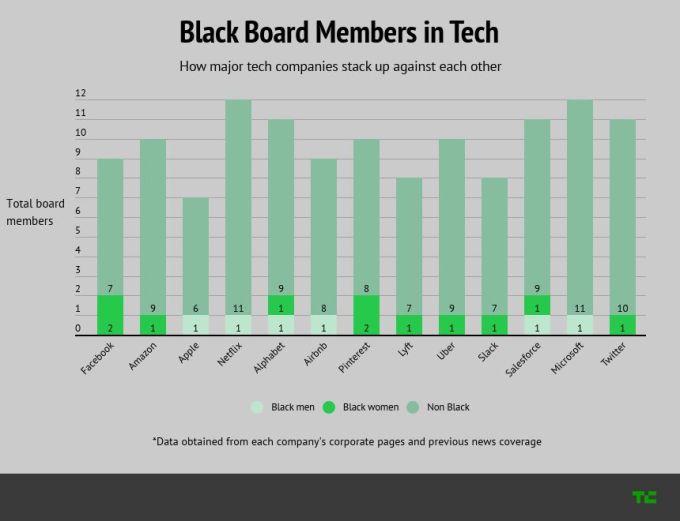
We’ve seen an increase in Black board members across the board at tech companies in the last couple of years. Most recently, Pinterest announced its first Black board member in August, followed by the addition of a second one in October.

Here’s a look at Black board member representation at major tech companies.

News: Pfizer and BioNTech to submit request for emergency use approval of their COVID-19 vaccine today

Two of the companies behind one of the leading COVID-19 vaccine candidates will seek approval from the U.S. Food and Drug Administration for emergency use authorization (EUA) of their preventative treatment with an application to be delivered today. Pfizer and BioNTech, who revealed earlier this week that their vaccine was 95% effective based on Phase

Two of the companies behind one of the leading COVID-19 vaccine candidates will seek approval from the U.S. Food and Drug Administration for emergency use authorization (EUA) of their preventative treatment with an application to be delivered today. Pfizer and BioNTech, who revealed earlier this week that their vaccine was 95% effective based on Phase 3 clinical trial data, are submitting for the emergency authorization in the U.S., as well as in Australia, Canada, Europe, Japan and the U.K., and says that could pave the way for use of the vaccine to begin in “high-risk populations” by the end of next month.

The FDA’s EUA program allows therapeutics companies to seek early approval when mitigating circumstances are met, as is the case with the current global pandemic. EUA’s still require that supporting information and safety data are provided, but they are fast-tracked relative to the full, formal and more permanent approval process typically used for new drugs and treatments that come before they’re able to actually be administered broadly.

Pfizer and BioNTech’s vaccine candidate, which is an mRNA-based vaccine that essentially provides a recipient’s body with instructions on how to produce specific proteins to block the ability of SARS-CoV-19 (the virus that causes COVID-19) to attach to cells. The vaccine has recently been undergoing a Phase 3 clinical trial, that included 43,661 participants so far. The companies are submitting supporting information they hope will convince the FDA to grant the EUA, including data from 170 confirmed cases from among the participants, and safety information actively solicited from 8,000 participants, and supplementary data form another 38,000 who that was passively collected.

While production is ramping globally for this and other vaccines in late stage development, and EUA will potentially open up access to high-risk individuals including frontline healthcare workers, it’s worth pointing out that any wide vaccination programs likely aren’t set to begin until next year, and likely later in 2021.

News: India approves Reliance’s $3.4 billion deal with Future Group, brings new headache to Amazon

The Indian watchdog said on Friday it has approved the $3.4 billion deal between the nation’s two largest retail giants, Future Group and Reliance Retail, posing a new headache for American e-commerce group Amazon, which had raised objections over the deal. The Competition Commission of India (CCI), the Indian antitrust body, said in a brief

The Indian watchdog said on Friday it has approved the $3.4 billion deal between the nation’s two largest retail giants, Future Group and Reliance Retail, posing a new headache for American e-commerce group Amazon, which had raised objections over the deal.

The Competition Commission of India (CCI), the Indian antitrust body, said in a brief statement that it had approved the proposed acquisition of retail, wholesale, logistics, and warehousing businesses of Future Group, India’s second largest retail chain, by Reliance Retail, the largest chain — and one that is controlled by Asia’s richest man Mukesh Ambani.

Reliance Retail and Future Group announced their proposed deal, worth $3.4 billion, in late August. Amazon, which owns a stake in one of Future Group’s holding companies, has raised objections over the deal, alleging the Indian firm of engaging in insider trading and violating contracts.

Late last month, a Singapore arbitration court issued an order to temporarily halt the deal between the two Indian retail giants, but it has been unclear ever since how much water that order holds in India. Shortly after the court issued the order, Future Group and Reliance Retail said they were working to complete their deal “without any delay.”

Friday’s announcement is crucial. Amazon, which has invested over $6.5 billion in its India business, had requested the CCI and SEBI, the regulator of the securities and commodity market in India, to consider Singapore International Arbitration Centre’s order and block the deal.

Future Group is currently fighting with Amazon in a court in Delhi, where a lawyer for the Indian firm has used bizarre language to charge the American firm. On several occasions, the lawyer has likened Amazon’s effort to block Future Group’s deal to the East India Company, the British trading house whose arrival in India kicked off nearly 200 years of colonial rule.

Amazon did not immediately respond to a request for comment.

The deal between India’s two largest retail chains was also seen an opportunity for the CCI to review the entire value chain — wholesale, logistics, warehousing, and front-end retailing — of the retail industry. The clearance delivered today means that the antitrust body has concluded that the deal won’t have an adverse impact on competition in the relevant industry.

More to follow…

News: Charge’s City is an e-bike for everyone

Charge Bikes founder Nick Larsen and VP of product Peter Vallance wanted to reduce the pain points of buying and owning an electric bike to attract everyday folks and cycling enthusiasts alike. The company offers three models: the Comfort for weekend leisure rides, the City for commuters and the XC for off-road enthusiasts. I got

Charge Bikes founder Nick Larsen and VP of product Peter Vallance wanted to reduce the pain points of buying and owning an electric bike to attract everyday folks and cycling enthusiasts alike.

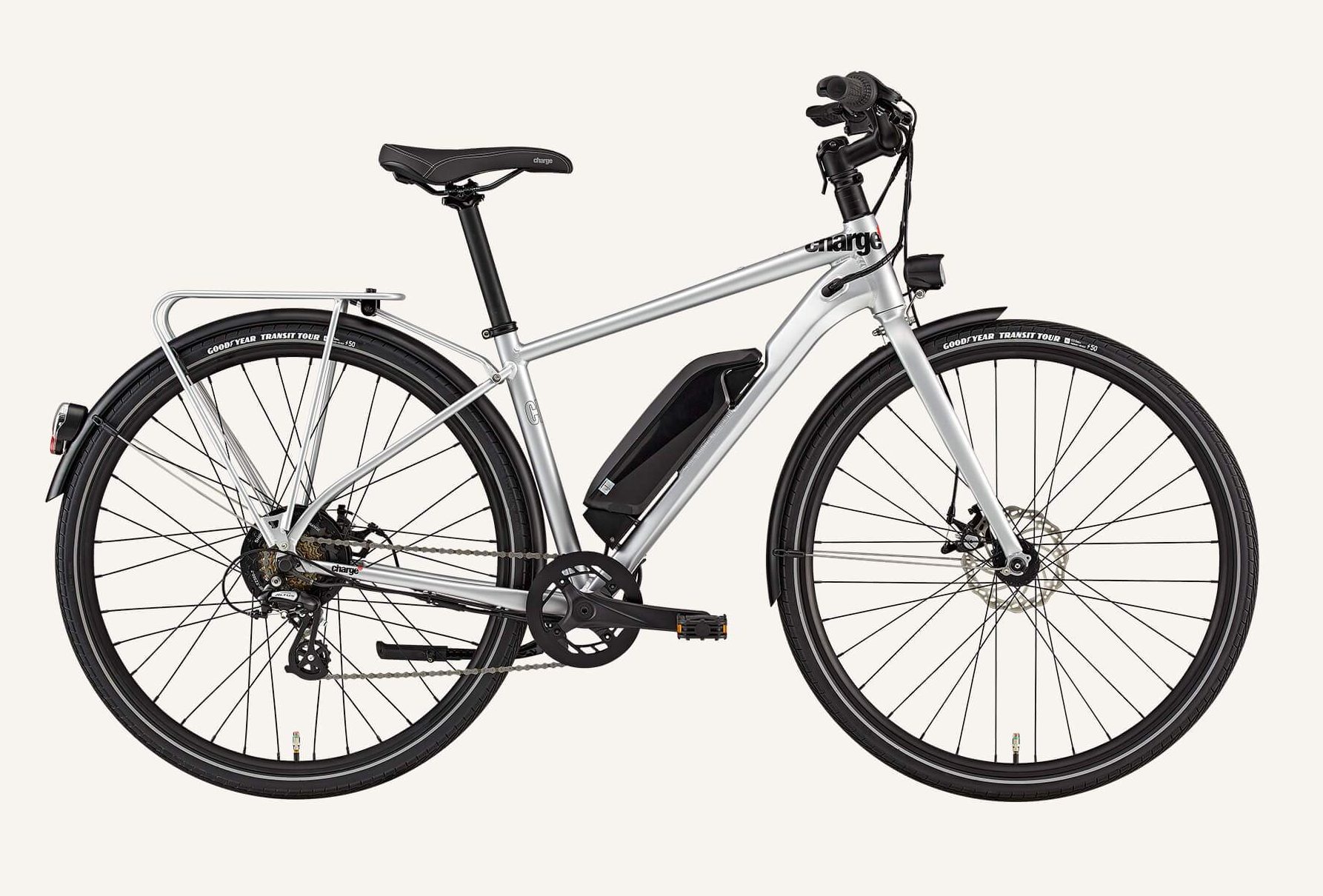
The company offers three models: the Comfort for weekend leisure rides, the City for commuters and the XC for off-road enthusiasts. I got to spend some time with the City and took it on a quick grocery to see what it could do.

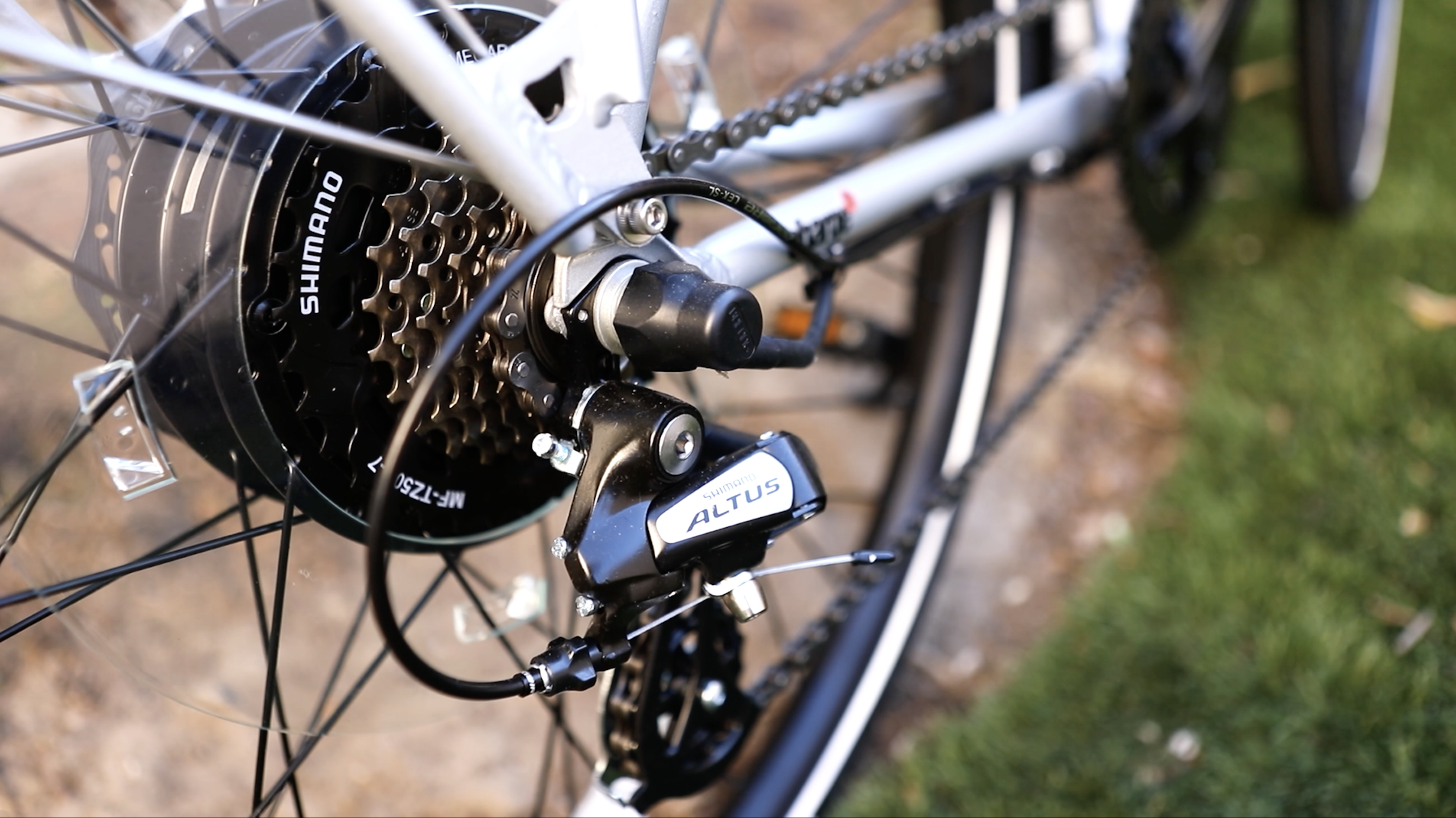
The bbike features a 250w geared hub motor with a max speed up to 20 MPH, pedal assist and throttle, front and rear lights, a locking removable battery that’s capable of 50 miles on a single charge, folding handlebar and pedals, puncture-resistant Goodyear tires, tire pressure sensors, an easy to read display with speed and power assist selector, disc brakes, Shimano Tourney 7 speed shifter, fenders, a rack and a handy dandy kickstand. All of that weighs in at just 45 pounds.

Charge Bikes

Source: Charge

Unboxing was simple, and I was happy the company skipped the styrofoam packing. I really like working with my hands and building things, but this was almost too easy. Just unfold the handlebar and pedals, attach the front wheel and adjust the seat post. Once you fill the tires with air and charge the battery, you’re ready to ride.

I started my ride on flat ground and mostly used the throttle at the highest setting — because, why not? The seat, grips, and riding position were comfortable, and I could see myself easily riding for longer.

The foldable pedals felt strange. There was some flex and bowing, which made me think I might be losing some crank power going to the wheel. I was afraid I might break them. However, the foldable handlebar felt securely locked in and didn’t give me any worry.

Source: Charge

One of the company’s marketing messages — “Get there and back, no sweat” — didn’t ring entirely true, at least for me. While it’s plenty fast and assists great on flat land, it’s not the hill flattening bike that I hoped it would be. We’ve got a lot of foothills out here in Oakland and my route to the local grocery store had several varying inclines. Some of the steepest had me cranking hard to make five miles an hour at assist level five.

It’s definitely better to have the electric power than not. I certainly wouldn’t attack any of these hills on my regular bike. I normally drive to this grocery store, but having an e-bike gave me the option of leaving the car parked and I like that.

Some critical points about the bike but aren’t dealbreakers are the fenders. While a great feature, they’d bend out of place often rubbing against the tires. The foldable pedals are a nice idea, but I’d likely swap them out for standard ones with straps.

I ran into gear-shifting issues mid hill climb which is the worst time for it not to shift into an easier gear. This was happening with my thumb on the throttle full blast. I also had an issue with the charger not charging the battery 100% overnight. It happened a couple times and I’m not sure what the issue was. I unplugged everything and plugged it back up, and that seemed to do the trick.

Source: Charge

Overall, the City is a great utilitarian bike for daily riding for everyday folks. From purchasing the bike to storing it, they really have reduced the friction points of owning an e-bike. You can purchase the City bike on their site for $1,499.


WordPress Image Lightbox Plugin