Yearly Archives: 2020

News: All IPOs should be paid for in Robux

Hello and welcome back to Equity, TechCrunch’s venture capital-focused podcast (now on Twitter!), where we unpack the numbers behind the headlines. This is an all-time first for the show, it’s an Equity Leftovers. Which means that we’re not focusing on a single topic like we would in an Equity Shot. This is just, well, more Equity.

Hello and welcome back to Equity, TechCrunch’s venture capital-focused podcast (now on Twitter!), where we unpack the numbers behind the headlines.

This is an all-time first for the show, it’s an Equity Leftovers. Which means that we’re not focusing on a single topic like we would in an Equity Shot. This is just, well, more Equity.

Danny and I and Chris got together to chat about a few things that we could not leave out:

And with this, our fourth episode in six days, we shall pause until Monday. Hugs from the Equity crew.

Equity drops every Monday at 7:00 a.m. PDT and Thursday afternoon as fast as we can get it out, so subscribe to us on Apple PodcastsOvercastSpotify and all the casts.

News: Daily Crunch: Roblox is going public

Roblox opens its books, Snap makes an acquisition and Pfizer and BioNTech seek regulatory approval for their vaccine. This your Daily Crunch for November 20, 2020. The big story: Roblox is going public The child-friendly gaming company filed confidentially to go public in October, but it only published its S-1 document with financial information late

Roblox opens its books, Snap makes an acquisition and Pfizer and BioNTech seek regulatory approval for their vaccine. This your Daily Crunch for November 20, 2020.

The big story: Roblox is going public

The child-friendly gaming company filed confidentially to go public in October, but it only published its S-1 document with financial information late yesterday.

How do the numbers look? Well, Roblox is certainly growing quickly — total revenue increased 56% in 2019, and then another 68% in the first three quarters of 2020, when it saw $588.7 million in revenue. At the same time, losses are growing as well, nearly quadrupling to $203.2 million during those same three quarters.

The company also acknowledged that its success depends on its ability to “provide a safe online environment” for children. Otherwise, “business will suffer dramatically.”

The tech giants

Snap acquired Voisey, an app to create music tracks overlaying your own vocals — Voisey users can apply audio filters to their voices, and they can browse and view other people’s Voisey tracks.

Despite commitment to anti-racism, Uber’s Black employee base has decreased — Uber’s latest diversity report shows a decline in the overall representation of Black employees in the U.S.

Google, Facebook and Twitter threaten to leave Pakistan over censorship law — This comes after Pakistan’s government granted blanket powers to local regulators to censor digital content.

Startups, funding and venture capital

Loadsmart raises $90M to further consolidate its one-stop freight and logistics platform — Loadsmart offers booking for freight transportation across land, rail and through ports, all from a single online portal.

ORIX invests $60M in Israeli crowdfunding platform OurCrowd — OurCrowd also says that the two groups will collaborate to create financial products and investment opportunities for the Japanese and global market.

Kea raises $10M to build AI that helps restaurants answer the phone — CEO Adam Ahmad says the startup has created a “virtual cashier” who can do the initial intake with customers, process most routine orders and bring in a human employee when needed.

Advice and analysis from Extra Crunch

If you didn’t make $1B this week, you are not doing VC right — Don’t yell at me, Danny Crichton said it!

Why is GoCardless COO Carlos Gonzalez-Cadenas pivoting to become a full-time VC — “I think this is the best moment in entrepreneurship in Europe.”

What is Roblox worth? — A deeper dive into Roblox’s numbers.

(Extra Crunch is our membership program, which aims to democratize information about startups. You can sign up here.)

Everything else

Pfizer and BioNTech to submit request for emergency use approval of their COVID-19 vaccine today — These emergency approvals still require supporting information and safety data, but they are fast-tracked relative to the full, formal and more permanent approval process.

Mixtape podcast: Building a structural DEI response to a systemic issue with Y-Vonne Hutchinson — Hutchinson is the CEO of ReadySet, a consulting firm that works with companies to create more inclusive and equitable work environments.

The Daily Crunch is TechCrunch’s roundup of our biggest and most important stories. If you’d like to get this delivered to your inbox every day at around 3pm Pacific, you can subscribe here.

News: Extra Crunch roundup: A fistful of IPOs, Affirm’s Peloton problem, Zoom Apps and more

DoorDash, Affirm, Roblox, Airbnb, C3.ai and Wish all filed to go public in recent days, which means some venture capitalists are having the best week of their lives. Tech companies that go public capture our imagination because they are literal happy endings. An Initial Public Offering is the promised land for startup pilgrims who may

DoorDash, Affirm, Roblox, Airbnb, C3.ai and Wish all filed to go public in recent days, which means some venture capitalists are having the best week of their lives.

Tech companies that go public capture our imagination because they are literal happy endings. An Initial Public Offering is the promised land for startup pilgrims who may wander the desert for years seeking product-market fit. After all, the “I” in “ISO” stands for “incentive.”

A flurry of new S-1s in a single week forced me to rearrange our editorial calendar, but I didn’t mind; our 360-degree coverage let some of the air out of various hype balloons and uncovered several unique angles.

For example: I was familiar with Affirm, the service that lets consumers finance purchases, but I had no idea Peloton accounted for 30% of its total revenue in the last quarter.

“What happens if Peloton puts on the brakes?” I asked Alex Wilhelm as I edited his breakdown of Affirm’s S-1. We decided to use that as the subhead for his analysis.

The stories that follow are an overview of Extra Crunch from the last five days. Full articles are only available to members, but you can use discount code ECFriday to save 20% off a one or two-year subscription. Details here.

Thank you very much for reading Extra Crunch this week; I hope you have a relaxing weekend.

Walter Thompson
Senior Editor, TechCrunch
@yourprotagonist


What is Roblox worth?

Gaming company Roblox filed to go public yesterday afternoon, so Alex Wilhelm brought out a scalpel and dissected its S-1. Using his patented mathmagic, he analyzed Roblox’s fundraising history and reported revenue to estimate where its valuation might land.

Noting that “the public markets appear to be even more risk-on than the private world in 2020,” Alex pegged the number at “just a hair under $10 billion.”

What China’s fintech can teach the world

Alibaba Employees Pay For Meals With Face Recognition System

HANGZHOU, CHINA – JULY 31: An employee uses face recognition system on a self-service check-out machine to pay for her meals in a canteen at the headquarters of Alibaba Group on July 31, 2018 in Hangzhou, Zhejiang Province of China. The self-service check-out machine can calculate the price of meals quickly to save employees’ queuing time. (Photo by Visual China Group via Getty Images)

For all the hype about new forms of payment, the way I transact hasn’t been radically transformed in recent years — even in tech-centric San Francisco.

Sure, I use NFC card readers to tap and pay and tipped a street musician using Venmo last weekend. But my landlord still demands paper checks and there’s a tattered “CASH ONLY” taped to the register at my closest coffee shop.

In China, it’s a different story: Alibaba’s employee cafeteria uses facial recognition and AI to determine which foods a worker has selected and who to charge. Many consumers there use the same app to pay for utility bills, movie tickets and hamburgers.

“Today, nobody except Chinese people outside of China uses Alipay or WeChat Pay to pay for anything,” says finance researcher Martin Chorzempa. “So that’s a big unexplored side that I think is going to come into a lot of geopolitical risks.”

Inside Affirm’s IPO filing: A look at its economics, profits and revenue concentration

Consumer lending service Affirm filed to go public on Wednesday evening, so Alex used Thursday’s column to unpack the company’s financials.

After reviewing Affirm’s profitability, revenue and the impact of COVID-19 on its bottom line, he asked (and answered) three questions:

  • What does Affirm’s loss rate on consumer loans look like?
  • Are its gross margins improving?
  • What does the unicorn have to say about contribution profit from its loans business?

If you didn’t make $1B this week, you are not doing VC right

Image Credits: XiXinXing (opens in a new window) / Getty Images

“The only thing more rare than a unicorn is an exited unicorn,” observes Managing Editor Danny Crichton, who looked back at Exitpalooza 2020 to answer “a simple question — who made the money?”

Covering each exit from the perspective of founders and investors, Danny makes it clear who’ll take home the largest slice of each pie. TL;DR? “Some really colossal winners among founders, and several venture firms walking home with billions of dollars in capital.

5 questions from Airbnb’s IPO filing

The S-1 Airbnb released at the start of the week provided insight into the home-rental platform’s core financials, but it also raised several questions about the company’s health and long-term viability, according to Alex Wilhelm:

  • How far did Airbnb’s bookings fall during Q1 and Q2?
  • How far have Airbnb’s bookings come back since?
  • Did local, long-term stays save Airbnb?
  • Has Airbnb ever really made money?
  • Is the company wealthy despite the pandemic?

Autodesk CEO Andrew Anagnost explains the strategy behind acquiring Spacemaker

Andrew Anagnost, President and CEO, Autodesk.

Andrew Anagnost, president and CEO, Autodesk.

Earlier this week, Autodesk announced its purchase of Spacemaker, a Norwegian firm that develops AI-supported software for urban development.

TechCrunch reporter Steve O’Hear interviewed Autodesk CEO Andrew Anagnost to learn more about the acquisition and asked why Autodesk paid $240 million for Spacemaker’s 115-person team and IP — especially when there were other startups closer to its Bay Area HQ.

“They’ve built a real, practical, usable application that helps a segment of our population use machine learning to really create better outcomes in a critical area, which is urban redevelopment and development,” said Anagnost.

“So it’s totally aligned with what we’re trying to do.”

Unpacking the C3.ai IPO filing

On Monday, Alex dove into the IPO filing for enterprise artificial intelligence company C3.ai.

After poring over its ownership structure, service offerings and its last two years of revenue, he asks and answers the question: “is the business itself any damn good?”

Is the internet advertising economy about to implode?

Image Credits: jayk7 / Getty Images

In his new book, “Subprime Attention Crisis,” writer/researcher Tim Hwang attempts to answer a question I’ve wondered about for years: does advertising actually work?

Managing Editor Danny Crichton interviewed Hwang to learn more about his thesis that there are parallels between today’s ad industry and the subprime mortgage crisis that helped spur the Great Recession.

So, are online ads effective?

“I think the companies are very reticent to give up the data that would allow you to find a really definitive answer to that question,” says Hwang.

Will Zoom Apps be the next hot startup platform?
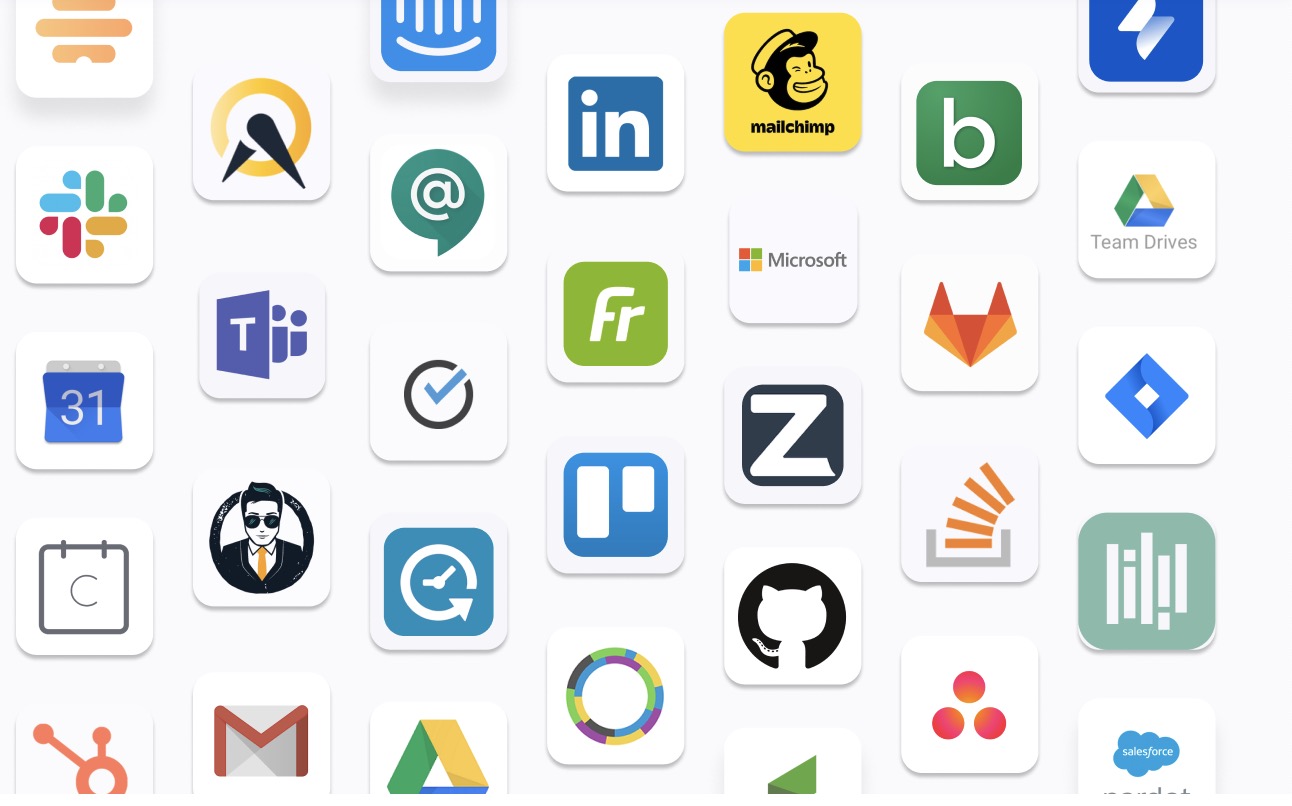
Logos of companies in the Zoom Apps marketplace

Image Credits: Zoom

Even after much of the population has been vaccinated against COVID-19, we will still be using Zoom’s video-conferencing platform in great numbers.

That’s because Zoom isn’t just an app: it’s also a platform play for startups that add functionality using APIs, an SDK or chatbots that behave like smart assistants.

Enterprise reporter Ron Miller spoke to entrepreneurs and investors who are leveraging Zoom’s platform to build new applications with an eye on the future.

“By offering a platform to build applications that take advantage of the meeting software, it’s possible it could be a valuable new ecosystem for startups,” says Ron.

Will edtech empower or erase the need for higher education?

Image Credits: Bryce Durbin

Without an on-campus experience, many students (and their parents) are wondering how much value there is in attending classes via a laptop in a dormitory.

Even worse: Declining enrollment is leading many institutions to eliminate majors and find other ways to cut costs, like furloughing staff and cutting athletic programs.

Edtech solutions could fill the gap, but there’s no real consensus in higher education over which tools work best. Many colleges and universities are using a number of “third-party solutions to keep operations afloat,” reports Natasha Mascarenhas.

“It’s a stress test that could lead to a reckoning among edtech startups.”

3 growth tactics that helped us surpass Noom and Weight Watchers

3D rendering of TNT dynamite sticks in carton box on blue background. Explosive supplies. Dangerous cargo. Plotting terrorist attack. Image Credits: Gearstd / Getty Images.

I look for guest-written Extra Crunch stories that will help other entrepreneurs be more successful, which is why I routinely turn down submissions that seem overly promotional.

However, Henrik Torstensson (CEO and co-founder of Lifesum) submitted a post about the techniques he’s used to scale his nutrition app over the last three years. “It’s a strategy any startup can use, regardless of size or budget,” he writes.

According to Sensor Tower, Lifesum is growing almost twice as fast as Noon and Weight Watchers, so putting his company at the center of the story made sense.

Send in reviews of your favorite books for TechCrunch!

Image via Getty Images / Alexander Spatari

Every year, we ask TechCrunch reporters, VCs and our Extra Crunch readers to recommend their favorite books.

Have you read a book this year that you want to recommend? Send an email with the title and a brief explanation of why you enjoyed it to bookclub@techcrunch.com.

We’ll compile the suggestions and publish the list as we get closer to the holidays. These books don’t have to be published this calendar year — any book you read this year qualifies.

Please share your submissions by November 30.

Dear Sophie: Can an H-1B co-founder own a Delaware C Corp?

Image Credits: Sophie Alcorn

Dear Sophie:

My VC partner and I are working with 50/50 co-founders on their startup — let’s call it “NewCo.” We’re exploring pre-seed terms.

One founder is on a green card and already works there. The other founder is from India and is working on an H-1B at a large tech company.

Can the H-1B co-founder lead this company? What’s the timing to get everything squared away? If we make the investment we want them to hit the ground running.

— Diligent in Daly City

News: Restaurant search engine FoodBoss adds support for direct delivery from restaurants

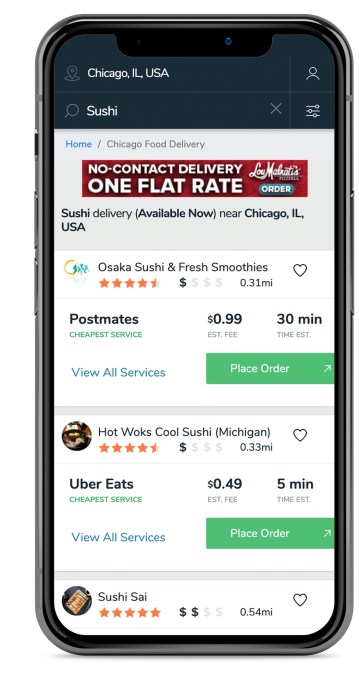
FoodBoss aims to be something like Kayak for online food ordering — the place where you can search across different service and apps to find the lowest prices and fastest delivery times. One limitation, however, is the fact that the service was limited to third-party services like Uber Eats and Postmates, with no way to

FoodBoss aims to be something like Kayak for online food ordering — the place where you can search across different service and apps to find the lowest prices and fastest delivery times.

One limitation, however, is the fact that the service was limited to third-party services like Uber Eats and Postmates, with no way to order from the restaurant itself — until recently, with the launch of a new feature called Restaurant Direct.

FoodBoss co-founder and CEO Michael DiBinedetto said that restaurants are placing an increasing emphasis on accepting delivery and pickup orders directly, both to save on the fees they pay to third-party services, and also to have a direct relationship with their customers.

“The main problem is they spent all this money to build out the [ordering] infrastructure, but they don’t necessarily know that they have to spend marketing dollars to drive consumers to their site or app,” DiBinedetto said. “That’s where we’re really helping.”

FoodBoss

Image Credits: FoodBoss

Restaurant Direct may present some additional technical hurdles, because it will require FoodBoss to integrate with a variety of ordering systems. DiBinedetto said the company will be connecting through APIs in some cases and can also work directly with restaurant IT departments.

He emphasized that FoodBoss will remain agnostic about how you order — the goal is just to show you all the options, and to highlight the ordering method that best matches your priorities.

“At FoodBoss, we’re focused on making sure we’re helping third parties and [restaurants] have a lower overall marketing cost,” DiBinedetto continued. “Everybody wants to be profitable on delivery.”

The first restaurant available through Restaurant Direct is Lou Malnati’s in Chicago, with plans to add Sbarro in multiple markets next year. In a statement, Lou Malnati’s President Heather Stege said, “The challenge for restaurants is being able to serve customers through the users preferred channels, while still providing them with exceptional food. FoodBoss helps simplify that by offering multiple options, including our own, to attract customers.”

News: Walmart is buying JoyRun assets to add ‘peer-to-peer’ product delivery

The last time we wrote about JoyRun, it was raising $10 million. Today, the Bay Area startup has some very different news to share, as it becomes part of Walmart as Walmart has purchased select assets in a bid to enhance its supply chain. The mega-retailer announced today that it has acquired “select assets –

The last time we wrote about JoyRun, it was raising $10 million. Today, the Bay Area startup has some very different news to share, as it becomes part of Walmart as Walmart has purchased select assets in a bid to enhance its supply chain. The mega-retailer announced today that it has acquired “select assets – including the talent, technology platform and IP” from the company, in a bid to incorporate its peer-to-peer food and drink delivery service into its own last-mile logistics.

Walmart EVP Srini Venkatesan notes that the app has amassed a network of 540 third-party merchant partners and north of 30,000 people who have delivered goods with the service since its launch half-a-decade ago. JoyRun’s service is a bit of twist on more standard delivery apps like Seamless and Uber Eats.

As we described it back in 2017, “The company’s app lets people find out who, nearby, is already heading out to a restaurant that they like, then tack on an order of their own.” It will be interesting to see how Walmart integrates this technology into its existing chain, though from the sound it, Walmart would essentially be relying on non-professionals to delivery goods like groceries.

The system would likely operate in a manner like Amazon Flex — a kind of Uber/Lyft gig economy-style approach to delivery.

“This acquisition allows us to further augment our team and ongoing efforts to explore even more ways to deliver for customers in the future,” Venkatesan adds. “For instance, Runners could complement our SPARK program and 3rd Party delivery providers. Our goal is to deliver as quickly and efficiently as possible.”

Walmart expects the deal to close “in the coming weeks,” which will incorporate JoyRun into its Supply Chain Technology team. Terms of the deal were not disclosed.

News: Kea raises $10M to build AI that helps restaurants answer the phone

Kea is a new startup giving restaurants an opportunity to upgrade one of the more old-fashioned ways that they take orders — over the phone. Today, Kea is announcing that it has raised a $10 million Series A led by Marbruck, with participation from Streamlined Ventures, Xfund, Heartland Ventures, DEEPCORE, Barrel Ventures and AVG Funds,

Kea is a new startup giving restaurants an opportunity to upgrade one of the more old-fashioned ways that they take orders — over the phone.

Today, Kea is announcing that it has raised a $10 million Series A led by Marbruck, with participation from Streamlined Ventures, Xfund, Heartland Ventures, DEEPCORE, Barrel Ventures and AVG Funds, as well as angel investors Raj Kapoor (chief strategy officer at Lyft), Craig Flom (who was on the founding team at Panera Bread), Wingstop franchisee Tony Lam and Five Guys franchisee Jonathan Kelly.

Founder and CEO Adam Ahmad said that with restaurants perpetually understaffed, they usually don’t have someone who can devote their attention to answering the phone. (Many of you, after all, are probably pretty familiar with the experience of calling a restaurant and being immediately placed on hold.)

At the same time, he suggested it remains an important ordering channel — especially during the pandemic, as takeout and delivery has become the biggest source of revenue for many restaurants. The New Yorker’s Helen Rosner put it succinctly when she suggested that anyone who wants to support restaurants should “pick up the damn phone.

Similarly, Ahmad said that for restaurants, paying substantial third-party ordering fees on all of their orders is “not a sustainable long-term strategy.” So Kea is offering technology that should help restaurants handle more orders over the phone, creating what Ahmad called a “virtual cashier” who can do the initial intake with customers, process most routine orders and bring in a human employee when needed.

The idea of an automated voice assistant may bring back unpleasant memories of trying to call your bank or another Byzantine customer service department. But Ahmad said that while most existing phone systems are “not smart,” Kea’s AI is very different, because it’s just focused on restaurant ordering.

“We’re doing a very closed domain,” he said. “In the pizza world, there are only a couple thousand permutations. We’re not innovating for the whole dictionary — it’s a constrained model, it’s a menu.”

In fact, the Kea team gave me a number to dial where I could try the system out for myself. It was a pretty straightforward and easy process, where I provided my address and then the details of my pizza order. And again, you can transfer to a human employee at any time. (In fact, I was accidentally transferred during my demo, leading me to quickly hang up in embarrassment.)

Kea is already live in more than 250 restaurants including Papa John’s, Donatos and Primanti Brothers, and it says it’s saving them an average of 10 hours of labor per week, with a 23% increase in average order size. With the new funding, Ahmad’s goal is to bring Kea to 1,000 restaurants across 37 states in 2021.

News: Mobileye taps Luminar to supply lidar for its robotaxi fleet

Luminar, the buzzy sensor startup that is on the verge of becoming a publicly traded company, locked in a supplier deal to furnish Intel subsidiary Mobileye with lidar for its fleet of autonomous vehicles. The deal, announced Friday, will see a rising star paired with a company that has long dominated the automotive industry. While

Luminar, the buzzy sensor startup that is on the verge of becoming a publicly traded company, locked in a supplier deal to furnish Intel subsidiary Mobileye with lidar for its fleet of autonomous vehicles.

The deal, announced Friday, will see a rising star paired with a company that has long dominated the automotive industry. While the supplier agreement is nowhere near the scale of Mobileye’s core computer vision business, it is an important collaboration that extends beyond a few pilot programs. Luminar has had a development agreement with Mobileye for nearly two years now. This new agreement signals the next critical step for both companies.

Mobileye’s camera-based sensors are used by most automakers to support advanced driver assistance systems. Today, more than 54 million vehicles have Mobileye technology. But the company, which was acquired by Intel for $15.3 billion in 2017, has branched out in recent years, moving beyond its advanced driver assistance technology and towards the development of a self-driving vehicle system. Two years ago, Mobileye announced plans to launch a kit that includes visual perception, sensor fusion, its REM mapping system and software algorithms.

Mobileye has since ratcheted up its self-driving ambitions and taken what some in the industry see as an unlikely turn to become a robotaxi operator, not just a supplier.

Luminar and Mobileye’s agreement while small at the moment is still a production contract. Luminar’s lidar will be part of Mobileye’s first-generation fleet of driverless vehicles, which are being piloted in Dubai, Tel Aviv, Paris, China and Daegu City, South Korea. Mobileye’s ultimate aim is to expand its robotaxi operations and sell its self-driving stack (or AV series solution) to other companies. Mobileye CEO Ammon Shashua has said the company is targeting commercial robotaxi services to be launched in 2022.

“So you basically have a production deal here to be able to equip their vehicles towards the 2022 launch of their service and power that in parallel to their camera solution to create that safety and redundancy,” Luminar founder and CEO Austin Russell said in a recent interview.

While the first use of this ‘AV series solution’ is for Mobileye’s own internal fleet, Russell is interested in the opportunities that will follow.

“They’ve taken a very different strategy and are very different company than any other kind private AV development company,” Russell said. “These guys have, tens of millions of products deployed on series production vehicles; they know what it takes to put something into series production. So to able to ride that wave and get on the ground floor to be in production vehicles as well was of particular interest for us.”

Luminar has landed other production-level deals. Volvo announced in May that it will start producing vehicles in 2022 that are equipped with lidar and a perception stack Luminar that the automaker will use to deploy an automated driving system for highways. For now, the lidar will be part of a hardware package that consumers can add as an option to a Volvo’s second-generation Scalable Product Architecture vehicles, starting with the XC90. Volvo will combine Luminar’s  lidar with cameras, radar, software and back-up systems for functions such as steering, braking and battery power to enable its highway pilot feature.

Daimler’s trucks division said in October it had invested in Luminar as part of a broader partnership to produce autonomous trucks capable of navigating highways without a human driver behind the wheel.


News: A16z is now managing $16.5 billion, after announcing two new funds

Andreessen Horowitz (a16z) has closed a pair of funds totaling $4.5 billion, the firm confirmed in a blog post this morning. The firm has raised $1.3 billion for an early-stage fund focused on consumer, enterprise, and fintech; and closed a $3.2 billion growth-stage fund for later-stage investments. The firm did not immediately respond to request

Andreessen Horowitz (a16z) has closed a pair of funds totaling $4.5 billion, the firm confirmed in a blog post this morning. The firm has raised $1.3 billion for an early-stage fund focused on consumer, enterprise, and fintech; and closed a $3.2 billion growth-stage fund for later-stage investments. The firm did not immediately respond to request for comment.

The funds may seem somewhat typical, given the size of new funds that venture firms have been raising in recent years, Still, these are extraordinary amounts given that a16z, with offices in Menlo Park and San Francisco, was founded just 11 years ago.

As extraordinary, they bring the firm’s total assets under management to $16.5 billion.

It was just 20 months ago that a16z closed its most recent pair of funds — a $2 billion late-stage fund, and a $740 million flagship early-stage fund.

It also announced a separate, $515 million crypto-focused fund back in April of this year, its second such vehicle. And, in February, it rolled out its third biotech and healthcare investing fund, which closed with $750 million in capital commitments.

That’s a lot of capital to capture in one year. Then again, its limited partners have had reason to feel cautiously optimistic about its portfolio. In January, for example, the fintech company Plaid, whose Series C round a16z joined in late 2018, was acquired by Visa for a hefty $5.3 billion after raising roughly $310 million altogether.

The Justice Department recently sued to block the deal on antitrust grounds, but even if it’s unwound, industry observers like Plaid’s prospects.

The firm is also an investor in the soon-to-be-publicly traded accommodations marketplace Airbnb, though notably, according to Airbnb’s S-1, a16z does not own enough of the company to be listed on the filing, despite that it led the company’s Series B round in 2011 and despite that general partner Jeff Jordan sits on the company’s board and would need to list any ownership position as a result.

We’ve asked if it sold part of its stake, possibly earlier this year. We’re still awaiting word back.

Another of a16z’s portfolio companies, the pay-as-you-go lending company Affirm, has also filed to go public. Andreessen Horowitz first participated in the company’s Series B round back in 2015. It is also not listed on Affirm’s S-1 filing, meaning it owns less than 5% of the company.

The firm is also an investor in the game company Roblox, whose $150 million Series G round it led earlier this year. Roblox made its S-1 public just earlier this week; a16z is not listed on it.

Its biggest win to date may well be Github, which sold to Microsoft in a $7.5 billion all-stock deal in 2018 and from which a16z reportedly pocketed more than $1 billion. When it invested in the company, it wrote the biggest check it had issued at the time: $100 million. The deal was enough for a16z to win the deal against some tough competition, including Benchmark, whose general partner, Peter Fenton, has said was also trying to woo Github at the time,

On the early-stage side, the firm is often characterized by its flashy deals, including its $100 million valuation of voice-chat app Clubhouse and $75 million valuation of Y Combinator graduate Trove.


A16z also recently launched a TxO accelerator, which uses a donor-advised fund to invest in underrepresented founders. Led by a16z partner Nait Jones, TxO has invested $100,000 each in an initial cohort of seven companies in exchange for 7% of ownership stake.

The donor-advised fund launched with $2.2 million in initial commitments, with Ben and Felicia Horowitz announcing that they would match up to $5 million. Any returns from companies in the fund will be repurposed into the investment vehicle. The firm has declined to share the fund’s total size to date.

Currently, a16z employs 185 people, most recently hiring Anthony Albanese, the chief regulatory officer at the New York Stock Exchange, as an operating partner for its cryptocurrency team.


News: ORIX invests $60M in Israeli crowdfunding platform OurCrowd

Japan-based financial services group ORIX Corporation today announced that it has made a $60 million strategic investment into the Israeli crowdsourcing platform OurCrowd. In return, the crowdfunding platform will provide the firm with access to its startup network. OurCrowd also says that the two groups will collaborate to create financial products and investment opportunities for

Japan-based financial services group ORIX Corporation today announced that it has made a $60 million strategic investment into the Israeli crowdsourcing platform OurCrowd. In return, the crowdfunding platform will provide the firm with access to its startup network. OurCrowd also says that the two groups will collaborate to create financial products and investment opportunities for the Japanese and global market, including access to its venture funds and specific companies in the OurCrowd portfolio.

ORIX is a global leader in diversified business and financial services who will strengthen OurCrowd in many ways,” OurCrowd CEO Jon Medved said in today’s announcement. “We are enthusiastic about the potential to further transform the venture capital asset class together and provide a strong bridge for our innovative companies to the important Asian markets.”

While ORIX already operates in 37 countries, including the U.S., this is the company’s first investment in Israel. It comes at a time where Japanese investments in Israel are already surging. And earlier this year, Israel’s flag carrier El Al was about to launch direct flights to Tokyo, for example, and while the pandemic canceled those plans, it’s a clear sign of the expanding business relations between the two countries.

“We are excited about investing in OurCrowd, Israel’s most active venture investor and one of the world’s most innovative venture capital platforms,” ORIX UK CEO Kiyoshi Habiro said. “We intend to be active partners with OurCrowd and help them accelerate their already impressive growth, while bringing the best of Israeli tech to Japan’s large industrial and financial sectors.”

So far, OurCrowd has made investments in 220 companies across its 22 funds. Some of its most successful exits include Beyond Meat and Lemonade, JUMP Bike, Briefcam and Argus. ORIX, too, has quite a diverse portfolio, with investments that range from real estate to banking and energy services.

News: Despite commitment to anti-racism, Uber’s Black employee base has decreased

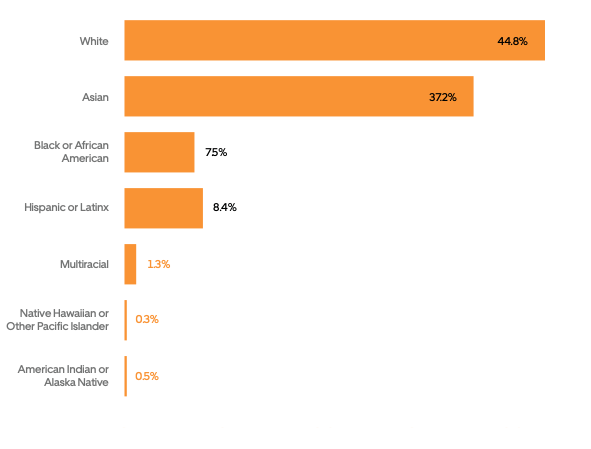
Uber today released its latest diversity report, showing a decline in the overall representation of Black employees in the U.S. despite an increased focus on racial justice this year in the wake of the police killing of George Floyd. In 2019, Uber was 9.3% Black while this year, only 7.5% of its employees are Black.

Uber today released its latest diversity report, showing a decline in the overall representation of Black employees in the U.S. despite an increased focus on racial justice this year in the wake of the police killing of George Floyd. In 2019, Uber was 9.3% Black while this year, only 7.5% of its employees are Black.

Uber attributes the decline in Black employees to its layoffs earlier this year, where about 40% of its employees in community operations were laid off, Uber Chief Diversity Officer Bo Young Lee told TechCrunch.

“As a company that has so publicly stated its stance on anti-racism, that’s not acceptable,” she said.

That unintentional decline in the Black population at Uber “led to a lot of soul searching,” she said. “Dara was certainly upset by it. Every leader was. It reinforced how easy it is to lose some ground after all the work you’ve done.”

Lee said her diversity, equity and inclusion team was consulted prior to the layoffs in an attempt to ensure there was no disparate impact on any one group.

“The unfortunate thing that wasn’t understood at the time was our customer service org in particular was hit pretty hard,” she said. “The overall rate of layoffs was 25-26% in most parts.”

But in the customer service organization, about 40% of employees were affected. And that part of the company had a higher representation of Black and Latinx folks than in other areas.

While Uber saw a decline in its overall Black population, it saw an overall net increase in women of color. And in order to get even more granular, Uber plans to start disaggregating the Asian community and Latinx community.

Uber first set diversity goals just last year. Those goals entailed increasing the percentage of women at levels L5 (manager level) and higher to 35% and increasing the percentage of underrepresented employees at levels L4 (senior associate) and higher to 14% by 2022.

Source: Uber. Uber’s overall U.S. racial breakdown

Currently, Uber is 59.7% male, 44.8% white, 37.2% Asian, 7.5% Black, 8.4% Latinx, 1.3% multiracial, 0.3% Native Hawaiian or other Pacific Islander and 0.5% Native American.

Uber does not break out the demographics of its gig workforce, but many studies have shown people of color make up a large portion of the gig economy.

In San Francisco, 78% of gig workers are people of color and 56% of gig workers are immigrants, according to a study conducted by San Francisco’s Local Agency Formation Commission (LAFCO) and led by UC Santa Cruz professor Chris Benner.

While Lee is not directly responsible for the driver and delivery population, she said they also represent a wide variety of socioeconomic backgrounds. With that in mind, her team does advise other parts of Uber in policy setting as it relates to gig workers.

Uber has had a contentious relationship with its drivers and delivery workers for the last couple of years, especially in California. That all came to a head when California voters passed Proposition 22, a ballot measure that will keep gig workers classified as independent contractors. Uber, Lyft, Instacart and DoorDash collectively proposed and backed the measure with $206 million in funding.

On the other side of the proposition were labor groups representing gig workers. But it wasn’t just gig workers who opposed the measure. Inside Uber, engineer Kurt Nelson spoke out against the measure. In fact, he credited the measure as being the final straw that led him to seek out other job opportunities.

For Lee, deciding to support Prop 22 came down to paying attention to “who gets included and who gets excluded from policies.” When looking at AB 5, the California bill that changed the way companies could classify their workers, she “couldn’t help but notice the majority of independent contractor roles that were predominantly white were being excluded from AB 5.”

For example, California exempted fine artists, freelance writers, still photographers, copy editors, producers and other types of professions from AB 5.

“Maybe if AB 5 was applied differently, I would’ve landed somewhere else,” Lee said, being sure to clarify she was speaking for herself and not for Uber. “For me, I recognize that Prop 22 was the right thing at the end of the day.”

Meanwhile, Uber CEO Dara Khosrowshahi has said the company plans to advocate for similar laws in other parts of the country and world. It’s not clear what that will specifically entail, but an Uber spokesperson said the company plans to discuss this type of framework with stakeholders in other states and countries.


WordPress Image Lightbox Plugin